

Are you thinking about traveling in the Caucasus?
The Caucasus or Caucasia is a region located between the Black Sea and the Caspian Sea, spanning Georgia, Armenia, Azerbaijan, and a part of Russia.
It is one of the most culturally and linguistically diverse regions in the world, home to more than 60 ethnic groups and dozens of languages
The Caucasus is full of history and culture, yet it’s still a bit of a hidden gem for many travelers.
For those of us who have spent time here, it’s easy to see why the region has so much to offer, from breathtaking mountain hikes to fascinating cultural experiences.
Sure, its past has been turbulent, and some people think of it as off-limits, but in reality, traveling to the Caucasus today is an adventure that’s welcoming, safe, and full of unforgettable moments.
Eager to attract tourism, each region is focusing on developing its own reputation for hospitality based on their cultural, historical, and economic attributes.
The Caucasus is a beautiful region to travel to, and has a special place in my heart. The region offers a wide range of options to create a great vacation. In this article, I want to share with you the different parts of the Caucasus and what make them worth visiting.
Travel to the Caucasus: Why Visit & Where to Go
1. Armenia

Armenia is known for its beautiful landscapes and rich culture and history. Some of the oldest churches and monasteries in the world can be found here.
Yerevan, the pink city, is Armenia’s largest and most developed city, and the country’s capital.
Yerevan gets its name from the unique stone color used to erect both old and new city buildings. The area, like much of the country, projects a feeling of safety for travelers with its bustling activity, which does not cease at night.
Also Read: What It’s Like to Move to & Live in Yerevan
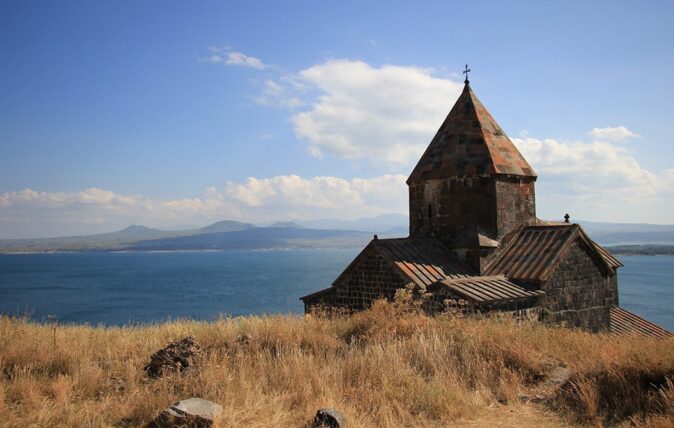
Like the rest of the Caucasus, Armenia is characterized by mountains.
It does not, however, have a coast like other republics in the region. Instead, water seekers can visit Lake Sevan, which takes up 5% of the country’s area. A popular beach destination for locals, Lake Sevan will welcome travelers, but many may find the abandoned feel of nearby towns to be eerie.
Besides Yerevan and Lake Sevan, popular places to visit in Armenia include Dilijan National Park, Garni, and the Noravank Monastery.
Travel Tip: Tourist infrastructure outside the main cities is improving, but can still be limited in more rural areas. Therefore, restaurants may be hard to come by in certain places.
Interesting Fact: Mount Ararat represents the quintessential example of Armenian cultural identity, but is now in Turkish territory.
2. Azerbaijan
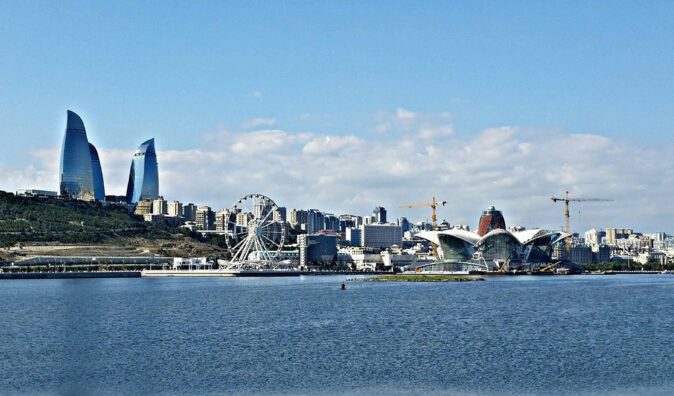
Azerbaijan gained international attention after hosting the 2012 Eurovision Song Contest in its capital, Baku. The city, the largest on the Caspian Sea and in the Caucasus region, features ultramodern skyscrapers but also a 12th-century “inner city” steeped in history.
One of the world’s first industrial oil wells was drilled near Baku in 1846, and by 1901 the city was responsible for more than half of the world’s oil supply.
Today, the region is still known for its huge energy resources and consequently a flourishing economy.
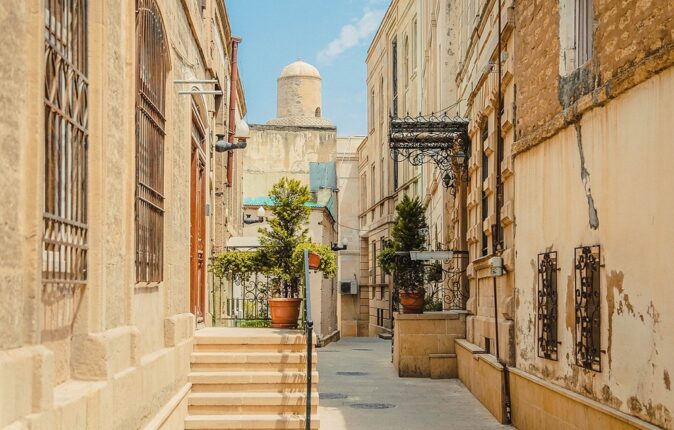
Those more interested in a wilderness experience can venture into the rugged mountains blanketing 60% of the country.
Ilandagh Mountain in Nakhchivan, iconic in its fang-like appearance, and Mount Kapaz near Ganja are ideal for both adventure seekers and history buffs.
Be sure to research your destination ahead of time, though. Some of the more picturesque hikes require a plane ride from the capital of Baku to access.
Lastly, if you’re going to travel to Azerbaijan, you cannot miss the more than 6,000 UNESCO-protected petroglyphs decorating several boulders on the Gobustan reservation.
This impressive number of rock engravings were carved over a span of thousands of years. The area also features the remains of inhabited caves, settlements, and burials, all showing evidence of early human life in the region during the wet period that followed the last Ice Age.
Travel Tip: Travel to Azerbaijan in March to catch the Novruz Bayrami (Persian New Year) celebrations.
Fun Fact: Azerbaijan is home to more mud volcanoes than any other country in the world.
3. The Chechen Republic or Chechnya

Of all the places in the Caucasus, the Chechen Republic might be the most misunderstood.
It’s often thought of as scary thanks to a cyclical history of conflict with Russia, and the turbulent history of the Chechen people. Things have improved, however, and Chechnya is now trying to build a visitor-friendly destination focused on economic growth and mountain culture that embraces sports and outdoor activities.
Grozny, the capital of the Chechen Republic, has undergone extensive reconstruction in recent decades after being heavily damaged during the Chechen wars. Today, the city features a modern skyline with new high-rise buildings, large mosques, and wide boulevards. Much of this redevelopment has been funded by significant investment from the Russian federal government, along with revenues connected to the region’s energy sector.
Despite its growing population and development, Grozny is clean and the people are polite, albeit shy at times.
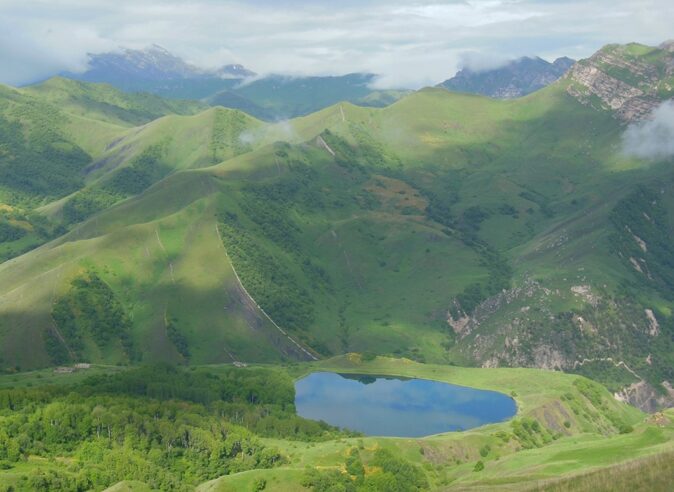
Outside city boundaries, travelers can enjoy the undisturbed nature of the Chechen mountains.
Ancient ruins from area tribes and unique food and dance compete with an active outdoor lifestyle and a burgeoning love of mixed martial arts and boxing.
Commercialized Chechnya tours barely exist, leaving room for the more authentic, self-guided experiences. I can highly recommend visiting mountain lake Kezenoy-am, one of the largest high-mountain lakes in the North Caucasus, and Galanchezh Lake.
Travel Tips: Be mindful of Nokhchallah, the Chechen code of social conduct that guides the area’s indigenous inhabitants.
Also, Chechnya is a conservative region with a predominantly Muslim population. Dressing and acting conservatively is therefore recommended.
Fun Fact: Chechens seem to be courteous and somewhat shy. Often referred to as the Spartans of the Caucasus, they prefer the outdoor lifestyle and sports over shopping or nightlife.
And although traveling to Chechnya is generally safe these days, I do recommend checking current travel advisories when you plan to visit this part of the Caucasus. Travel to Chechnya can be complicated and many governments advise caution due to political sensitivities and strict local regulations.
4. Georgia
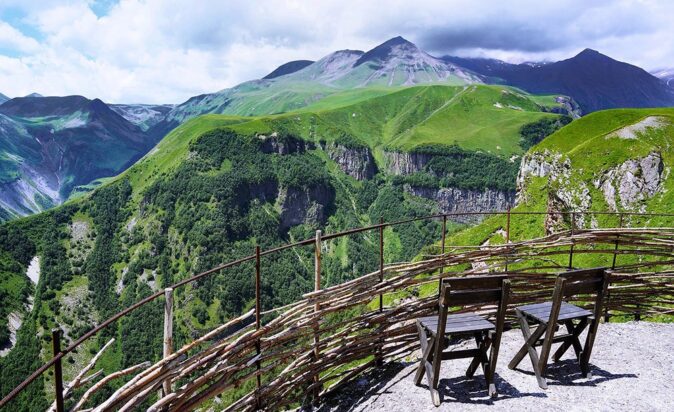
Georgia is a former Soviet republic that has embraced pro-Western sentiments much like Armenia.
Georgia is the most popular country to visit when traveling to the Caucasus.
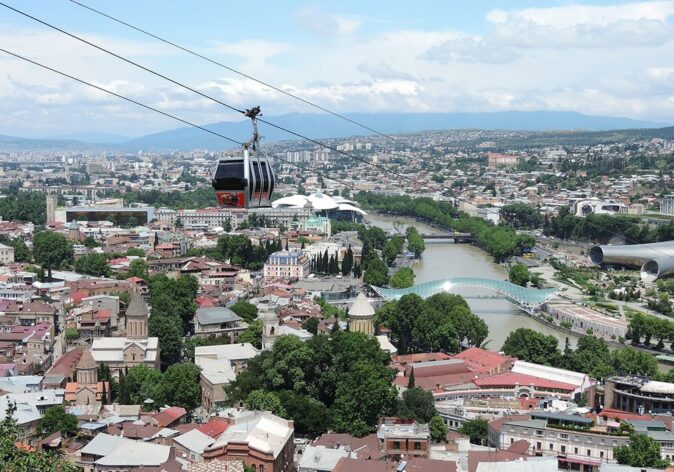
Georgia boasts a food and wine experience to rival France.
Its capital city, Tbilisi, seamlessly blends 21st-century amenities with medieval, classical, and 20th-century architecture.
Tourists traveling to this Caucasus country can expect world-class art and history museums, high-energy dance clubs, and a wide range of restaurants.
If you love the outdoors you should explore Tusheti National Park, in one of the most remote parts of Georgia, for a unique mix of mountainous terrain and ancient stone towers.
Religious and historical travelers would do well to note the thousands of churches, monasteries, and mosques erected since the 4th century. In fact, Tbilisi is home to one of the newest Orthodox cathedrals in the world and one of the oldest still standing. They’re located less than 1.5km (1 mile) apart!
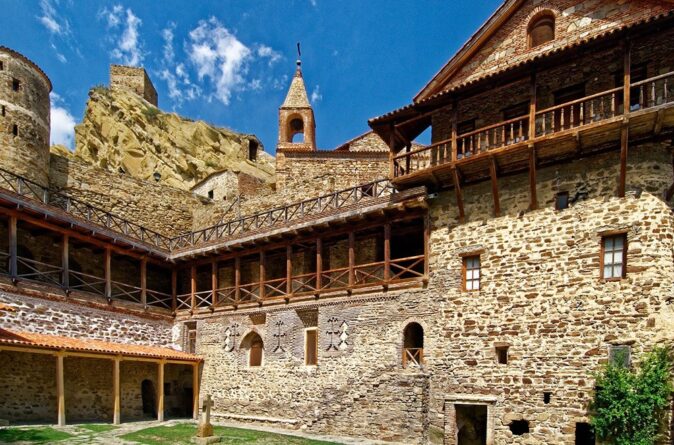
Finally, food lovers can revel in a diverse menu of meats, pastries, and vegetable dishes that impress every time. The wine accompanying many of the dishes is often grown in local vineyards that have perfected their craft over a period of 8,000 years.
Travel Tip: Getting to Tusheti National Park is an adventure that requires a 4-wheel drive, since the roads are bad. Snowy and hazardous conditions make Tusheti National Park inaccessible in winter.
Fun Fact: In Georgian culture, meals are traditionally followed by song.
Also Read: 10 Things Not to Miss When Visiting Georgia
Why Travel in the Caucasus Region?
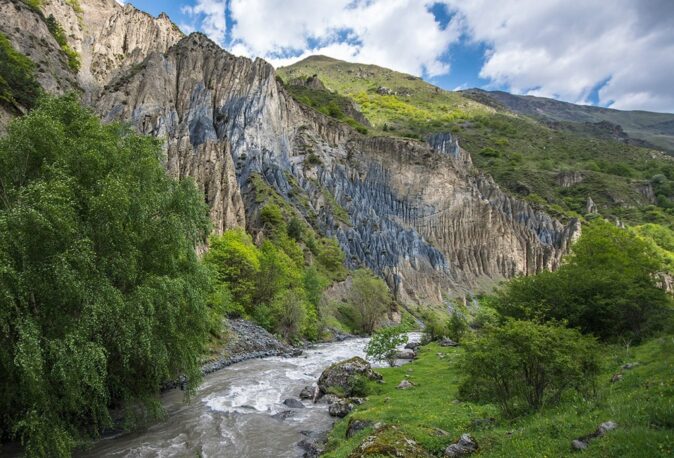
The Caucasus offers something for everyone. History buffs, foodies, wine enthusiasts, and nature lovers all have a home among the diverse cultures and rocky landscapes found here.
The Caucasus region is home to the Caucasus Mountains, including Europe’s highest mountain, Mount Elbrus, at 5,642 meters (18,510 ft).
The Caucasus is where Eastern Europe and Western Asia meet. It’s a stunning region and traveling in the Caucasus is quickly becoming popular, for good reasons!
Combined Georgia, Armenia, and Azerbaijan tours are offered to those wanting to travel the Caucasus region with ease. But, independent travelers, like myself, come to the Caucasus more and more as well.
Best Time to Visit the Caucasus?

The best time to visit the Caucasus, in general, is spring or fall.
But, the Caucasus is a destination you can visit year-round, depending on what you are looking for.
In spring, the valleys are filled with wildflowers. In the fall, rain is rare and the sky is blue most days, with warm temperatures. Plus, from September through October the wine-growing regions in Armenia and Georgia have their harvest season, which comes with lively celebrations.
In summer it can get quite hot (especially in August), which makes it a good time to head to the hills, to enjoy the coastline, or to relax lakeside. Exploring the cities in August might not be the best time however, because of the heat.
Winter is perfect for winter sports lovers or those wanting to experience the lively atmosphere and beautifully lit up towns in the weeks leading up to Christmas.
But, no matter what time of year you decide to travel to the Caucasus, I am sure you will love it!
Map of Places to Visit in the Caucasus
Like this article about traveling the Caucasus? Pin it!
