
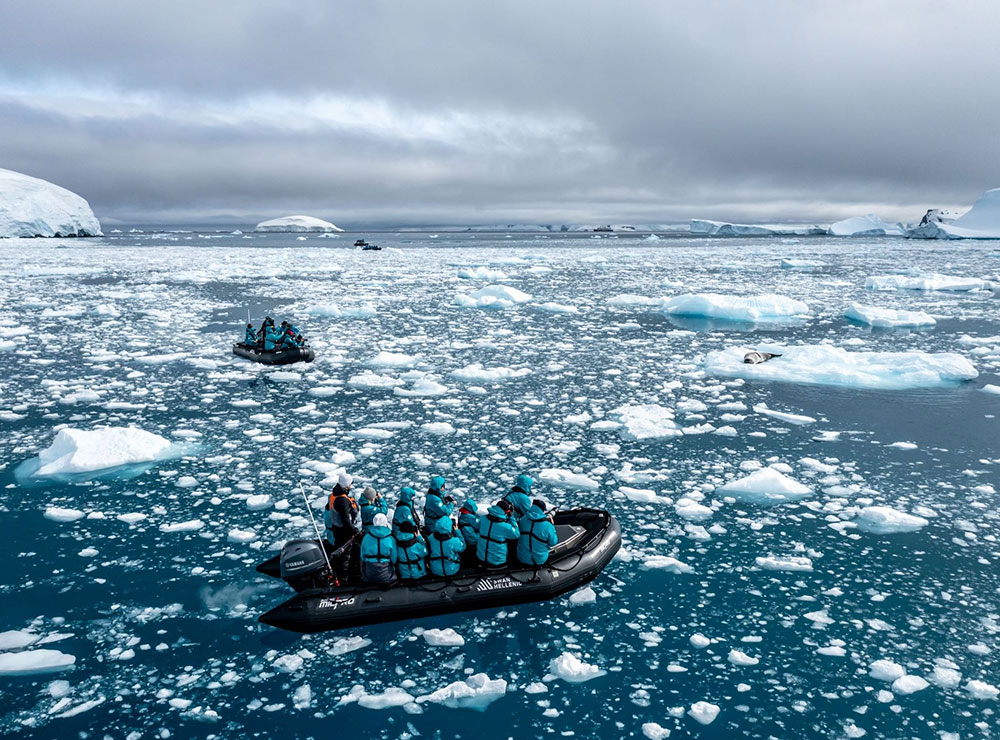
Most people who think about Antarctic cruises picture the Antarctic Peninsula: towering icebergs, penguins gathering along rocky shores, glaciers, and perhaps a whale surfacing beside the ship.
The Ross Sea is something else entirely.
The Ross Sea is one of the most remote regions you can reach on an Antarctic expedition.
Getting there takes considerably more time than a typical Antarctic Peninsula cruise, and the journey itself is part of the experience. In return, you get an extraordinary combination of vast ice-covered landscapes, abundant wildlife and some of the most important historic sites from the Heroic Age of Antarctic exploration.
The Ross Sea is where you can follow in the footsteps of explorers such as Robert Falcon Scott and Ernest Shackleton, visit remarkably well-preserved expedition huts, sail alongside enormous ice shelves and, if conditions allow, encounter wildlife in a part of Antarctica that very few travelers ever see.
And that is really the appeal of a Ross Sea cruise. This isn’t simply a longer version of a standard Antarctic holiday. It is a much more ambitious expedition into one of the most isolated corners of the continent.
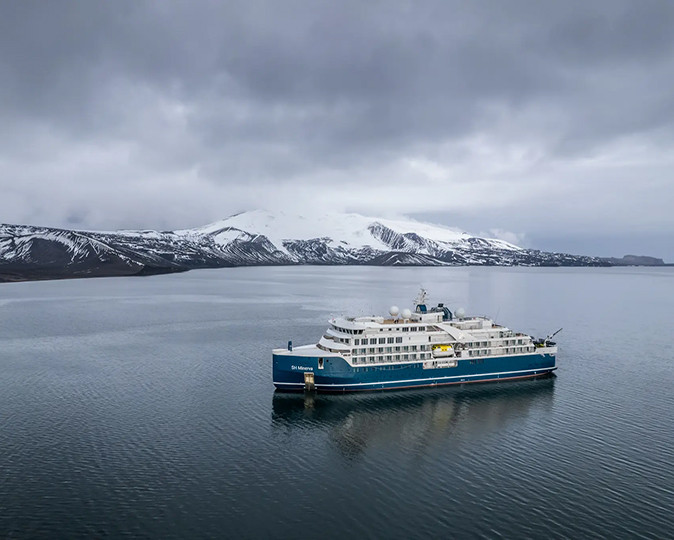
Ross Sea Antarctica Cruise at a Glance
| Typical duration | Around 3–4 weeks, with some voyages longer |
| Location | Ross Sea region of Antarctica |
| Departure points | New Zealand, Australia or South America, depending on the itinerary |
| Best for | Wildlife enthusiasts, history buffs and experienced expedition travelers |
| Main attractions | Scott and Shackleton sites, ice shelves, wildlife and extreme remoteness |
| Wildlife | Penguins, seals, whales and seabirds |
| Conditions | Highly dependent on weather and sea ice |
| Cost | A significant investment, often tens of thousands of dollars per person |
| First Antarctic trip? | Possible, but the Antarctic Peninsula is usually a better introduction |
What Is the Ross Sea?
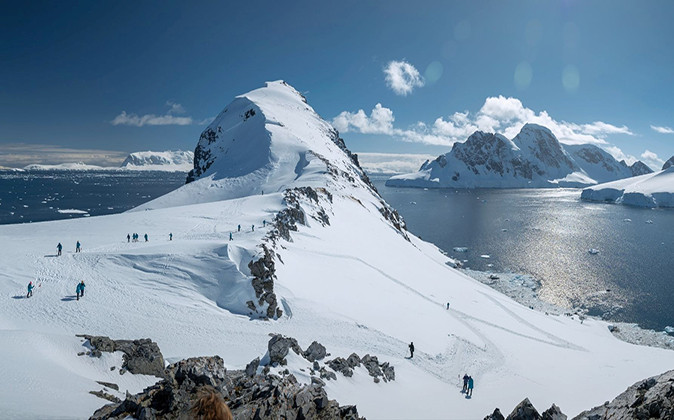
The Ross Sea is a large area of ocean extending south from the Southern Ocean toward Antarctica. Much of it is bordered by Antarctica’s Ross Dependency, with Ross Island, McMurdo Sound and the enormous Ross Ice Shelf among its best-known features.
Geographically, it is a very different part of Antarctica from the Antarctic Peninsula.
And that geography is a big reason why so few people visit.
The Ross Sea is a long way from the usual gateway to Antarctica in Ushuaia, Argentina. Expedition ships approaching from New Zealand or Australia have to travel vast distances across the Southern Ocean, while voyages that combine the Ross Sea with other parts of Antarctica can involve a month or more at sea.
This is not the kind of Antarctic trip where you spend a week sailing between spectacular landing sites and then fly home.
A Ross Sea expedition is a commitment.
But for travelers who are fascinated by Antarctica, that is precisely what makes it appealing.
Why Is the Ross Sea So Remote?
The Antarctic Peninsula is the most accessible part of Antarctica for tourists. Its proximity to South America means that you can visit on an expedition cruise of roughly 10 to 14 days.
Getting to the Ross Sea takes considerably longer.
There are also practical challenges. Sea ice, weather and other polar conditions can affect where a ship can travel and whether a landing is possible. Expedition itineraries therefore aren’t fixed in quite the same way as a conventional cruise.
This unpredictability is important to understand before booking.
You aren’t buying a guaranteed list of ports and excursions. You’re joining an expedition into an environment where nature ultimately decides what is possible.
That can mean changing plans, spending additional time at sea or missing a planned landing. It can also mean getting an unexpected opportunity to see something that wasn’t originally on the itinerary.
For me, that distinction is important when thinking about the Ross Sea: the journey is part of the adventure, rather than simply the transportation to the destination.
Ross Sea vs. Antarctic Peninsula: What’s the Difference?
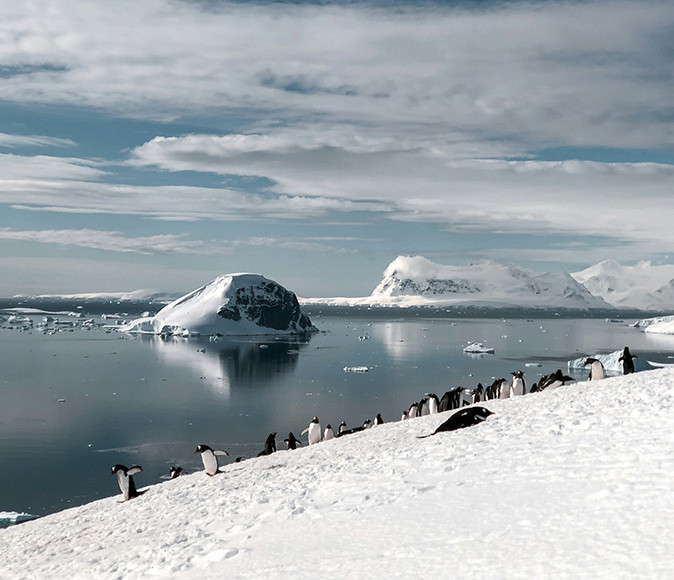
If you’re trying to decide between a Ross Sea expedition and a more traditional Antarctic cruise, this is probably the most important comparison to make.
| Antarctic Peninsula | Ross Sea | |
| Typical trip length | Around 10–14 days | Around 3–4 weeks or more |
| Accessibility | Relatively accessible | Extremely remote |
| Common departure point | Ushuaia, Argentina | New Zealand, Australia or longer trans-Antarctic voyages |
| Main appeal | Icebergs, glaciers, penguins and dramatic scenery | Exploration history, vast ice, wildlife and remoteness |
| Visitor numbers | Much higher | Much lower |
| Historic exploration sites | Some | A major highlight |
| Type of experience | Classic first Antarctic expedition | Deeper, more ambitious expedition |
IAATO’s preliminary tourism estimates for the 2026–27 season illustrate just how different the scale is. The organization estimates only 385 passengers across three traditional seaborne Ross Sea-only voyages, compared with 65,055 passengers on traditional seaborne voyages in the Antarctic Peninsula region.
If this is your first Antarctic trip and you have only limited time available, I’d probably choose the Antarctic Peninsula.
You’ll still experience extraordinary landscapes and wildlife, and you’ll spend much less time and money getting there.
But if you’ve already visited the Peninsula, or you’re the kind of traveler who would happily spend a month reaching one of the world’s most remote destinations, the Ross Sea becomes a very different proposition.
The Ross Sea and the History of Antarctic Exploration
One of the biggest reasons to visit the Ross Sea isn’t wildlife at all.
It’s history.
This region was central to some of the most famous Antarctic expeditions of the early 20th century. Robert Falcon Scott based his Terra Nova Expedition at Cape Evans, while Ernest Shackleton established his base at Cape Royds during the Nimrod Expedition.
The landscape around the Ross Sea still contains physical reminders of these expeditions.
And that’s what makes visiting this part of Antarctica so fascinating. You’re not simply hearing stories about Scott and Shackleton during an onboard lecture. Depending on the itinerary and conditions, you can actually travel to the places where these expeditions lived and worked.
Scott’s Hut at Cape Evans
Scott’s Hut at Cape Evans was the main base for Robert Falcon Scott’s Terra Nova Expedition of 1910–1913.
The expedition famously set out for the South Pole in November 1911. Scott and the members of his polar party reached the Pole after Roald Amundsen, but all five members of Scott’s polar party died during their return journey.
The hut they left behind is remarkably well preserved.
The Antarctic Heritage Trust describes it as the iconic base associated with Scott’s final expedition to the South Pole. It is the largest of the historic huts in the Ross Sea region and was home to 25 members of Scott’s shore party.
Standing inside a building containing equipment, supplies and personal belongings from more than a century ago is a very different experience from visiting a conventional museum.
Shackleton’s Cabin at Cape Royds
At Cape Royds, also on Ross Island, is the hut built for Ernest Shackleton’s 1907–1909 Nimrod Expedition.
Shackleton and his team used the hut as their winter base while attempting to reach the South Pole. The expedition came remarkably close, reaching within about 180 kilometres of the Pole before turning back.
The hut has been carefully conserved, along with many of the objects left behind.
New Zealand has played an important role in preserving these historic sites for decades, with the Antarctic Heritage Trust now responsible for their conservation.
Discovery Hut at Hut Point
There is another Scott-related site at Hut Point.
Discovery Hut was built for Scott’s first Antarctic expedition, the Discovery Expedition of 1901–1904. It later became associated with several other expeditions, including Shackleton’s 1907–1909 expedition and the Ross Sea Party of Shackleton’s Imperial Trans-Antarctic Expedition.
Together, these sites make the Ross Sea particularly fascinating for anyone interested in polar exploration.
The history isn’t simply something you read about before your trip. It is embedded in the landscape.
What Wildlife Can You See in the Ross Sea?
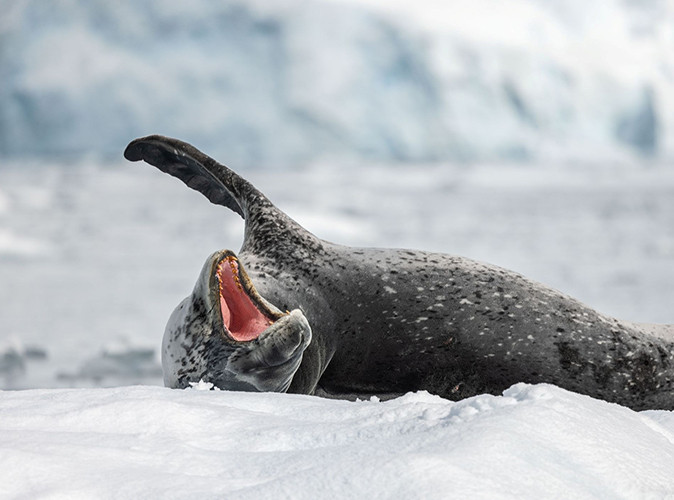
Of course, Antarctica isn’t only about exploration history.
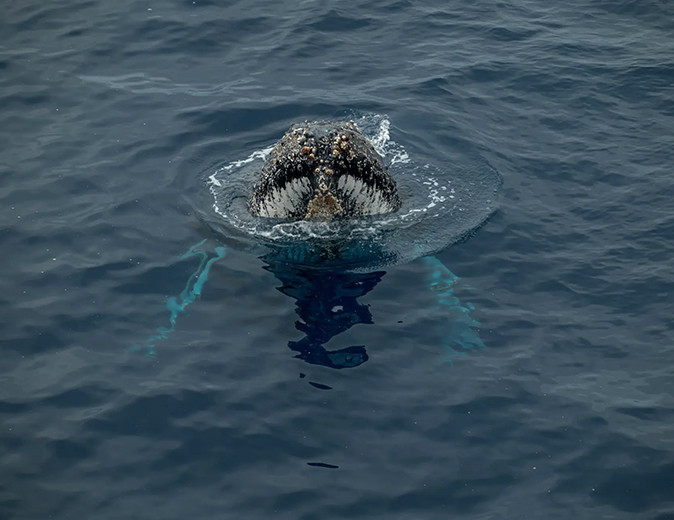
The Ross Sea is also an important wildlife region, and the isolation of the area means that encounters can feel very different from those on a busier Antarctic itinerary.
Depending on the location, season and conditions, wildlife can include:
- Adélie penguins
- Emperor penguins
- Seals
- Orcas
- Southern right whales
- Other whale species
- Albatrosses and other seabirds
The Ross Sea is home to major Adélie penguin colonies, while Emperor penguins can sometimes be encountered in the region. But it’s important not to book a Ross Sea expedition expecting a guaranteed Emperor penguin sighting.
Wildlife in Antarctica is wild, after all.
Even the best expedition operators can’t control where animals will be on a particular day.
That unpredictability is part of what makes wildlife encounters so special. You might spend hours scanning the sea without seeing much and then suddenly have whales alongside the ship or a large penguin colony appear on the shore.
The Ross Ice Shelf and McMurdo Sound
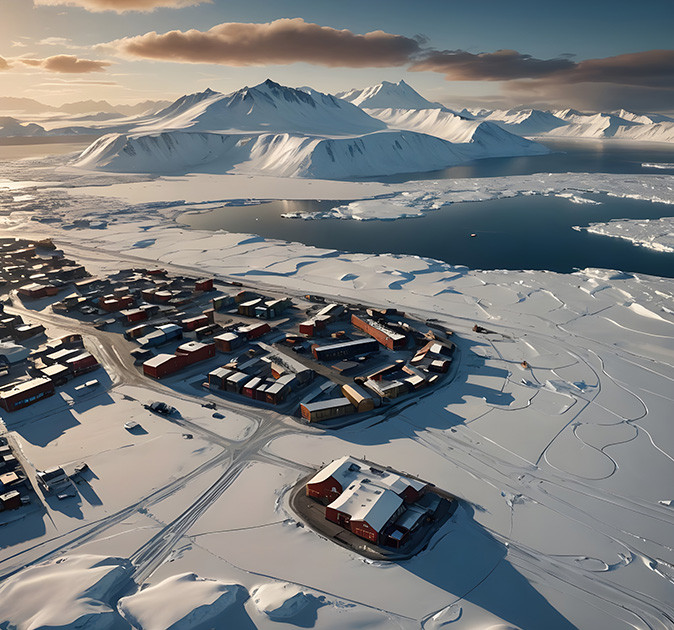
The landscape itself is another reason to come this far.
The Ross Ice Shelf is the largest floating ice shelf in Antarctica, and seeing ice on this scale is difficult to comprehend until you’re actually looking at it.
McMurdo Sound is another important part of the region. It is bordered by Ross Island and contains several of the historic sites associated with early Antarctic exploration.
You also get a very different sense of scale here.
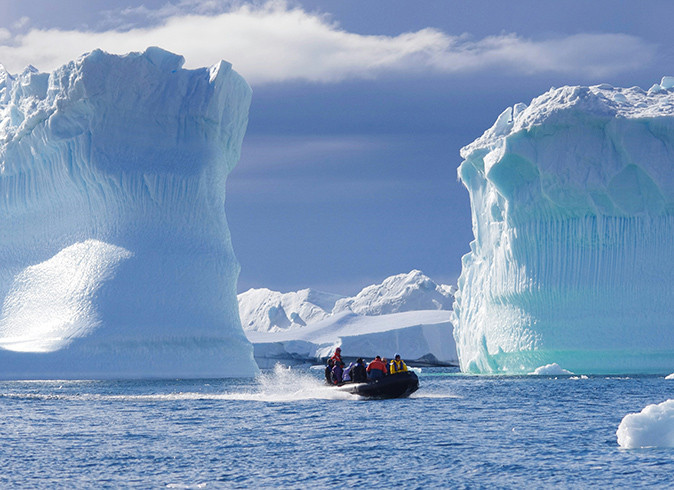
The Antarctic Peninsula is spectacular partly because of its mountains, glaciers and dramatic coastal scenery. The Ross Sea can feel much more expansive and austere.
There are enormous stretches of ice, sea and sky with very little evidence of human presence.
That feeling of remoteness is one of the main reasons people make the long journey.
What Is a Ross Sea Expedition Actually Like?
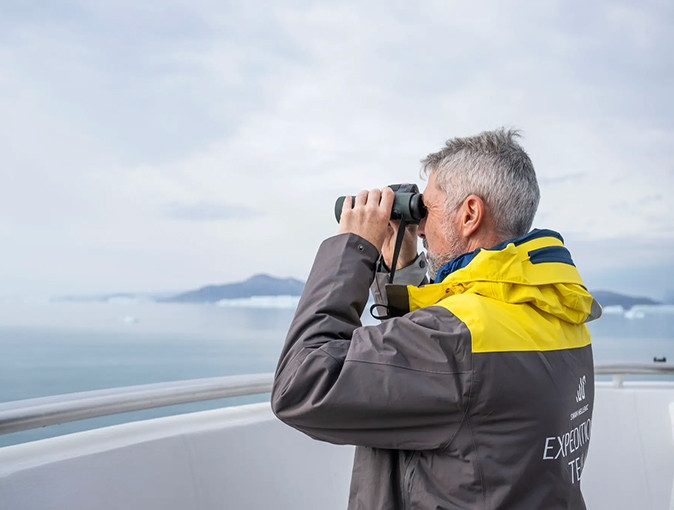
This is something I think is worth considering before you get too excited about booking one.
You’re going to spend a lot of time on a ship.
A lot.
A Ross Sea expedition can take three or four weeks, and longer itineraries may combine the Ross Sea with the Antarctic Peninsula, West Antarctica and New Zealand’s subantarctic islands.
There will be several days when you’re not stepping onto land at all.
Instead, you might spend the day watching the landscape from the deck, attending an expert lecture, photographing wildlife, enjoying the ship’s facilities, relaxing or simply looking out at the ocean.
On expedition ships, the educational side of the journey is often an important part of the experience. Naturalists, historians, scientists and other specialists can help put what you’re seeing into context.
And then, when conditions allow, you may head ashore by Zodiac for a landing.
There is something appealing about that rhythm. You aren’t rushing from one attraction to the next. The environment dictates the pace.
How Long Is a Ross Sea Cruise?
There isn’t one standard Ross Sea cruise length.
Dedicated Ross Sea voyages can be around three to four weeks, while longer Antarctic itineraries that include the Ross Sea can extend beyond a month.
For example, Swan Hellenic offers a 33-night Ultimate Antarctica Adventure from Ushuaia to Dunedin. The itinerary includes the Antarctic Peninsula, West Antarctica and the Ross Sea, with several days dedicated specifically to the Ross Sea region.
That particular voyage gives you a good idea of the scale of this type of expedition: you’re not flying in, spending a few days in the Ross Sea and flying home. You’re undertaking a substantial journey across Antarctica and the Southern Ocean.
How Much Does a Ross Sea Cruise Cost?
A Ross Sea expedition is not a budget-friendly way to visit Antarctica.
Expect to spend tens of thousands of dollars per person, depending on the itinerary, cabin category, length of the voyage and what is included.
As a useful current benchmark, Aurora Expeditions lists its 26-day Ross Sea Odyssey from US$44,895 per person twin share.
Of course, prices change, and the cheapest cabin isn’t necessarily available on every departure.
But the important thing is to understand the scale of the commitment before you start planning. A Ross Sea expedition is a serious travel investment, both financially and in terms of time.
When Is the Best Time to Visit the Ross Sea?
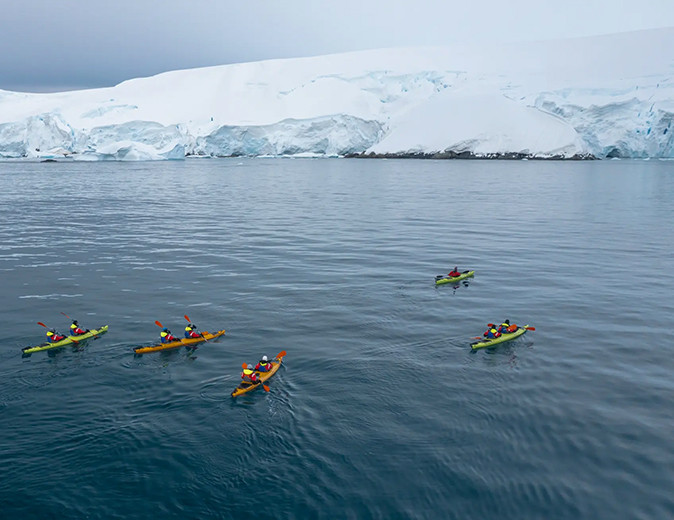
Ross Sea expeditions operate during the Antarctic summer, when conditions allow ships to travel into the region and there are long periods of daylight.
The exact timing matters because sea ice and weather have a major influence on what is accessible.
Even during the Antarctic summer, conditions can change quickly. A planned landing may not be possible, or an itinerary may need to be adjusted.
This is one of the reasons expedition companies emphasize that itineraries are not guaranteed.
If you need every day of your holiday to go exactly according to plan, this probably isn’t the type of trip for you.
If you’re comfortable with some uncertainty in exchange for the possibility of experiencing somewhere extraordinarily remote, that’s a different story.
Is a Ross Sea Cruise Suitable for a First Antarctic Trip?
It can be.
But I wouldn’t automatically recommend it to everyone.
For a first visit to Antarctica, the Antarctic Peninsula is simply easier to experience. You can see spectacular scenery and wildlife in a considerably shorter timeframe, and there are many more departure options.
The Ross Sea makes more sense if Antarctica itself is the reason you’re traveling.
Maybe you’re fascinated by polar exploration. Maybe you’ve already visited the Peninsula and want to see a completely different side of the continent. Or perhaps you’re the kind of traveler who would rather spend an extra two weeks reaching somewhere few other travelers ever see.
In that case, the length of the journey becomes part of the attraction rather than a disadvantage.
Who Is a Ross Sea Expedition Best For?
A Ross Sea cruise could be a great fit if you:
- have a strong interest in Antarctica and polar exploration
- love wildlife and remote destinations
- don’t mind spending several weeks on an expedition ship
- are fascinated by Scott, Shackleton and Antarctic history
- appreciate having expert naturalists and historians around to explain what you’re seeing
- are comfortable with plans changing because of weather and ice
- want a much less conventional Antarctic experience
It may not be the right choice if you:
- only have one or two weeks for your Antarctic trip
- mainly want to see penguins and icebergs
- are looking for the most affordable way to visit Antarctica
- need a predictable day-by-day itinerary
- don’t enjoy long periods at sea
There is no right or wrong choice here.
A two-week Antarctic Peninsula expedition and a month-long Ross Sea voyage are simply very different travel experiences.
Is a Ross Sea Cruise Worth It?
If you’re looking for the easiest way to visit Antarctica, no.
The Ross Sea takes more time, costs considerably more and requires a greater tolerance for uncertainty than a typical Antarctic Peninsula cruise.
But that’s also what makes it so special.
The Ross Sea offers something that is increasingly difficult to find in travel: a genuinely remote destination where the journey itself still feels like an expedition.
You’ll spend days at sea before reaching the region. You’ll visit places connected to some of the most famous stories in polar exploration. You can watch enormous stretches of ice passing by the ship and, if you’re lucky, encounter wildlife in a part of Antarctica that very few tourists ever reach.
For someone whose idea of the perfect trip is a comfortable holiday with a packed itinerary and guaranteed activities, this probably isn’t it.
But if the idea of spending several weeks traveling to one of the most remote corners of Antarctica sounds exciting rather than exhausting, a Ross Sea expedition could be one of those rare trips that feels genuinely like an adventure.
Also Read: