
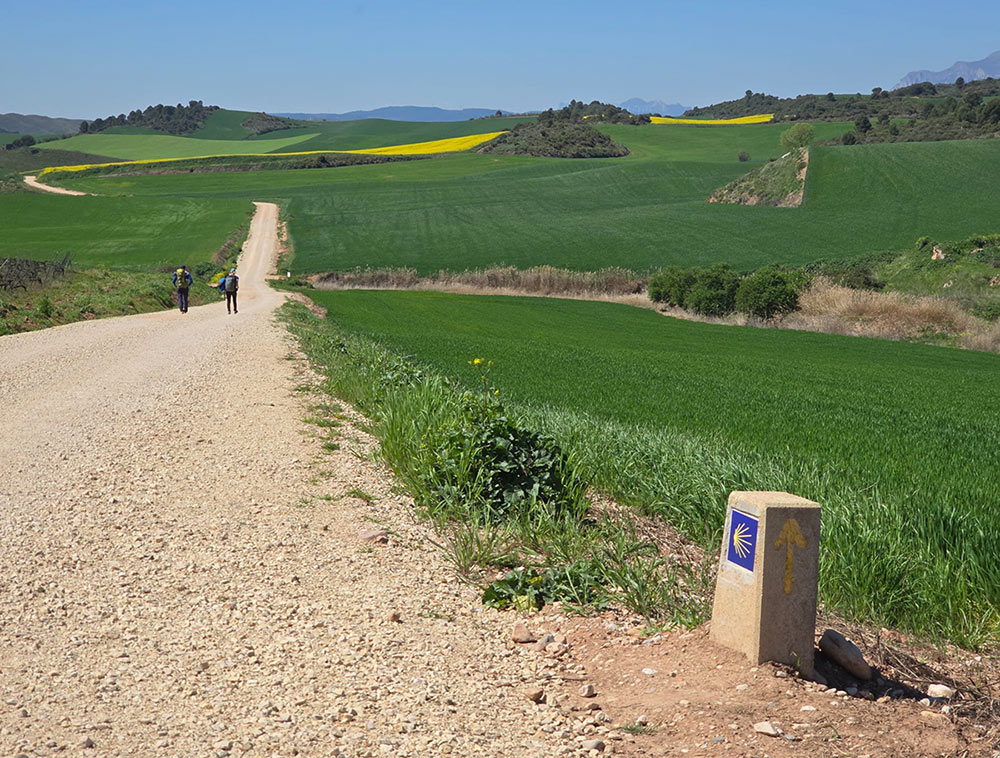
Combining remote work with walking the Camino de Santiago might sound a bit ambitious—and honestly, it is.
But if you plan things right and manage your energy levels, it is possible.
I recently walked the Camino while still working on my business, and in this article, I want to share what that was really like, what to consider if you’re thinking about doing the same, and a few tips I wish I’d known before setting off.
Working Remotely on the Camino de Santiago: What to Know Before You Go
1. Is It Possible to Work While Doing the Camino?
Let’s start with the big question: can you actually work while walking the Camino de Santiago?
The short answer is yes, but not without compromises.
Walking every day, carrying your backpack, and adjusting to the rhythm of the Camino takes a toll. Even when you take it easy and stop for coffee breaks along the way, you’re still physically active for hours each day. By the time you arrive at your destination, you’re usually tired and not always in the right headspace to be productive.
I found it relatively easy to get small tasks done—checking emails, writing social posts, quick updates—but I definitely struggled to focus on anything more demanding.
So if you’re planning to walk the Camino while working on a big project or juggling full-time responsibilities, I’d say you’ll either need to give yourself plenty of rest days or lower your work expectations a bit.
2. Internet Access on the Camino: Wifi and Mobile Signal
I have to admit, internet wasn’t as bad as I feared, but maybe I had very low expectations.
Most albergues (the hostels for pilgrims) do have wifi, but the quality really varies.
In busier albergues, the internet is sometimes very slow or unstable, especially in the evenings when everyone’s trying to connect. And don’t think it will only be small towns that have bad wifi, the worst wifi I experienced was in an albergue in Pamplona (one of the main cities along the Camino Frances).
If you want to work while walking the Camino, I definitely recommend having plenty of mobile data. I have a Spanish SIM card with a generous data plan, and that made a big difference. Coverage was generally good in towns and even in some more rural stretches.
I also recommend bringing a power bank. Not only because it’s useful during the long daily walk, but if you plan to sleep in albergues you might not always have (enough) plugs to charge everything.
Tip: Data in Spain is cheap, so I recommend getting a local SIM card before you start walking the Camino.
3. Accommodation Tips for Remote Workers
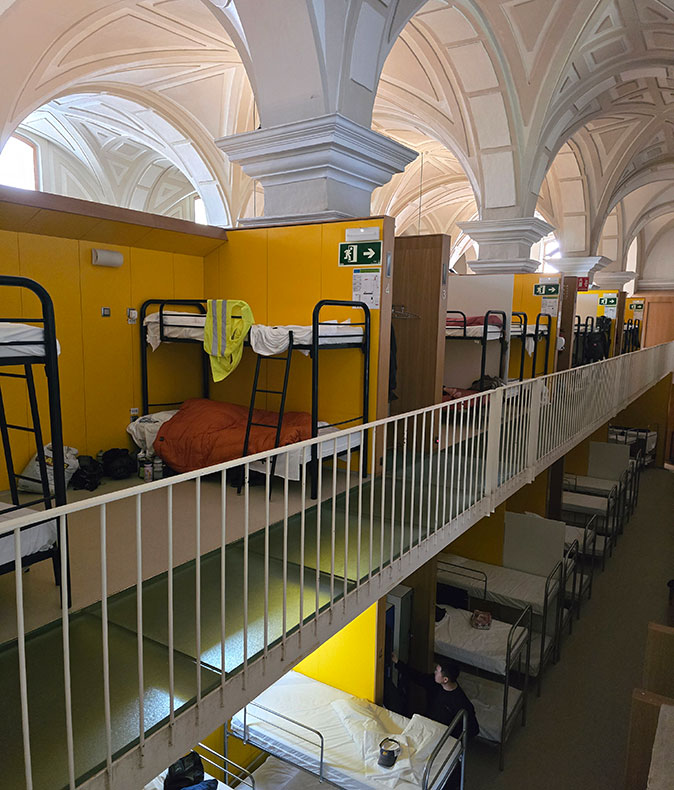
Staying in albergues is part of the Camino experience—they’re the most sociable and affordable option and the preferred choice for most people walking the Camino. But, if you’re trying to work, they’re not always ideal.
Dorm rooms mean zero privacy, and while many albergues do have communal spaces where you can set up your laptop, it’s not guaranteed. Plus, with people coming and going at all hours, it can be hard to focus or take calls.
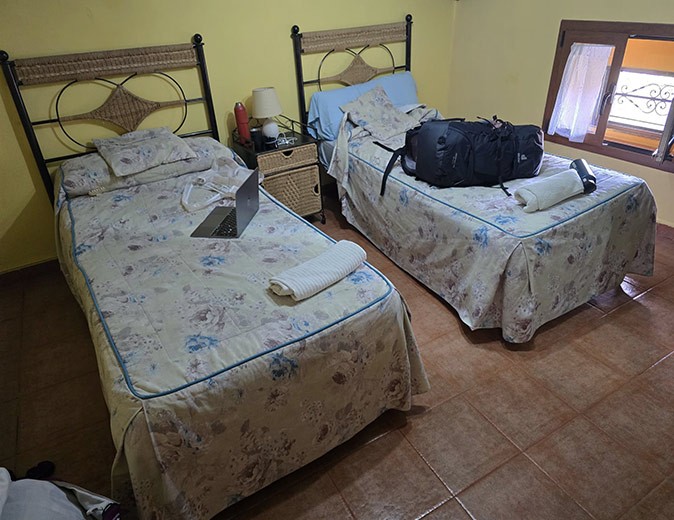
That’s why I sometimes booked private rooms, either in guesthouses, hotels, or in albergues (some albergues have a few private rooms). It costs more, but it was worth it for the quiet, privacy, and ability to get things done.
On days when I knew I had calls or work deadlines, I planned shorter walking stages and booked accommodation with reliable wifi and private rooms in advance.
A mix of both—dorms when you don’t need to work much and private rooms when you do—is a good balance.
Note: In cities and larger towns you could also check for Airbnbs.
For more details, I’ve written a separate article about where to stay on the Camino de Santiago.
4. Structuring Your Days: Walking First, Working Later
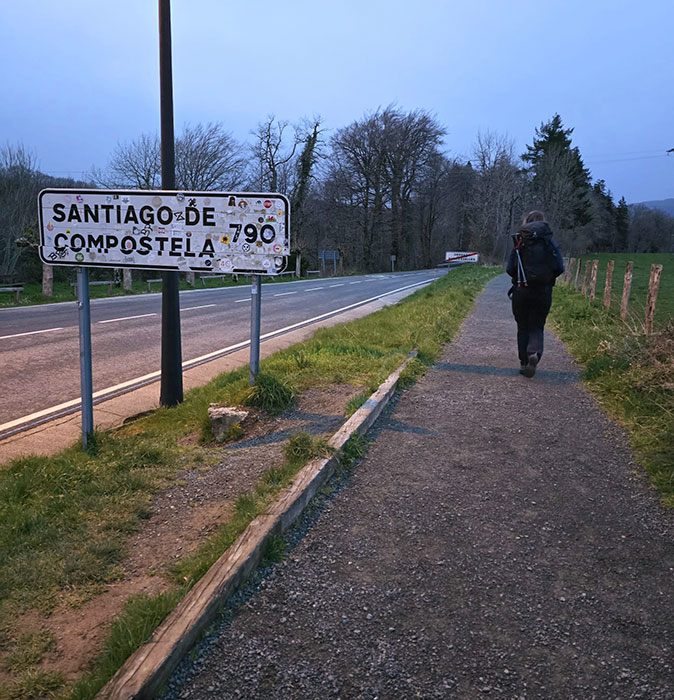
Most pilgrims start their day early—often around 7 AM or even earlier—so they can walk in the cooler hours and arrive by early afternoon. This actually works well if you’re working remotely, since it gives you the rest of the day to settle in, grab lunch, and then open your laptop.
That said, after walking more than 20 km, you might not be in the mood to jump straight into work. I definitely had days where I told myself I’d get loads done in the afternoon, only to end up napping or sitting in a plaza with a glass of wine instead. And honestly, that’s part of the Camino experience as well.
If you’re working part-time or have flexible hours, the Camino rhythm can work quite well. But if your job requires you to be online at set times, it’s not easy.
If you need to work more than 4 hours per day, I highly recommend shortening your daily walks and seeing if you can take some days off.
I used the Buen Camino App to see what the suggested daily distances and overnight stops are. If you follow that, most days you’ll be walking 20 to 25km. Combining this with more than 4 hours of work per day will be tough. So my suggestion would be to shorten each stage. Walking 15km a day still gives you a great daily walk, but leaves more time to work. Of course that does mean it will take significantly longer to walk the whole Camino, if that is your goal.
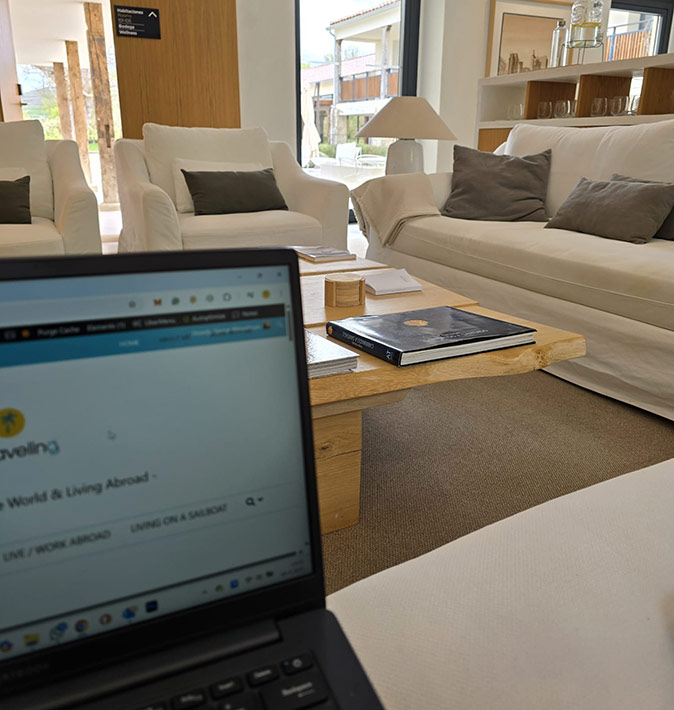
Note: Most albergues ask everyone to check out by 8 AM. Therefore, if you need to do any work in the mornings, just know you can’t count on being able to work from your albergue past 8 AM. Many cafes don’t open until later, so if you really need a place to work from in the mornings, I’d stay in a guesthouse or hotel with a later check-out time.
5. Coworking Spaces & Laptop-Friendly Cafés on the Camino
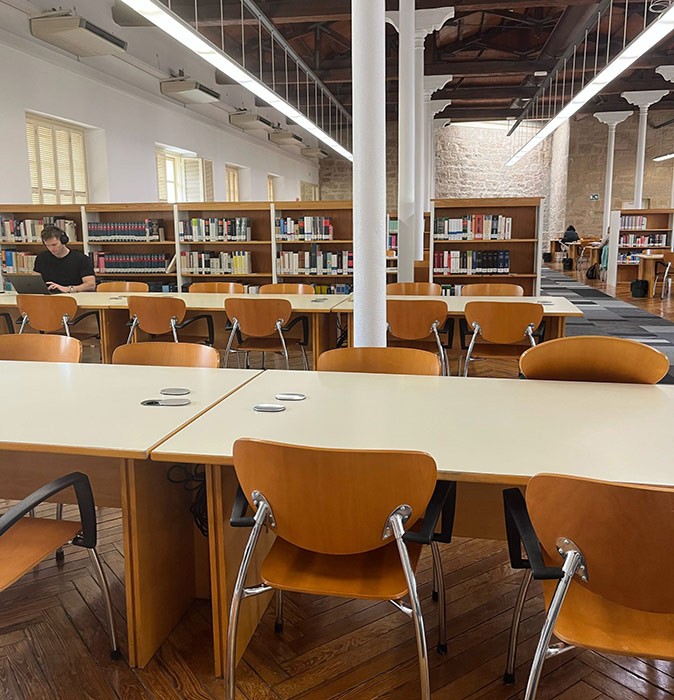
As you may have expected, coworking spaces are pretty much non-existent along the Camino de Santiago.
Mostly, I ended up working from my accommodation, or the occasional café with half-decent wifi.
However, most Camino routes do pass through several cities. The popular Camino Francés goes through Pamplona, Logroño, Burgos, and León, where you’ll have a better chance of finding coworking spaces or quiet spots to set up your laptop. Just don’t expect a digital nomad hub — it’s still very much a pilgrim experience, not a remote work trail.
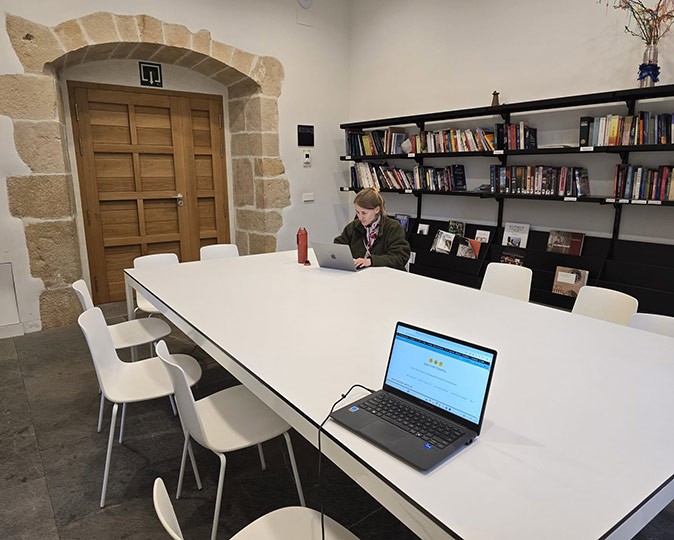
In Logroño, I actually found the public library to be a surprisingly good place to work from. It was quiet, had good desks, and reliable wifi — a welcome break from crowded albergues.
If you’re walking through other cities, it might be worth checking out their public libraries too.
Cafés can be hit or miss. Some towns have nice modern coffee shops with good wifi and some plugs, but many will be more traditional — great for a café con leche, but they’ll look at you a bit funny when you pull out your laptop.
That being said, my friend and I did stop to do some work in remote cafes halfway through our daily walks as well. And while you’ll get some questions from surprised pilgrims (very few have any work commitments while walking the Camino), I’ve found that using my mobile data turned pretty much any cafe into an acceptable work spot.
In short, coworking infrastructure is very limited, but with a bit of creativity and flexibility, you can usually find a spot to get some work done.
6. Managing Your Gear: How to Walk Light While Carrying a Laptop
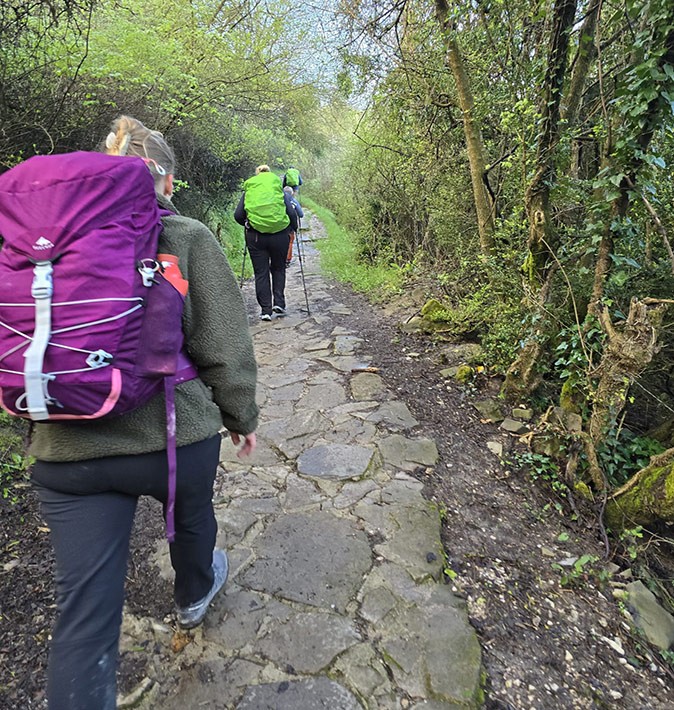
One of the golden rules of the Camino de Santiago is to pack light, because every extra kilo/pound will feel heavier with each step. But if you’re walking as a digital nomad, that advice gets trickier.
Bringing a laptop, charger, and maybe a small tripod or extra gear adds weight you can definitely feel after 20+ kilometers.
The good news? You don’t have to carry it all.
Use Luggage Transfer Services
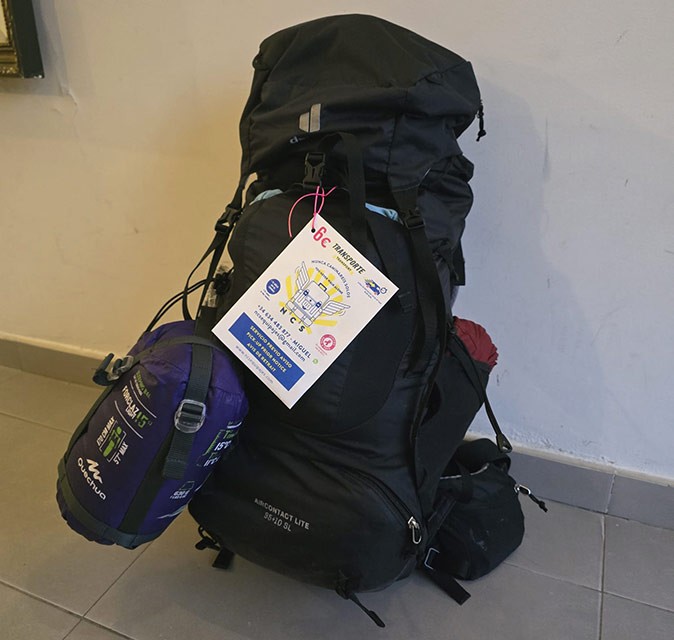
For around €6 per day, you can have your backpack transported from one accommodation to the next. It’s a popular option not just for digital nomads but also for older pilgrims or those dealing with injuries.
I quite quickly decided to use the luggage transfers on longer and more hilly walking days. My laptop is heavy, and my back was killing me after the first few days!
Almost every accommodation along the Camino is familiar with these services. You’ll usually find small envelopes at reception: just write your name and the address of your next stay, pop in €6 in cash, attach the envelope to your bag, and leave it in the designated area in the morning. By the time you arrive at your next stop, your backpack will be waiting for you.
Keep Valuables With You
One thing is always emphasized when using these luggage transfer services: never leave valuables in your bag. That includes your laptop, wallet, passport, or anything else you really don’t want to lose.
I brought a small daypack just big enough for my laptop, phone, water bottle, and a few personal items. I carried that on the days my main bag was transported. It made walking so much easier!
Final Thoughts: Is Combining the Camino With Remote Work a Good Idea?
Walking the Camino as a digital nomad is doable—but it’s not for everyone.
You might have to take more rest days (to catch up on work) than other pilgrims you meet along the way, and walk shorter distances some days. And of course it takes away one key element the Camino offers many pilgrims: the opportunity to disconnect.
If you’re used to structured workdays, the Camino will require some adjustment. It took me several days to get into the flow of combining work and walking.
But the flip side? You get to spend your mornings walking through some of the most beautiful landscapes in Spain, meet incredible people, and still keep your work going. It’s not your typical work-travel balance, but it’s a really special experience.
Also Read:
- Accommodation Along the Camino de Santiago
- Things to Know Before Going to Spain
- Working Remotely in Spain: Why Spain is Great for Digital Nomads
- A Digital Nomad’s Guide to Coliving in Spain
- Famous Spanish Food You Should Try
- Interesting, Strange & Fun Facts About Spain