
What’s it like to move to and live in Yangon?
Yangon is the largest city in Myanmar and was the country’s capital until 2005. It has a small expat community and one of those expats, Steve, was kind enough to interview with me to share his experiences and tips.
This interview is part of the Ask an Expat series. In this series I interview people living all over the world but outside of their country of birth. I try to help paint an honest picture of the ups and downs of living abroad, share tips for anyone thinking about moving abroad, and information about the place the expat now lives in.
Living in Yangon, Myanmar
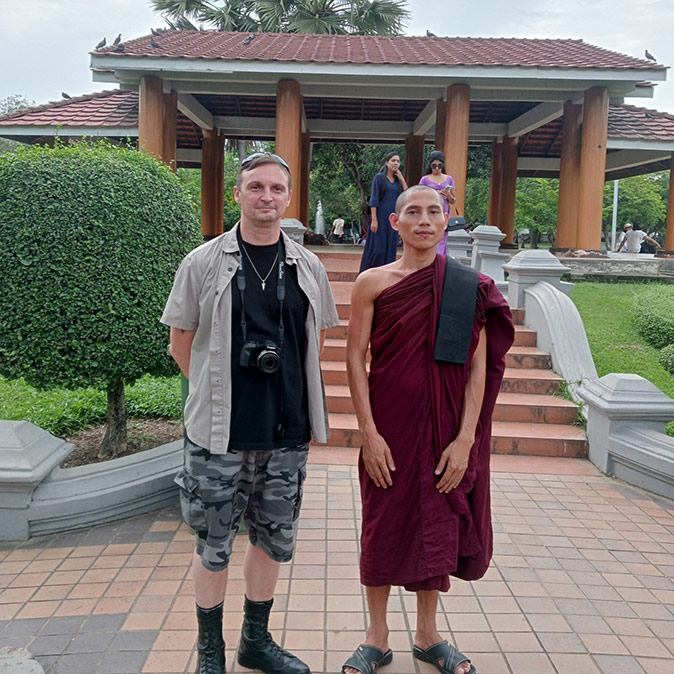
Name: Stephen (Steve) Anthony Rohan
Age: 44
Hometown: Colchester, United Kingdom
His Story:
“I lived in England up until the age of 34, when I got bored of sitting at a desk staring at spreadsheets all day. I moved to China to teach English and lived there for six years, but left after dealing with severe covid restrictions and yo-yoing in and out of lockdowns.
At the time I had a profitable travel blog, and supplemented by freelance writing, this enabled me to live as a digital nomad, traveling from one place to the next for years.
I lived and worked in Romania, Macedonia, Turkey, Iraq, and Georgia, before settling in Armenia for a year.
Due to the advent of AI and Google algorithm changes, I sold my blog in 2022. After briefly returning to England, I decided to head back to Asia and get back into teaching while I formulated a new plan. I spent six months in Cambodia before finding a better position in Yangon (double the money and half the hours), and have now been here for almost a year.”
Why Did You Move to Yangon?
“I moved to Yangon after working in Cambodia for six months. After selling my blog and losing most of my freelance writing income, I decided to go back to TEFL teaching rather than rejoining the rat race that I strived so hard to leave.
I didn’t enjoy Cambodia at all and hated living in Phnom Penh. It was chaotic, noisy, polluted, corrupt, and dangerous.
Whilst browsing job sites I came across a teaching position in Yangon, and thought it couldn’t be any worse! And I’m so glad I did, because it turned out to be one of the best decisions I have made.”
Tip: Thinking about teaching English? You can do an online course to get your TEFL (Teaching English as a Foreign Language) certificate.
What Do You Like About Living in Yangon?

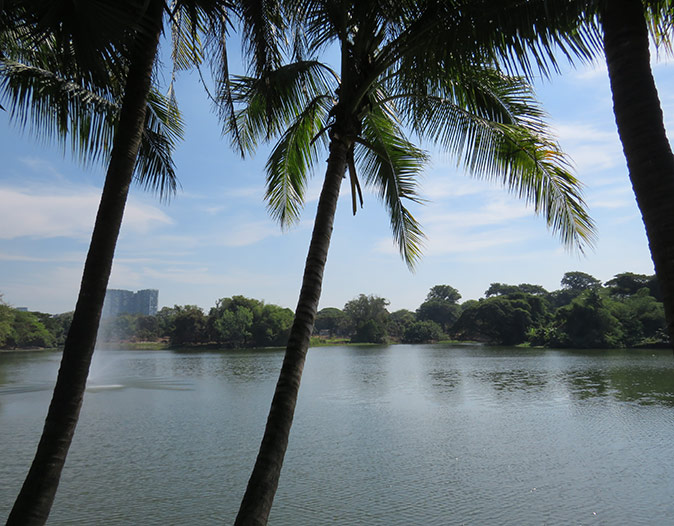
“Although Yangon is geographically part of Southeast Asia, it couldn’t be more different. No tuk-tuks or motos whizzing past, clean, orderly streets, lots of green spaces and parks everywhere (something Phnom Penh is sorely lacking).
And above all, access to pristine nature and jungle within a few hours of the city.
There are some excellent cafes and restaurants, lots of cultural sites and museums, and it’s easy to get around with Grab taxis or by bicycle.
Yangon also makes a good base for exploring a little farther afield. So far I have visited Bagan twice, the coast at Ngwe Saung, and the extinct volcano, Mount Popa.”
What Do You Dislike About Living in Yangon?
“Obviously living in an active warzone presents issues, and the biggest challenge is the lack of electricity.
For my first six months here I lived in an apartment where I had 8 hours of electricity per day (and trying to survive in the tropical heat without air-conditioning was a nightmare). I’ve since moved to a new apartment that has a generator so I now have 24-hour electricity which feels like such a treat!
Another gripe is the food. It’s the only country I’ve lived in where getting hold of fresh produce is a challenge, let alone one or two comfort foods from home. Burmese food is very spicy and oily, and not to my liking, but my new apartment has a kitchen, and with 24-hour electricity I can now cook, if I can source the ingredients.
It’s not unusual for supermarkets to run out of basic products for months at a time (I can’t remember the last time I enjoyed mayonnaise in a sandwich).”
Is Yangon Safe as a Place to Live?

“Yes, Yangon is safe to live in, as the city is away from most of the fighting.
That being said, since the elections that started in December 2025, the conflict is edging ever closer.
There was also an earthquake last night that registered 4.9 on the Richter scale (in March 2025 a huge 7.7 earthquake decimated Mandalay and many places across the country, resulting in the deaths of over 5,000 people).
With all that being said, I still feel a lot safer here than in Phnom Penh, and probably London too.”
Is Yangon Expensive as a Place to Live?
“Yangon is relatively expensive due to the closed borders and imports being heavily restricted, if not non-existent.
Rents here aren’t cheap, compared to many other Southeast Asian cities. I pay US$500 per month for my apartment, which, I know, doesn’t sound bad if you’re coming from Europe or North America.
It’s possible to live frugally, but if you want to maintain some level of comfort it comes at a price.
Eating out is cheap, with a decent meal coming in at under $10, so it’s possible to offset expenditure.
Travel is also cheap, and that is the main reason I’m here (a stay in a 4 or 5-star can be had for around $50 per night).
To give you an idea, the average salary for an experienced, native speaking teacher in Yangon is around US$2,000 per month. If you work for an international school or have specific qualifications it will be a bit higher.”
What Is Your Favorite Thing to Do in Yangon?
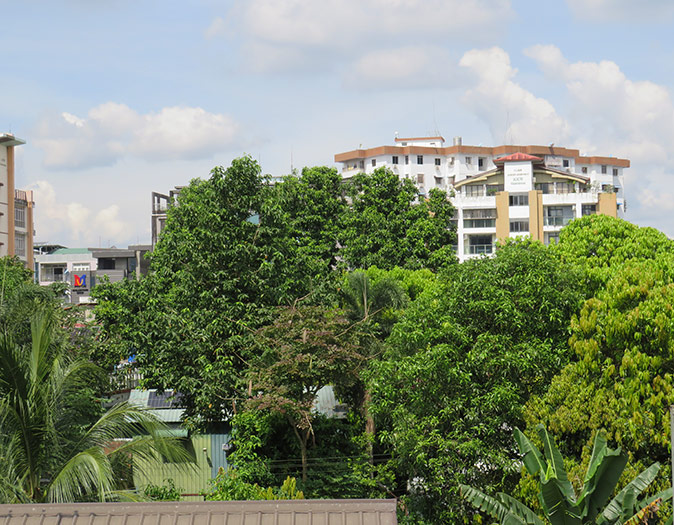
“My favorite thing to do in Yangon is to head to one of the many parks for wildlife photography.
Although it’s a capital city, it’s till surrounded by encroaching jungle, and not a day goes by that I don’t see some sort of tropical wildlife or birdlife. From my apartment I can see kingfishers, bee-eaters, eagles and more.
Photography and nature are my passions, and it’s pretty easy to indulge these in Yangon.
I’ve also just bought a bicycle so I enjoy cycling around the city and out into local villages and the countryside when I’m not working.”
What Is Your Favorite Place to Hang Out in Yangon?
“There are some excellent cafes and restaurants spread across the city, with my favorite being Corner Edge Bistro in Dagon Township. It’s a rooftop restaurant with plants growing from the rafters, and a retractable ceiling that allows stargazing while you eat!
I rarely go out to bars these days as it’s not really recommended to be out too much after dark. That being said, many of the restaurants double up as bars, and I’ll usually stop by somewhere for a quick beer if I’m out cycling. My latest find is a charming place called Legacy Windermere in the exclusive Golden Valley neighborhood.”
What Is the Expat / International Community Like in Yangon?
“The expat community is mostly made up of teachers and aid workers. It reminds me a little of living in Luoyang, China, which had a small but active expat scene.
I don’t really know anyone here other than my colleagues, but a few of us like to go out to play pool from time to time, or arrange cycling trips.”
Any Tips for Moving To / Living in Yangon?
“You can only move to Myanmar if you have a job lined up as your visa will be tied to your employment (tourists can apply for an e-visa, which is straightforward).
If you do plan on moving to Myanmar, be prepared for a lot of bureaucracy, especially if you rent your own apartment, as there is a lot of paperwork that must be submitted to the relevant authorities.
Be aware of constant power outages, so look for somewhere that has a generator (all good hotels have these).
Be prepared for military checkpoints, and don’t travel outside of Yangon without checking how things are on the ground.
Popular tourist sites such as Bagan, Ngwe Saung beach, and Kyeiktiyo Pagoda (Golden Rock) are all currently safe for visitors, but things can change quickly.
If traveling between cities by bus or train, be aware that foreigners can only use certain services, so check with the transport agency. You will need your passport, visa, and Form-C (proof of residence) to travel outside of Yangon.”
Any Resources You Found Useful During the Process of Moving to and Building a New Life in Yangon?
“I didn’t really do any research before moving to Yangon, and just relied on word of mouth to find my apartment.
Most websites with information about Myanmar are about 5 year out of date (almost all guides were written before the 2021 coup and the current civil war).
That’s one of the reasons I have set up myanamr-travels.com, as there is a lack of online resources relating to Myanmar.
There are Facebook groups which can be useful for events and things to do, however most social media, including Facebook is banned in Myanmar and VPNs are illegal.”
Is There Something You Just Have to See or Do When You Are in Yangon?
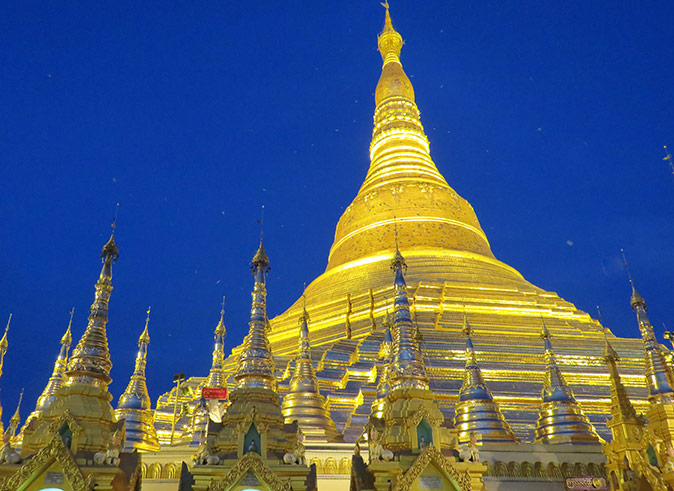
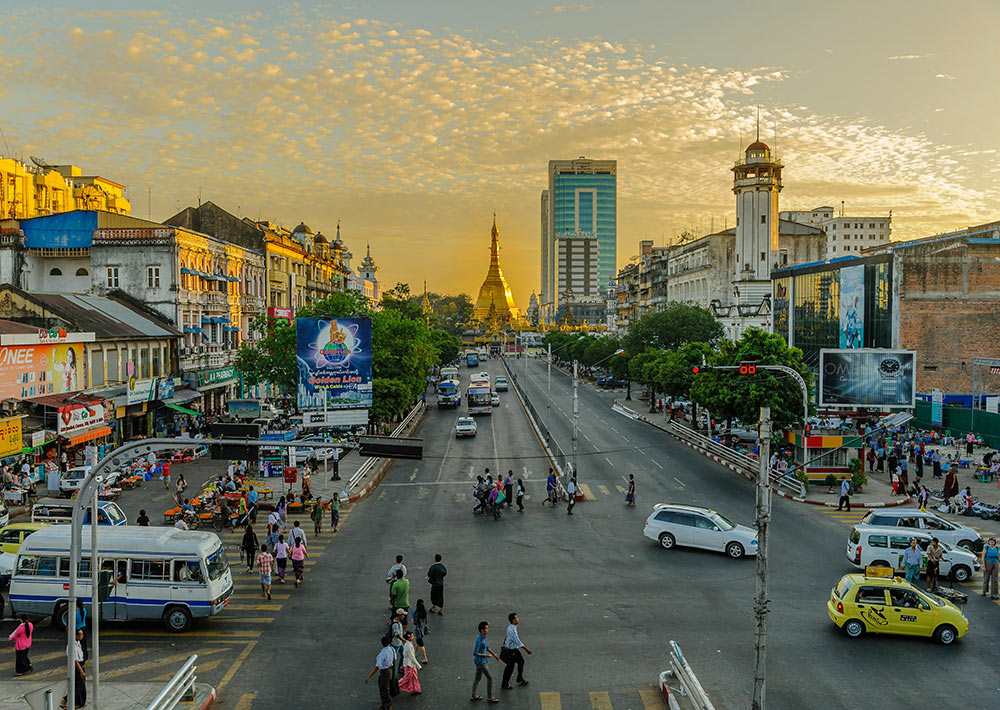
“Shwedagon Pagoda is the number one attraction in Yangon. This gilded and bejeweled pagoda towers over the city skyline (there is a bylaw that states no building can exceed the height of the pagoda), and it is the most important Buddhist monument in the country.
Seeing it at sunrise or sunset as the rays bounce off the gold-plated dome is one of the must-do things for anyone visiting.”
About Yangon & Myanmar
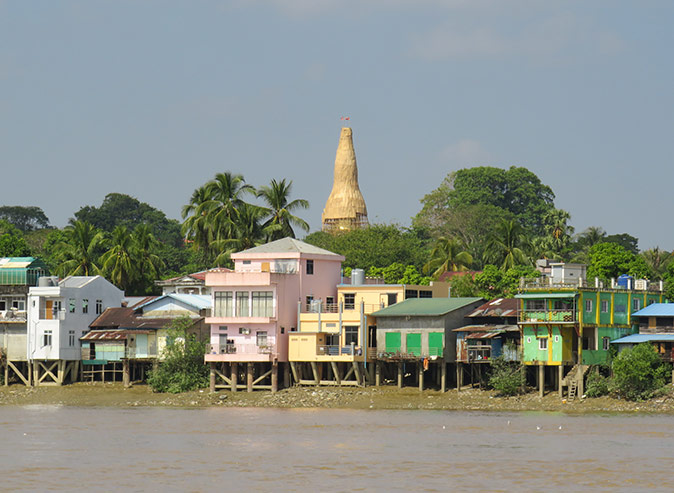
Yangon (formerly Rangoon) is Myanmar’s largest city and former capital, with a population of approximately 5.9 million.
It’s a city of contrasts: colonial-era buildings sit next to glittering pagodas, and street food stalls operate alongside upscale cafés.
Myanmar itself is a culturally rich and diverse country, with over 100 ethnic groups, strong Buddhist traditions, and a slower pace of life than many other parts of Southeast Asia. Daily life here is shaped by religion, family, and community, and newcomers who approach the country with patience and respect often find the people exceptionally warm and welcoming.
From a practical perspective, Yangon is generally the most livable city for foreigners. It has the widest range of international-standard housing, schools, hospitals, and services. Most expats live in neighbourhoods like Bahan, Yankin, Sanchaung, or Golden Valley, where you’ll find apartment buildings, embassies, and a small but established expat community.
Healthcare in Yangon is limited compared to neighbouring countries. While there are private clinics and hospitals that expats use for basic care, many people travel to Thailand or Singapore for more serious medical treatment. Comprehensive international health insurance is strongly recommended if you’re considering a move.
The climate is tropical, with a hot season, a rainy monsoon season (roughly May to October), and a drier, more pleasant period from November to February. The heat and humidity can take some getting used to, especially for newcomers.
One important consideration is the current political and security situation in Myanmar. Conditions can change quickly, and anyone considering a move should stay well-informed, follow official travel advice, and think carefully about their personal risk tolerance.
Most expats who do live in Yangon do so with a strong awareness of local conditions and often for specific reasons such as work, family, or long-term ties to the country.
Living in Yangon is not for everyone, but for those who choose it, the experience can be deeply eye-opening. It’s a place where everyday life feels very different from the rest of Southeast Asia, and where adaptability, cultural sensitivity, and an open mind are essential.
Also Read: