
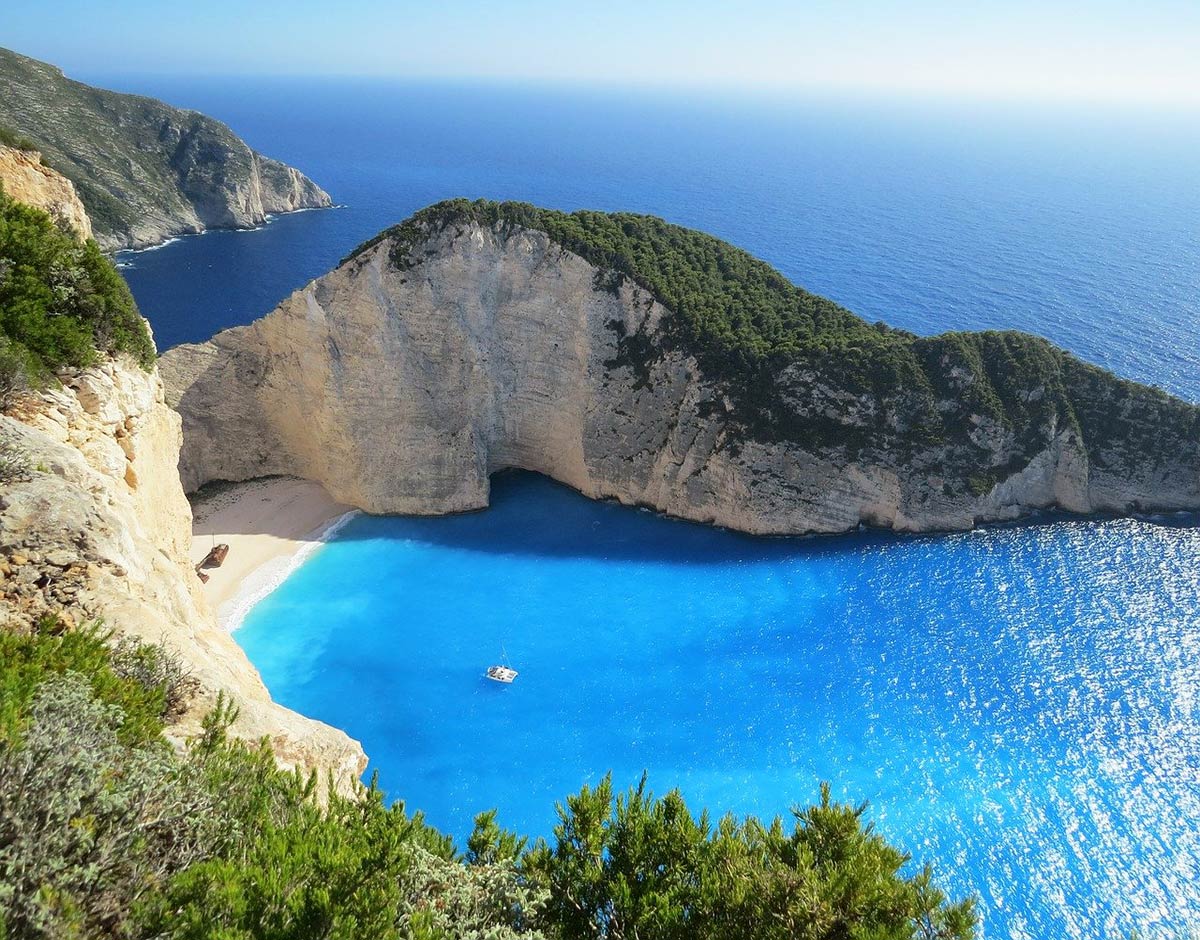
Are you planning to go sailing in Greece? You’re not the only one!
With its thousands of islands and islets, Greece is one of the world’s most popular yacht charter destinations. And it’s easy to understand why.
When you set sail for Greece or rent a boat in Greece, you’ll get to explore diverse nature, incredible culture, great architecture, and delicious food, all in one country.
You might, as many other boaters, decide to return to Greece more than once!
Whether you’re thinking of sailing your own boat or chartering one, you’re going to need some tips if you want to do some island hopping. So today I’ll share some practical information with you.
Something worth knowing is that there are more options than ever to charter a yacht in Greece with online rental companies like Sailo and Click and Boat making hiring a yacht an easy and convenient process.
Now, let’s dive into it!
Things to Know About Sailing in Greece
1. The Best Time to Sail in Greece
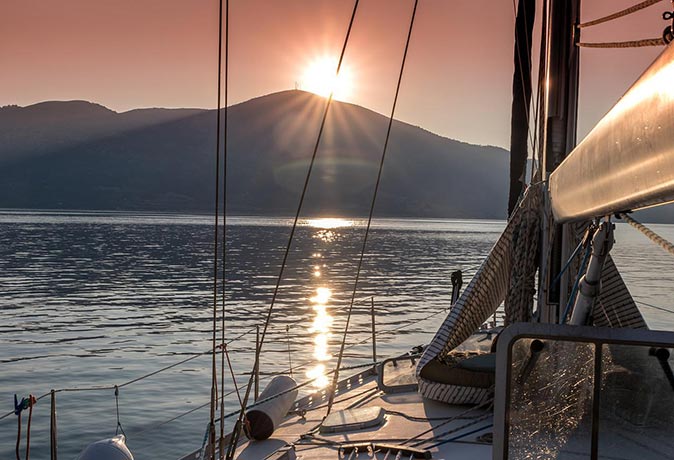
Greece’s sailing season is in full force between late April and early November.
High season lasts from the last week of June until mid-September. High season does mean crowded marinas and anchorages, which is something to keep in mind.
But, there are some upsides to sailing in Greece during high season as well. It’s when Greece is the most lively. All the shops and restaurants are open, the streets are filled with people and the atmosphere is happy and vibrant.
You might know that summers in Greece can be very hot and dry. Think of temperatures up to 35 degrees Celcius (95 ºF) around the coast and islands. However, the Meltemi winds offer some relief from the heat, but more about that later.
I would say, the best time to sail in Greece is either in June or the second half of September, as you’ll still be able to enjoy that summer feeling, but with less of a crowd. On top of that, if you are renting a yacht, there will be some great offers!
2. Changing Winds & Weather Conditions in Greece
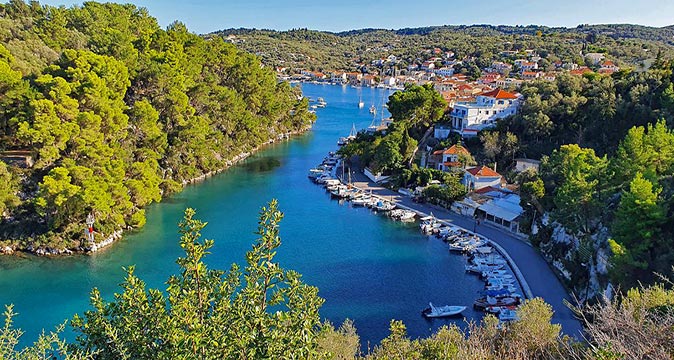
Greece’s weather is characterized by hot, dry summers and damp, mild winters.
The weather conditions start to get unstable at the end of October, due to the decreasing Azores High and the combination of cold and hot air masses, which cause thunderstorms.
Winds in Greece are also known to be very changeable.
The wind will change its direction from north to south and back every 3-4 days. The Meltemi winds, the strong, dry northerly winds, dominate across the Aegean Sea from the end of June until the beginning of September.
The Meltemi blows up to 8 Beaufort. And although this wind can cause harsh sailing conditions, it also brings down the temperature and humidity and provides good visibility. This, as mentioned before, makes summer temperatures a lot more pleasant.
The Meltemi winds are strongest during July and August and the Cyclades are affected by these winds the most.
The Meltemi is one of the few Mediterranean winds that do not necessarily die out at the end of the day and can easily last for three to six days. It is however strongest during sunny hours.
We can divide Greece into five wind zones. Sometimes, the winds of each zone blow independently, but not when the Meltemi gets strong, then the wind directions are very similar everywhere.
Northwest winds dominate the Ionian Sea, they start blowing in the midmornings and get less in the evening.
Westerly winds dominate the coast around Peloponnese, which can reach up to 6 Beaufort, and sometimes southerly winds (Scirocco) as well.
All other regions near the coast can expect north-dominated winds because of the landmasses.
Between and behind isles with high mountains you can experience serious gusts of winds, which is something to keep in mind when sailing around Greece.
In short, when you are sailing in Greece you want to check the weather frequently. But this is no different in most of the rest of the Mediterranean. And if you don’t like the sound of strong Meltemi winds, then avoid the Cyclades.
3. Where to Go Sailing in Greece
Greece is full of golden sandy beaches, secluded anchorages, hillside towns, and hidden coves.
When you charter a boat in Greece your time here most likely will be limited. And even if you plan to spend the entire season sailing the Greek islands, you still couldn’t visit everything.
So, you’ll have to make a selection.
Some of the best sailing destinations in Greece are the Ionian Islands, the Saronic and Argolic Gulfs, the Sporades, and the Dodecanese.
It’s hard to make a small selection, but I’ll list a few of the best anchorages below.
3.1 The Ionian Islands
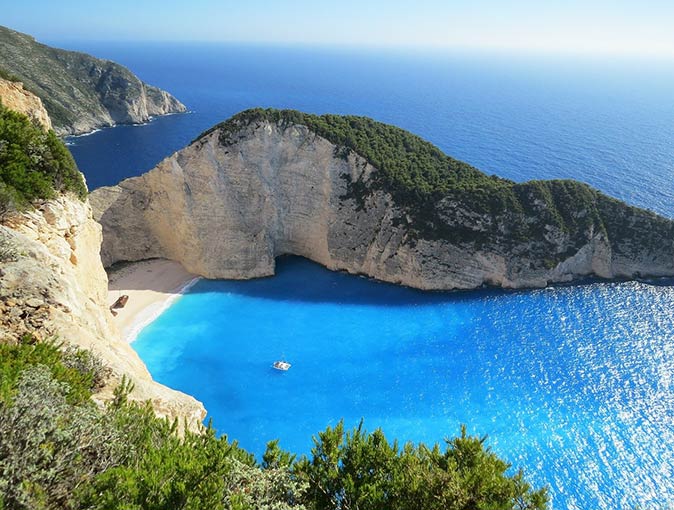
Corfu, Lefkada, Meganisi, Ithaca, Kefalonia, and the many other Ionian islands are full of wonderful places to explore.
Unique rock formations and crystal-clear waters are what you’ll find here. The region has a large number of good anchorages and the islands offer easy and protected navigation.
The Best Anchorages Around the Ionian Islands:
Petritis, Vlicho, Abelake Bay, Frikes, and Blue Caves Agios Nikolaos.
3.2 The Saronic and Argolic Gulfs
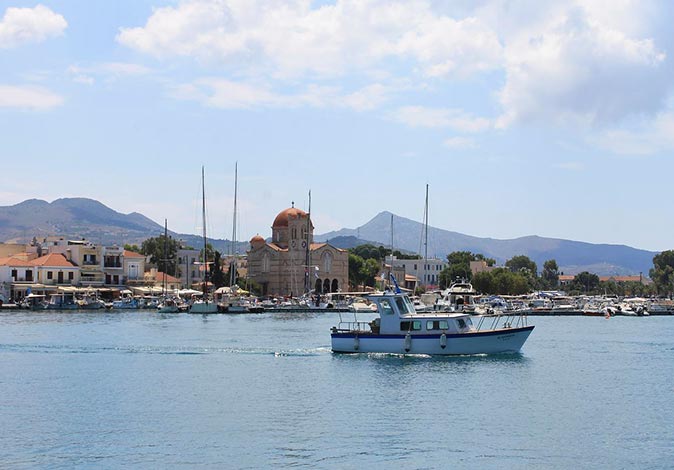
These regions are sheltered from strong summer winds, especially from the Meltemi.
The Saronic and Argolic Gulfs offer lots of possibilities for sailing along the coasts and around the islands of the gulf.
There are many famous archaeological and historical sites to discover in the region and its proximity to Athens makes especially the Saronic Gulf a popular destination to charter a boat.
The Best Anchorages in the Saronic and Argolic Gulf:
Perdika Egina Nord, Skilomango West, Ormos Kalamakiou, Lefteri (to visit Athens), Ormos Skindos, Vivari, Romvi, and Arvanitias.
3.3 The Sporades
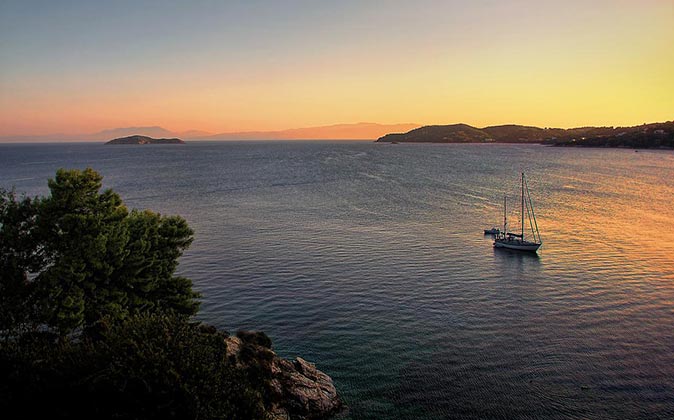
Coming from the Saronic Gulf it will take you two or three days to sail to the Sporades.
If you don’t mind a slightly longer sail you are rewarded by a quieter Greek sailing destination, simply because it’s further away from the main rental areas.
There are many little gems to discover around the Sporades as the islands differ a lot from each other. Think of small ports, wild anchorages, and many historical and natural attractions.
The islands can be explored by scooter or car.
The Best Anchorages in the Sporades:
Koukounaries, Limnonari Beach, Skiropoula East, and Tzortzi Gizmos.
3.4 The Dodecanese
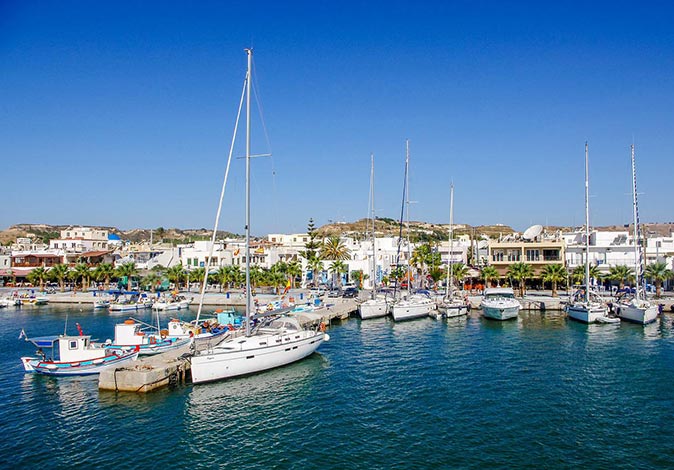
Between Samos and Rhodes lies the famous Dodecanese region which is also known as the Southern Sporades.
It’s an archipelago that makes a great sailing destination, filled with small coves and harbors on more than 160 islands and islets that are mostly uninhabited.
Samos and Rhodes are large and rich in archaeological sites. Take some time to explore those by car.
The Best Anchorages in the Dodecanese:
Kos, Ormos Livadia, and Tigani.
Also Read: Hidden Gems in Greece You Should Visit
4. Cruising Guides for Sailing in Greece
I use Navionics for navigation and although that works well, I always try to get a cruising guide for each country or region I visit.
Cruising guides not only give great information about marinas and anchorages and how to approach them, but also about what there is to do around the anchorage or marina.
For sailing in Greece the most popular cruising guides are written by Rod and Lucinda Heikel and published by Imray. They have four different books:
I recommend getting at least the Greek Waters Pilot, which contains a wealth of useful information!
5. Is Sailing in Greece Safe?
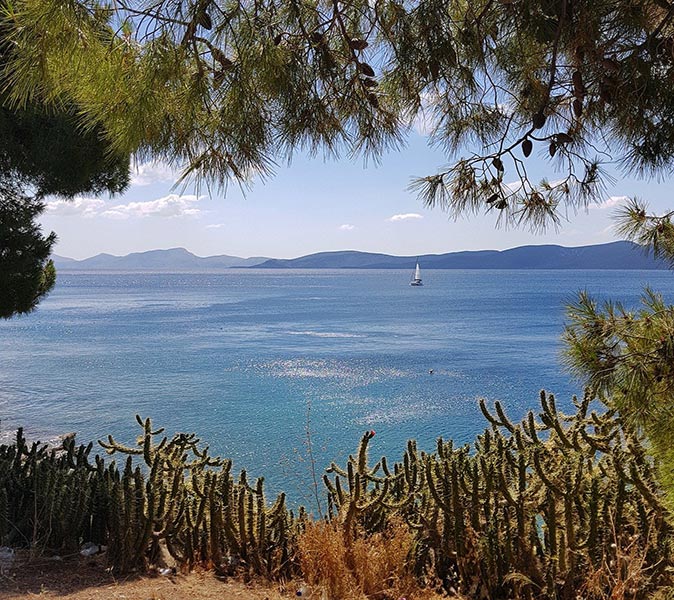
This is a question I get a lot, and a concern of mine as well each time I choose a new sailing destination. The last thing we want is for our dinghy to get stolen or our boat to be broken into.
Thankfully, generally speaking, sailing in Greece is safe. It’s a trouble-free country for cruising boats, in particular on the islands.
The main areas where theft is on the rise are around Athens and the major harbors and resorts.
While sailing around the Greek islands you don’t have to worry too much. Just secure your boat and belongings, as you would anywhere.
6. Renting a Boat in Greece – Different Types of Charters
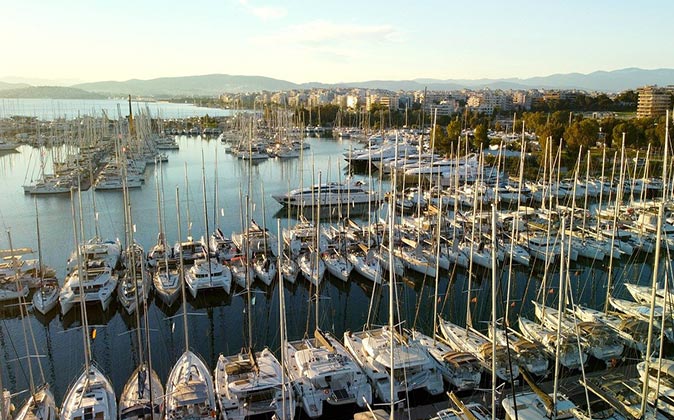
If you decide to charter a boat in Greece you have various options. You can choose a ‘bareboat charter’, meaning without a skipper, you can charter a boat with a skipper, or you could rent a yacht with a full crew.
Before exploring all the charter possibilities, it’s wise to decide where in Greece you would like to sail and base your decision on what’s available there.
Much like sailing in the rest of the Mediterranean, the weather can change quickly in Greece and that might mean you’ll have to move anchorage. And sometimes that means a long sail to a next protected anchorage. Preparing yourself well and checking weather forecasts daily is very important.
But if you don’t feel like skippering a boat yourself in these changing conditions, chartering a boat with a skipper, who knows the sailing conditions in Greece well and will make sure you are going to the best places depending on the weather, is a great option.
Plus, your skipper will help you to get to know more about local islands, the best anchorages, restaurants, bays, and beaches.
To step it up a notch, you can also rent a yacht in Greece with a full crew. Besides a professional skipper the crewed yacht will have a host, a professional cook, and, depending on the size of the yacht, one or more deckhands.
If you know how to sail, then renting a sailboat in Greece without a skipper is perfect. Don’t let the changing winds put you off, Greece is a great sailing destination that offers easy island hopping and so many places to explore!
Perhaps you are dreaming about sailing around the world? The Greek Islands are a great place to build some miles and gain sailing experience while also exploring one of the best sailing destinations in the Mediterranean.
Two popular websites to find boats to charter in Greece, for a wide range of budgets, are Sailo and Click and Boat.
Conclusion: Greece is a Great Sailing Destination!

Whether you want to charter a boat in Greece or sail your own boat here, Greece is an incredible sailing destination.
You could sail to a different island every day and see so much of Greece in just a few weeks.
But, I’d recommend taking your time. Explore different anchorages, swim in Greece’s beautiful waters, go ashore to get to know the rich history, and of course enjoy all the delicious food the country has to offer!
I hope you found this article helpful. And if you decide to go to Greece, have a great time and leave a comment below if you want to share any useful tips about sailing in Greece!
Also Read:
- An Itinerary for 3 days in Athens, Greece
- My Experiences Sailing Across the Atlantic
- Sailing in the Azores – Things You Should Know
- Chartering a Boat in Spain – Tips & Things to Know
- Sailing Around Saint Lucia: Anchorages, Sailing Tips & More
- Sailing Around Grenada: Everything You Should Know
- How to Sail Around the World? 7 Ways to Make it Happen
- 7 of the Best Places to Visit By Boat in Miami
Like this article about sailing and renting a boat in Greece? Pin it!

This article about sailing in Greece contains affiliate links. I may receive a commission for purchases made through these links, at no additional cost to you. As an Amazon Associate I earn from qualifying purchases.