
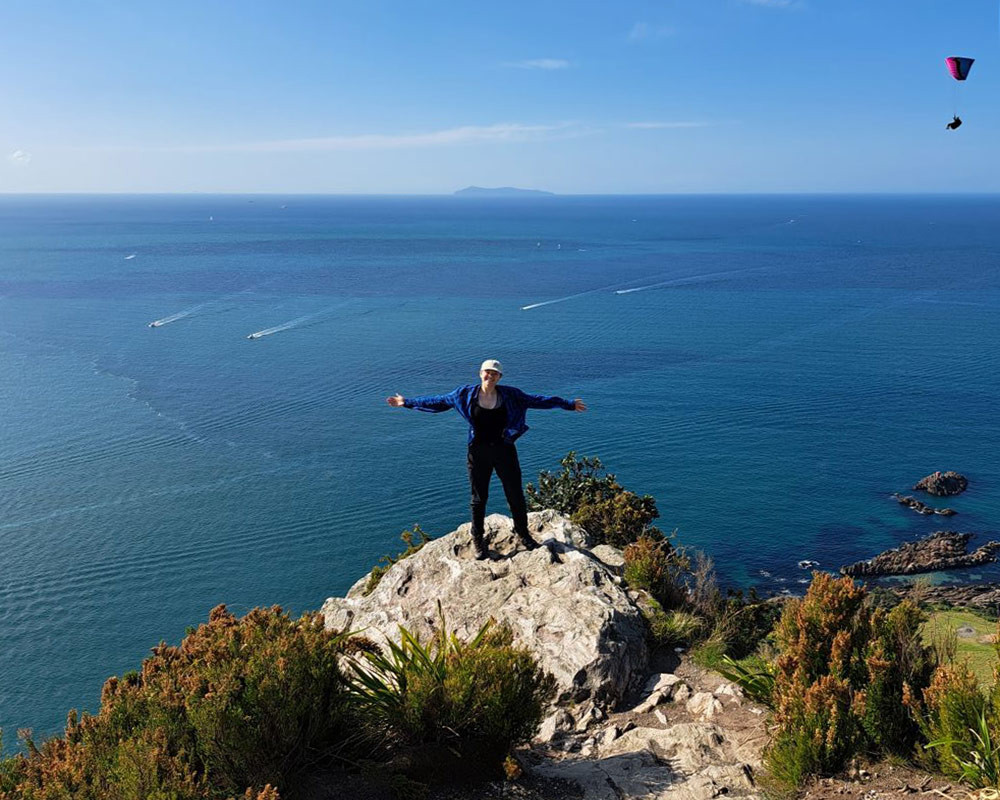
New Zealand (or Aotearoa in Māori) is, in my opinion, the most beautiful place on Earth.
After having traveled it top to bottom and front to back, I can safely say that this is a nation of friendly people, gorgeous scenery, endless coastline, and an incredible tourist scene.
What drew me here in the first place? The fact that New Zealand has a whopping 152 ecosystems, covering sub-tropical beaches, glaciers, fjords, mountains, pastures, and temperate rainforests. Almost all of these areas can be hiked and stayed in overnight with the Department of Conservation (DOC) hut network.
The mind-blowing variety of the landscape was a constant source of amazement for me. This fact (and a lack of funds) prompted me to move around a lot via work exchanges and a couple of short periods of paid work, rather than stay and work in one place for a long period, as many others on a Working Holiday Visa do.
Māori culture also drew me in as an Anthropology graduate. Observing the way the Māori language, knowledge, and tradition are woven into every part of New Zealand life was an absolute privilege.
One of my favourite memories is being invited into a marae (a Māori meeting ground) and having a haka performed to the school group I was assisting in Oamaru.
What else? There is so much to do in New Zealand. Favorites include whale-watching in Kaikoura, jetboating in Queenstown, glowworms in Waitomo, and hot springs in Rotorua. And let’s not forget the infamous Hobbiton, the film set of The Lord of the Rings.
Whatever you’re interested in, you’ll find it here in New Zealand. (Apart from a big nightlife scene, if we’re being honest.)
So, can you imagine yourself, beer in hand, on the beach in the Bay of Islands? Or perhaps skiing the slopes of Cardrona in your time off from instructing?
Read on to find out how, as I’ll use this article to explain exactly how the Working Holiday Visa works, and everything you need to know before you get to New Zealand.
Work and Travel in New Zealand: The Working Holiday Visa Explained
Working Holiday Visa 101
A Working Holiday Visa (WHV) is a short-term open work visa for young adults, usually 18-30 years old.
They are available in a number of countries globally, including the USA, Canada, Australia, the UK, Japan, Argentina, and many more, but eligibility depends on your citizenship.
The WHV system is primarily a youth exchange program to promote cultural and economic exchange, as well as to boost tourism.
I spent a year on a WHV in Aotearoa/New Zealand. The requirements for applicants are:
- Must be 18-30 years old (or 18-35 from select countries).
- Must be a citizen of one of 45 countries with an exchange agreement.
- Must not engage in full-time, permanent work.
- Must possess a return ticket or proof of ability to pay for one.
For stays of more than 1 year, there’s a mandatory medical exam including a chest X-ray. Applicants from China, Peru, Thailand, the Philippines, Vietnam, and Türkiye must also provide proof of English language proficiency.
What Can You Do With a WHV?

There are a wide variety of options available to you once you have a WHV. These include:
- Travel, including group trips and backpacking.
- Study programs of <6 months.
- Full-time work (for <12 months), especially seasonal work.
- Part-time work.
- Work exchanges (for example through platforms like Workaway).
- Volunteering.
According to Immigration New Zealand, travel should be the main priority of a WHV, while work and study should be ‘secondary intentions’.
How to Apply For Your WHV
Want to apply for the experience of a lifetime? Head to Immigration New Zealand to check your eligibility and the application process for your citizenship.
Luckily, the number of WHVs available per year for citizens of countries like the UK, the US and Germany means that you are incredibly unlikely to be denied on that basis. However, stricter rules and fewer visas are available for some other nations, such as Uruguay (only 200 visas per year) or Taiwan (600 visas per year). This means that, depending on where you are a citizen, you may have a slightly harder time getting in.
The base price for a WHV is now NZ$770 (around US$440), and if medical checks are necessary the process can easily cost several hundred dollars more, a cost which may not be obvious on the immigration website. Keep an eye on your bank account because you may also have to prove financial eligibility during entry.
Warning! During the application process you can specify a date from which you will be eligible for entry, and, if you’re approved, you have 364 days from that date to enter New Zealand. If you don’t enter the country within those 364 days, the WHV will be void!
Next Steps to Make the Most of Your WHV

You’ve been approved? Great! Welcome to the adventure!
Remember, you can exit and enter the country as many times as you like while your WHV is valid, but you must enter within a year of approval to validate the visa.
There are a few important steps when you’re getting started in New Zealand. You’re going to need:
- A New Zealand bank account: I used my Wise account for simplicity, but this did create extra charges when withdrawing money from ATMs.
- An IRD number: This is the tax identification number which you’ll need for any paid job in New Zealand.
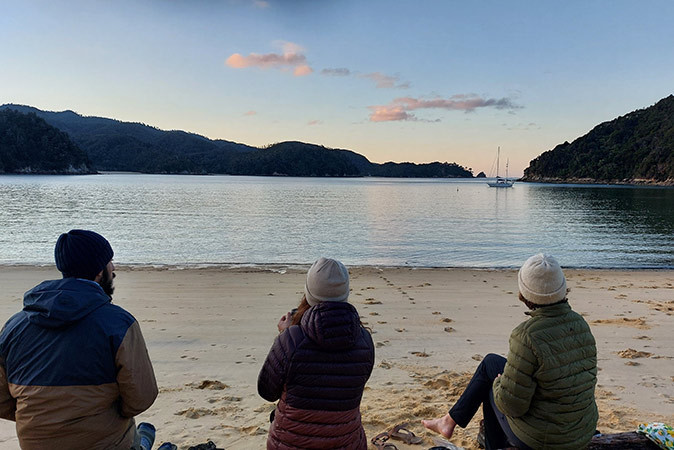
- Accommodation: renting short-term is pretty easy through Facebook Marketplace and other forums. Or you can stay long-term at a discounted rate in most hostels (check out my favourite hostel, Tasman Bay Backpackers).
- Wheels: many people on WHVs buy a secondhand car or camper to then sell on at the end of the year, but be careful of the rise in price at the beginning of tourist season (December-February).
What I Learned On My Working Holiday Visa
The list is endless. To give you an idea of some of the incredible experiences I had during my year in the country:
I planted trees in a wildlife restoration project (Wild Waikawa) in Marlborough, planting over 100 seedlings in the hard-to-reach inclines of the forest.
This was one of the most impactful opportunities of my life, spending 10 days living and working in the forest of a sacred mountain. I learned a hell of a lot about plantlife, trapping, and conservation here.
I saw the constellations, both inside and out. New Zealand is famous for its glowworms, one of many forms of bioluminescence found there, and caves like Waipu in Northland have the entire universe inside their cavernous interiors.
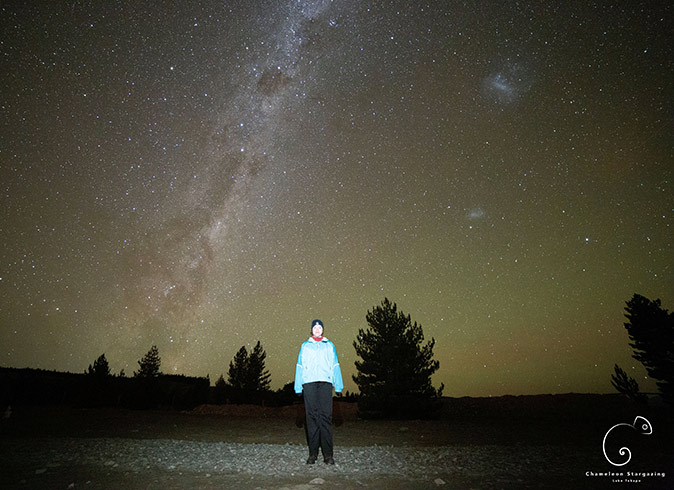
I also saw the actual constellations and the Milky Way on a guided stargazing experience at Lake Tekapo with Dark Sky Project, the largest in the world. Nothing could have prepared me for that view.
I was followed by dolphins on a tourist boat where I worked for a few weeks in the Bay of Islands. The local pod of bottlenose dolphins liked to put on a show, and one day they swam right under the hull, right beneath my feet.
There is nothing like the magic of the ocean on a sunny day to make you glad to be alive. Here I learned about the evergreen history of the Māori iwi and their relationship with the wildlife around them.
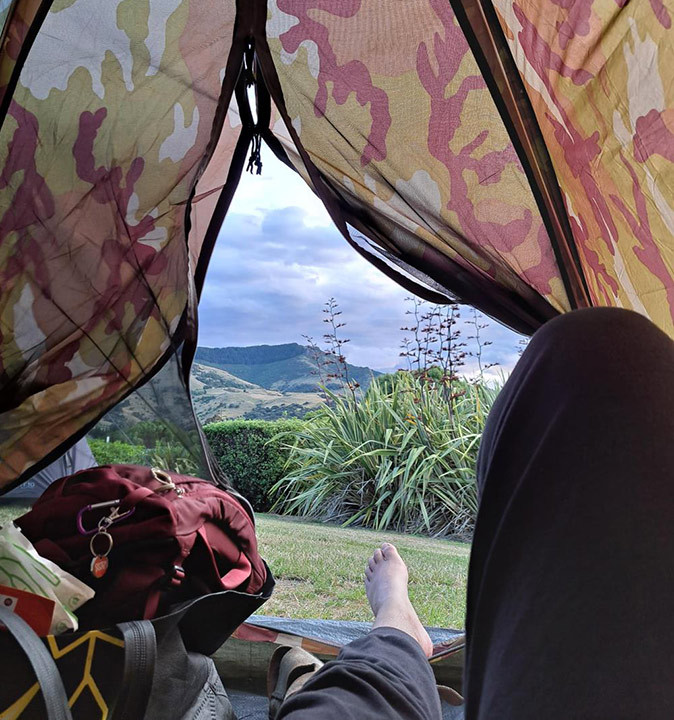
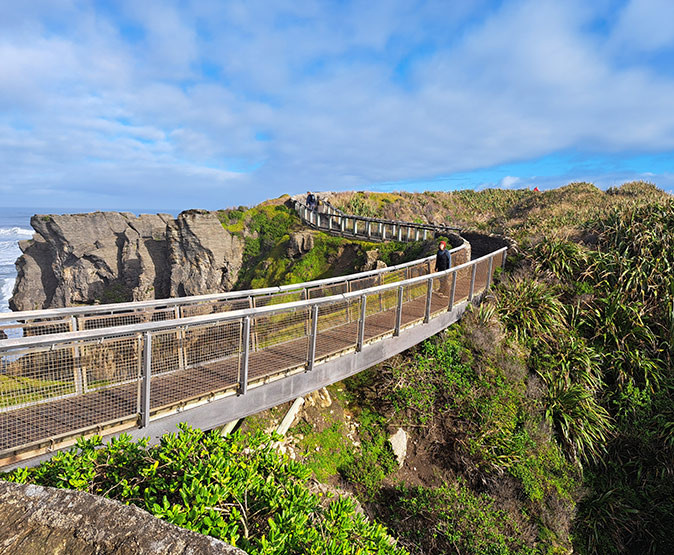
I road-tripped and camped with strangers along the West Coast of the South Island, where I met the sneaky weka (a flightless bird) and lost my beloved hat. But most importantly, I saw the otherworldly beauty of the West Coast landscape, with gorges, glaciers, temperate rainforest, and black sand beaches, all up close.
I spent all the rest of my money on my portion of the fuel and wound up in Nelson where I had to stay and get a job for a few months. Worth it!

And greatest of all, I learned the art of resilience. Having struggled with anxiety disorder for as long as I can remember, my year without plans, without funds, without expectations, was just about the opposite of my comfort zone.
This year gave me the freedom to make mistakes and throw myself into new skills and experiences I’d never tried before. And once you’ve gone to the toilet in a bucket in an off-grid Tiny House, you can pretty much handle anything.
I could go on, but every day was an experience worth writing essays about. (And I have!)
The only question that remains is this: do you want to be changed by New Zealand, too?
Useful Resources
From one backpacker to another, here are some links to useful resources for your time in Aotearoa/New Zealand:
- Seek – New Zealand’s main online job site
- PickNZ – agricultural/seasonal job site
- TradeMe – a popular buy and sell page
- BookMe – activity discount site
- InterCity – national coach service (bulk discount passes available)
- DOC Campsite Pass – annual campsite pass at a discount
- Rideshare groups like New Zealand RideShare Backpackers
- Community groups like New Zealand Backpackers
Final Thoughts: Is a Working Holiday Visa in New Zealand Worth It?
If you’re considering a Working Holiday Visa in New Zealand, the short answer is yes, and the longer answer is that it might just be one of the most rewarding years of your life.
A WHV gives you the rare freedom to slow down, move around, try different jobs, and experience New Zealand beyond the usual tourist route.
Whether you spend your time fruit picking, working in hospitality, volunteering on conservation projects, or road-tripping between short-term jobs, the flexibility of the visa allows you to shape the experience around your interests, budget, and energy levels.
New Zealand isn’t always cheap, and life on a Working Holiday Visa isn’t always easy, but that’s part of what makes it meaningful. You’ll learn how to adapt, you’ll connect with people from all over the world, and you’ll say yes to opportunities you might never have considered at home.
If you’re looking for more than just travel, if you want adventure, growth, and stories you’ll tell for the rest of your life, a Working Holiday Visa in Aotearoa might be exactly what you’re looking for!
Also Read:
- Things to Know Before Traveling to New Zealand
- A Practical New Zealand North Island Itinerary
- The Perfect New Zealand South Island Road Trip
- What’s it Like to Live in Christchurch, New Zealand
- How to Find the Cheapest Flights
- What to Look For in Travel Insurance
This post contains affiliate links. I may receive a commission for purchases made through these links, at no additional cost to you.