

There are several must see places in Cuba but here I want to focus on the historical places in Cuba you really have to visit.
Cuba is quickly becoming a popular tourist destination and it’s definitely one of my favorite places in the Caribbean.
With its rich history, lush tropical landscape, and incredible people the country has a lot to offer.
The island, the largest in the Caribbean, has sugar-white beaches and is dotted with tobacco fields. Salsa music plays in the dance clubs and cabaret shows are performed at the famed Tropicana.
Cuba is a remarkably beautiful island. And it’s a country that has maintained its character and authenticity throughout the years.
The pristine state of much of Cuba’s countryside and the lack of development in many rural areas have helped preserve some of the world’s most awe-inspiring wildlife and endemic flora & fauna in this part of the world.
Cuba has an impressive 263 protected natural areas, which cover nearly 22 percent of the country’s territory.
If you want to experience some of the country’s unspoilt sights, there are nine UNESCO World Heritage sites in Cuba – areas of cultural or physical significance that are protected as a result.
And if I have to make a selection of things to see in Cuba, below are the five UNESCO World Heritage sites in Cuba I recommend visiting.
5 Historical Sites in Cuba You Should Visit
1. Old Havana and its Fortification System
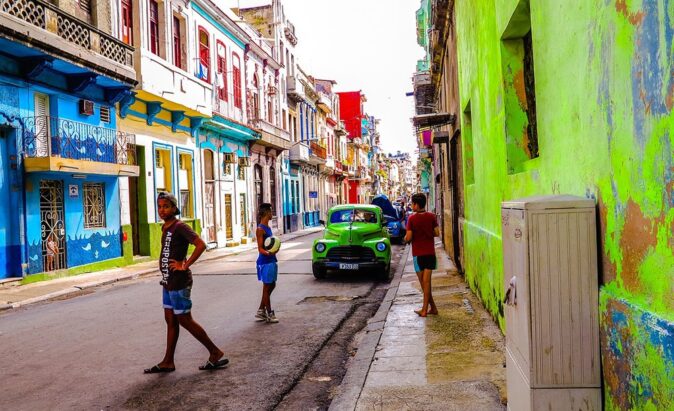
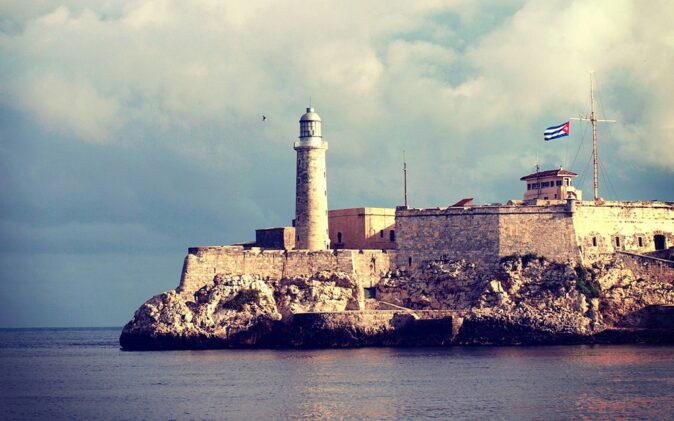

Havana was founded in 1519 by the Spanish and the city’s core, Old Havana, still retains much of its character to this day.
Grand, palm-filled squares are surrounded by streets with imposing churches, pastel-colored houses, tiny kiosks, and 1950s-era cars.
The former city walls still stand, as does its complex system of fortifications that protected the city. For example, the Castillo de Los Tres Reyes del Morro, which guards the entrance of the canal, is an impressive sight you have to see.
You can still visit the five large plazas and outstanding buildings that were evident in its early setting, with each of them having their unique architectural character.
It’s amazing to feel the authenticity and vibrant atmosphere that’s still evident in a city that oozes character.
Havana is undoubtedly one of the historical sites in Cuba you really can’t miss!
If you have the time, I’d recommend spending at least 3 or 4 nights in Havana to soak up its unique vibe, get to know its people, and explore its historical sites.
Tip: Stay in a ‘casa particular‘ to really get to know Cuba.
A casa particular is a home owned by a Cuban. They rent out rooms or sometimes entire apartments. This helps them gain access to foreign currency which they desperately need, and it gives you an opportunity to experience local life, and help a local family.
And, in case you wondered, or worried, staying in casas particulares is completely legal. And you can book many of them on Airbnb.
Also Read: What Life in Havana is Like – Interview With an Expat
2. Trinidad and the Valley de Los Ingenios
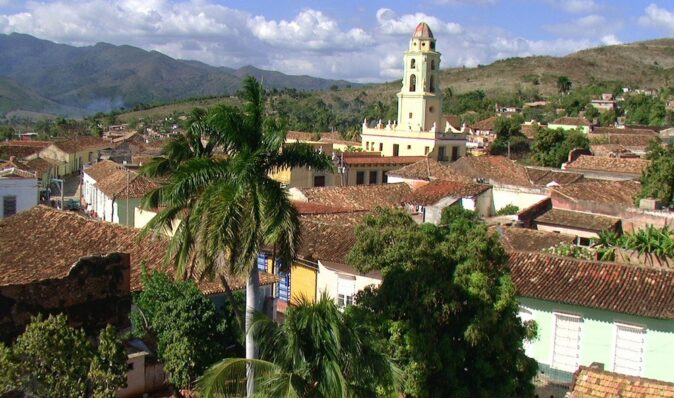
Valley de Los Ingenios (or Valle de Los Ingenios in Spanish) is also known as the Valley of the Sugar Mills.
It is a stunning series of three interconnected valleys; San Luis, Santa Rosa, and Meyer, about 12 kilometers (7.5 mi) outside of Trinidad.
The area became the world’s central hub for sugar production from the late 18th to the late 19th century. Both the climate and the soil were perfect for cultivating sugar cane, which is why the industry flourished in this area.
The Valley holds a lot of cultural significance and the former plantations, mill buildings, and archaeological sites are incredibly well preserved to this day.
Trinidad itself is a quaint town of cobblestone streets, pretty plazas, and an aesthetically pleasing mix of 18th and 19th century buildings.
The town’s neo-baroque main square, Plaza Mayor, is surrounded by grand colonial buildings.
Museo Romántico, in the restored Palacio Brunet mansion, and Museo de Arquitectura Colonial display relics from the town’s sugar-producing era.
Also Read: An Ultimate Guide to Trinidad
3. Viñales Valley (Valle de Viñales)
This dramatic and striking Valley in west Cuba is quite a breath-taking sight.
Encircled by mountains and dotted with dome-like limestone mogotes that rise as high as 300m, seeing this lush landscape is a unique must-see in Cuba.
If you’re looking to see authentic Cuba, Viñales Valley is a great place to go as the traditional methods of agriculture still survive here and remain unchanged.
The area is best known for the cultivation of tobacco and the plantations are fascinating due to their cultural and historical significance.
The area is great for hiking, cycling, or horseback riding and there are several caves to explore.
Tip: rent a car and take a road trip from Havana to Viñales!
4. The Historic Center of Cienfuegos
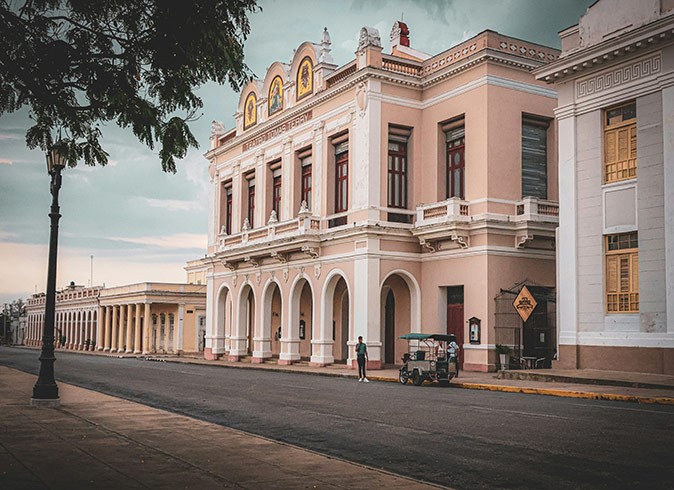
Cienfuegos is often referred to as La Perla del Sur (the Pearl of the South), and once you set foot in this elegant little city, you’ll see why.
Unlike other Cuban towns with Spanish colonial influence, Cienfuegos was founded by French settlers in the 19th century, and that difference really shows in its layout and architecture.
The city is beautifully organized around Parque José Martí, a grand central square with neoclassical buildings, a gorgeous cathedral, and one of the few triumphal arches in Cuba.
Strolling through Cienfuegos, I was struck by how peaceful and well-kept everything felt.
Don’t miss the Palacio de Valle on the Punta Gorda peninsula with its mix of Gothic, Moorish, and Art Deco styles, overlooking the bay. It’s one of the most unique buildings I’ve seen in Cuba, and the rooftop terrace is a great place for a drink with a view.
If you’re planning a trip between Havana and Trinidad, Cienfuegos makes for a perfect stopover to soak in more of Cuba’s rich history and its French-Caribbean flair.
5. The Historic Centre of Camagüey
Camagüey is one of Cuba’s oldest cities, and it stands out for its quirky, maze-like layout.
Built deliberately to confuse pirates (seriously!), the city’s winding streets are like a giant labyrinth.
Walking through Camagüey, you’ll come across pastel-colored colonial buildings, lively squares, and hidden courtyards. There’s a real artistic vibe here, maybe because it’s the hometown of so many Cuban poets, painters, and musicians.
The city is also known for its tinajones, large clay water jars you’ll spot on almost every corner. Legend has it that if you drink from one, you’ll always return to Camagüey…
The historic center is less touristy than Havana or Trinidad, which makes it feel even more authentic. It’s a place to slow down, grab a coffee in one of the cute cafés, and just enjoy the local rhythm of life.
If you’re exploring central Cuba, Camagüey definitely deserves a spot on your itinerary.
Why These Are 5 Must-Visit Historical Sites in Cuba
These historical sites in Cuba will give you a real idea of what life in Cuba is like, and what it has been like in the past.
I highly recommend traveling to Cuba sooner rather than later. Visit my favorite UNESCO World Heritage sites and enjoy everything this beautiful tropical island has to offer.
There are many activities in Cuba for any type of traveler and many incredible places to visit, but if you ever wondered “where should I go in Cuba?”, definitely add these 5 UNESCO World Heritage Sites in Cuba to your bucket list!
Each of these spots will offer you an authentic experience and a unique insight into Cuban history.
When is the Best Time to Visit Cuba
The best time of year to visit Cuba is from January to May. The weather is nice and warm but not hot and it is less crowded with tourists than around Christmas or in July & August.
Tip: make sure you have a VPN when you travel to Cuba. You’ll most likely need it to access your banking app and many other international websites and apps.
And, bring cash. Apart from the fact that not all credit cards work in Cuba, converting cash to Cuban Pesos will give you a much better exchange rate than using ATMs.
Have a great time exploring these historic places in Cuba!
Also Read:
- What is Life in Havana Like?
- 7 Best Things to Do in Havana
- The Best Caribbean Islands to Visit & Why
- Living in Cuba – Pros, Cons & Other Things to Know About Life in Cuba
- How to Find the Cheapest Flights to Anywhere in the World
Havana is so high on our bucket list! A friend has recently been there on his honeymoon and told us wonders about Cuba. I’d love to see the city walls too!
Such a great guide to these three sites! I had no idea that they were UNESCO World Heritage sites in Cuba. So cool.
So excited to find this post. I’m trying to go to Cuba in early January and it’s great to know that’s a good time to go. So excited! Thanks!
Havana is so high on our bucket list! A friend has recently been there on his honeymoon and told us wonders about Cuba. I’d love to see the city walls too!
I so want to visit Cuba! I’m in the east of Mexico at the moment and meeting so many travellers who have just come from there and love it. I wish I could go, but I’m digital nomading and I know the internet is too weak there for me to work. Another time! Thanks for sharing these tips!
Great suggestions. Every time I think of Cuba I imagine the old cars on the colourful streets of Havana and the beaches. Somehow I never consider its agricultural side, the plantations, the tobacco fields. Definitely a good reminder that a great part of the island is actually that, so definitely something worth seeing.