
What Is expat life in the Maldives like?
I was living in the Maldives myself several years ago. And that is why I’ve been looking forward to doing this interview with someone who is still enjoying expat life here.
I arrived in the Maldives just after a coup, and I don’t think I had any idea about all the issues going on in this beautiful island nation.
Within a year I decided to leave again because I couldn’t deal with the corruption, injustice, and lack of freedom anymore.
Yes, as expats you have easy access to amazing resorts, yachts, and incredible diving, all at discounted rates.
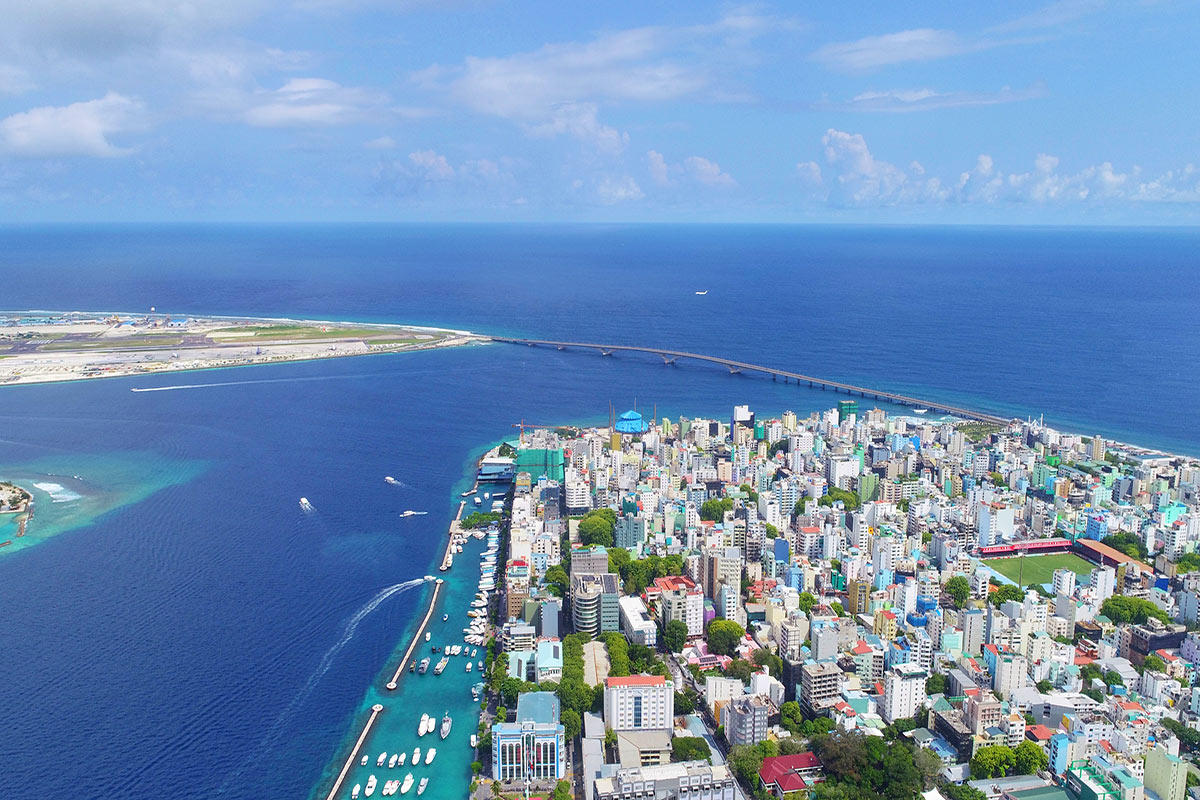
But the rest of the time you live in a very strict Muslim country, either on an extremely densely populated island or inside a resort, which expats often refer to as ”living in a golden cage”.
While I left, other expats stayed and got used to life in the Maldives. One of them is Ruth, who has lived here for almost 10 years now, and I am very happy to share her story.
In the Ask an Expat series I interview people living all over the world but outside of their home country. I try to help paint an honest picture of the ups and downs of life abroad, share tips for anyone thinking about moving abroad, and provide information about the place the expat now calls home.
Living in the Maldives

Location: Hulhumale, Maldives
Name: Ruth Franklin
Age: 47
Hometown: Birmingham, UK
Her Story:
“I discovered the Maldives over 15 years ago, visiting as a scuba diver in search of manta rays and whale sharks.
I was fortunate and found a reasonably priced resort that allowed me to stay and indulge in my hobby. But then came along development, and my well-loved resort went luxury and beyond my price range.
So I moved to scuba diving from a boat (liveaboard diving) which, over the years, enabled me to see more and gain a better understanding of local island life.
I always considered myself lucky to have found a group of Maldivian friends. They invited me to their family homes for dinner, to break fast during Ramadan, and to share afternoon hedika (a traditional snack) and beetle nuts.
My love and appreciation of Maldives life, its people, its culture, and its traditions was almost immediate. It resulted in me visiting the archipelago on over 30 occasions in the years since.
In 2012 the opportunity to relocate arose. I had met a businessman who asked if I would consider going into business together to run a travel agency. Not one to decline a challenge I resigned from my retail career, moved to the Maldives and formed a tour company specializing in local island tourism.”
What Do You Like About Life in the Maldives?
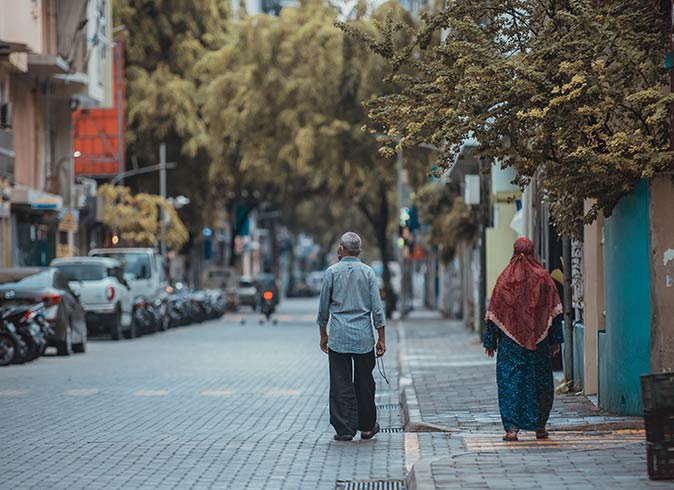
“The people. They are warm, friendly and hospitable and have welcomed me into their community.
I am fortunate to have been ‘adopted’ by two local families now that I live in the Maldives, and I am treated both as a sister and a daughter.
To get the best out of living in the Maldives, I believe you should get to know local people.
I appreciate that I am lucky because I already had a circle of friends and contacts when I moved here.
But for those considering moving to the Maldives, my advice would be to take time to hang out with Maldivians. You will meet them through work, they could be your neighbors, or if you have school-age kids then you will meet parents at the school gate.
Surely, one of the points of moving to another country is to experience different cultures.”
What Do You Dislike About Life in the Maldives?
“There is nothing I actually dislike.
Yes there are aspects that frustrate me. The time it takes people to answer emails or get a job done for example!
There is one thing I have learnt about the people from the Maldives and that is that they enjoy a slow-paced, stress-free life. While we may think they are slow, they are perfectly on time according to themselves!”
Is There Anything You Miss About Home in the UK?
“Maybe occasionally the seasonality of the weather.
Yes, it’s lovely to be able to wake up every day, look out the window and see blue skies and sunshine. But I have to admit I like a good rainstorm, and it makes a pleasant change to wake up and look out on a cloudy day.
People often presume I miss Western food but I don’t miss any particular food items. In Malé, the capital, a wide range of fresh fruit and vegetables are available and with supermarkets such as Redwave and Fantasy in both Hulhumale and Male everyday staples are easily on hand.
But, as far as food shopping is concerned, buy it when you see it! If a favorite brand suddenly pops up on the shelf, you don’t want to leave it as you’ll never know if it will be back again!”
What Is Your Favorite Thing to Do in the Maldives?

“Scuba diving! But I hate to say that I dive less now than when I was visiting as a tourist.
I also love having typical evening tea with my friends. Walk into any coffee shop, café or restaurant between the hours of 3pm and 5pm and you will find an array of bite-sized savory and sweet delights (hedikaa). Select as many as you wish and then, to follow true Maldivian tradition, accompany them with a mug of black tea.”
Note: Alcohol is illegal in the Maldives outside of resorts. This makes nightlife look very different if you’re coming from a place with a culture of meeting friends for drinks in bars.
What Is Your Favorite Place to Hang out in the Maldives?
“On the beach with friends, having coffee under the stars. It is fair to say that in the evening if you can’t find me at home, this is where I will be!
In Malé there is a growing number of new trendy coffee shops so Nescafe and Lavazza are now no longer the only coffee options!”
Is the Maldives Safe as a Place to Live?
”In many ways, yes—but it depends on where you’re living and what kind of lifestyle you’re after.
If you’re living on a resort island, the environment is generally secure and well-managed. However, living in Malé is a very different experience, especially for women.
Malé is a bustling city with a dense population. While violent crime is relatively rare, many women, both locals and expats, will have had issues with street harassment. This includes catcalling, unsolicited comments, and, in some cases, physical intimidation.
This article in The Guardian highlights that Maldivian women often feel like “second-class citizens,” facing persistent intimidation and abuse when they step outside.
And while I generally feel safe living in the Maldives, and I love living here, there are definitely a few things to keep in mind. On the local islands (the ones where Maldivians live, not the private resort islands), the culture is quite conservative. There are certain unspoken rules about how to dress and behave, especially as a woman.”
What Is the Expat Community like in the Maldives?
“I am one of a small number of expats in the Maldives who don’t really mix with the expat community socially. I have a couple of expat friends who I meet for a coffee occasionally but otherwise my friends are all locals.
But, there is a tight-knit community of expats in the Maldives who often organize get-togethers, boat trips, trips to resorts, etc.
Hulhule Island Hotel, close to the airport, is the only place around Malé that serves alcohol. It is therefore generally seen to be a meeting point for expats, especially on weekends.
There are a few Facebook groups for expats in the Maldives that will keep you up to date on social opportunities both in Malé and at resorts. ”
Also Read: My Top 3 of Best Resorts in the Maldives & Additional Tips for Going to the Maldives
Any Tips for Moving to / Living in the Maldives?
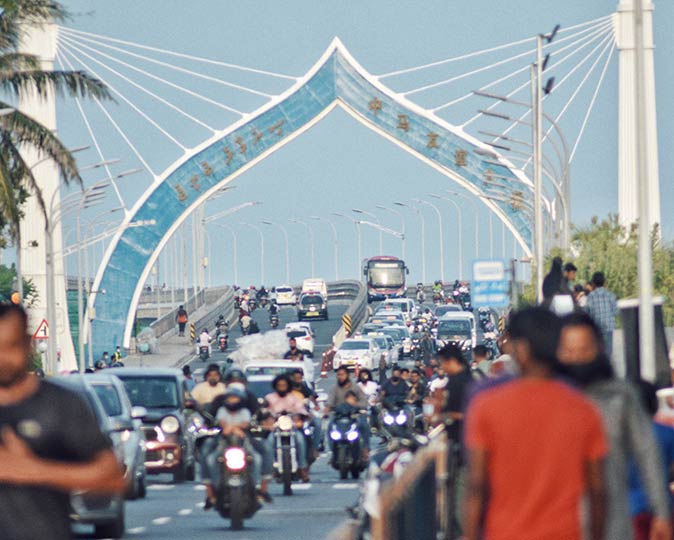
“You have to come with an open mind. Be prepared to make compromises.
Appreciate that living in the Maldives is not the same as holidaying here, especially if you are living on a local island and your experiences have only ever been resort life.
Accept the country with all its flaws, regulations, and bureaucracy, and understand that you may experience frustration because of these.
Accept that whilst you may not agree with government policies and regulations, it is not your place to rock the boat. By all means, discuss and debate with family and friends, but do not think that you can impact a political change.
If making an impact and supporting local communities is something that gets you buzzing, connect with local NGOs, girl guides, or scout groups. Support beach cleanups and community projects. Your skills and abilities will be welcomed.
Whilst access to food and materialistic items has improved in the time I have been living here, it has made me appreciate that life isn’t all about having the best of everything.
Back in the UK I spent the last 10 years living in London. I hate to think how much money I spent on clothes, shoes, and new must-haves for my home. With minimal shopping opportunities I have scaled down my belongings big time. I have what I need for my life to be comfortable and I may add to my wardrobe once a year when I visit Europe.
If accommodation is not provided by your employer then renting an apartment in Malé or Hulhumale is getting expensive. Expect to pay a minimum of US$1000 per month for a simple one bedroom apartment.
Estate agents and removal companies don’t exist in the way we know them in the western world. Recently Facebook pages have popped up featuring rooms and apartments for rent, but other than that, it’s mainly word of mouth.
If you are considering taking on a job at a resort there are some key points to bear in mind.
First of all, you will most likely be living in shared accommodation. In many resorts, staff are not able to mix with guests when they are off duty, and sometimes they are confined to the facilities available in the designated staff area.
It is not always easy to leave the resort even on your day off, especially if you are not located close to Malé.
I have not worked in a resort myself, but I always considered it to be like living in a bubble or a golden cage. You either love it or hate it and it has never been something that appeals to me.

And then there are some other things to be aware of. The Maldives is a Muslim country; therefore bikinis are a no-go on local islands unless there is a bikini beach or a private garden/balcony. Locals are far more tolerant these days of western dress, and shorts, sundresses and vest tops are not frowned upon as much anymore.
However, my advice would be to dress modestly and respect the Maldivian culture.
The Islamic faith underpins day-to-day life and this is something that you should be aware of. You will hear the call to prayer five times a day. You, therefore, may want to check how close your apartment is to the mosque!
On Fridays, ferries do not operate and during Friday prayer islands are at their most peaceful and still.
Islamic festivals such as Ramadan, Hajj, and EID are strictly observed.
During Ramadan fasting takes place and cafes and restaurants are closed during daylight hours. It is against the law to eat, drink, or smoke during this period, and whilst foreigners will not be fined, out of respect for the community you are expected to eat, drink, and smoke only behind closed doors.
Working hours during this period are considerably reduced, and the pace of life becomes even slower than normal.
I guess the point I am making here is that if religion does not play a large part in your day-to-day life now, keep in mind that when you move to a local island in the Maldives it will have some bearing, however small, on your everyday life here.
One other big consideration is alcohol. Laws prohibit alcohol from being drunk on all local islands. Expats often visit resorts for a day or an evening to go to the bars there. This can be a costly habit though, as resorts often charge entrance fees, drinks at resorts aren’t cheap and on top of that, there is the cost of a speedboat transfer.
Look out for expat social events if you want to meet up with other expats for a drink or a party.
Pork is also forbidden so don’t expect bacon for breakfast!
One final consideration is that local islands are not always as pristine as the picture-perfect resort islands. Though they’re catching up and are still beautiful in their own way, be forewarned that there are still some growing pains and there is definitely room for improvement.
The Maldivians historically threw their waste into the ocean. That was no real issue in the days when waste was predominantly food waste and biodegradable. Then came along plastic, and then came one million visitors. Add all this together and we are presented with a country that has a significant challenge regarding waste removal.”
Also Read: Things to Consider Before Moving to Another Country
Any Resources You Found Useful During the Process of Moving to and Building a New Life in the Maldives?
“I didn’t really refer to any websites other than Immigration.gov.mv
However, if you are moving to the Maldives as part of a business venture, then I would highly recommend reading all that is available on the following websites in order to know what is expected from businesses: Mira.gov.mv & Trade.gov.mv
Don’t expect to be told all there is to know. More often than not you’ll stumble upon updates as opposed to being informed formally!”
Is There Something You Just Have to See or Do When You Are in the Maldives?
“Get into the water! Snorkel or scuba dive. And if you don’t dive, take the opportunity to learn to dive while you live in the Maldives.
With the water a consistent 27-28 degrees Celsius (81-82ºF) there is in my opinion no better place to learn to dive.
No matter where you are based in the Maldives, great snorkeling and diving opportunities are on your doorstep.”
About Ruth
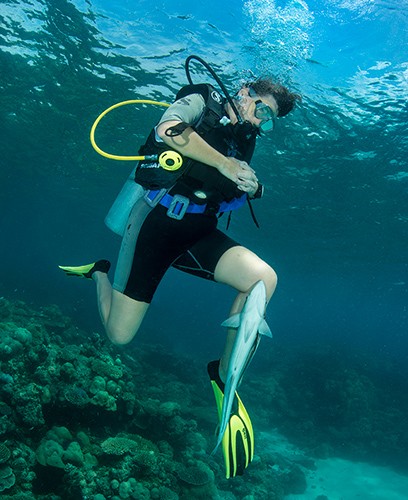
Ruth Franklin has been living in the Maldives for almost 13 years. She is originally from the UK where she worked at retailer British Home Stores for 27 years.
Ruth moved to the Maldives in 2012 and is the co-founder of Secret Paradise Maldives, a tour company specializing in day tours and multi-day tours throughout the Maldives which allows tourists to engage with locals.
About the Maldives

The Maldives is a tropical island nation in the Indian Ocean. It is composed of 26 ring-shaped atolls, which are made up of around 1,200 islands.
The Maldives is known for its beaches, blue lagoons, and extensive reefs.
Only around 200 of the country’s islands are inhabited, and another 100+ are used as resort islands.
Every resort in the Maldives is located on its own private island with stunning white-sand beaches and an incredible reef surrounding the island.
The unrivaled luxury and incredible natural beauty make the Maldives an obvious choice for a vacation of a lifetime.
The Maldives’ Political Situation
The Maldives was ruled for about 30 years by Maumoon Abdul Gayoom, who definitely wasn’t known for being democratic. He held onto power through strict control, jailed people who spoke out against him, and kept winning elections that were, let’s just say, not exactly fair.
Things finally changed in 2008 when, under international pressure, the Maldives held its first real democratic elections. Mohamed Nasheed, a former political prisoner and climate activist, won—and for a while, it felt like real progress.
But that didn’t last. In 2012, Nasheed was pushed to resign after a series of protests and what many still describe as a coup. His vice president, Mohammed Waheed Hassan, who had support from people close to the old regime, stepped in as president. During that time, there were serious reports of police violence and human rights violations, especially against Nasheed’s supporters.
Fast forward to the most recent election in September 2023, and Mohamed Muizzu, from the Progressive Party of Maldives (PPM), narrowly beat the sitting president.
Muizzu is closely linked to the pre-democracy era, and his win raised a lot of eyebrows, especially among people worried the country might slide back toward more authoritarian rule. He’s also shifted the Maldives’ foreign policy direction, moving away from India and cozying up to China, which has sparked even more debate.
Culture & Religion
Maldivians are almost entirely Sunni Muslim, and the local culture is a mixture of South Indian, Sinhalese, and Arab influences.
Alcohol, pork, drugs and public observance of non-Muslim religions are banned on the inhabited islands. The resort islands and liveaboard boats, however, do not have to follow these laws, and it feels like here almost anything goes.
“I first came to the Maldives with no idea how different it was to the rest of the world. How fragile or challenging life seems here at the mercy of the sea, with so few resources locally available.
It’s such a contradiction that this is also where to find some of the world’s most luxurious hotel properties.” – Tom Masters, writer for Lonely Planet
Are you thinking about traveling to the Maldives?
Also read: My Top 3 of the Best Luxury Resorts in the Maldives and, if you love scuba diving, How to Volunteer in the Maldives as a Reefcheck Diver With Biosphere Expeditions
Like this article about expat life in the Maldives? Pin it!

Featured image: life in Maldives on the densely populated capital city Malé.
Hello Sanne,
I’ve been living as an expat in the Maldives for 11 months between 2016-2017. I worked as a civil engineer at Raa Atoll. Now I am planning to work there again. BUT, at that time I was single. Now I am married and have 2 children. Could you please give me information about living in the Maldives with a family, esspecially aproximate cost of accommodation & food per month?
Thank you. Have a nice day.
Hello Hayati,
Thank you for your comment.
I’d recommend asking this question in the Facebook group ‘Expats in Maldives’. There are several people in that group who have children, so they will be able to give you a more accurate answer.
Hello, my husband and I are considering moving there. My husband is a clinical health care assistant. Also certified for home health care. Are there job opportunities there and how is the pay?
Hi Aura,
The pay for skilled expats is generally good in the Maldives, especially compared to the local cost of living. Don’t expect the best expat packages such as you might expect in a place like Dubai, but you should be able to experience the Maldives comfortably. As for current jobs, I’d recommend posting that question in one of the ‘expats in Maldives’ groups on Facebook.
Hi
I’m looking to visit for a couple of weeks mid 2024! I was hoping to get backpacker accommodation / hostel but there’s appears to be nothing.
Any help?
Mike. West London
Hi Mike,
No, the Maldives is definitely not a great backpacker / budget destination. Stay on local islands instead of on resort islands to find cheaper accommodation, but it will still generally be hotels and guesthouses, not hostels.
I want to move to Maldives from Nigeria, how hard would it be for me to settle there?
You will have to find a job before you go to the Maldives, so that the company can help you get a visa. I’d recommend either contacting businesses in your industry that are located in the Maldives to see if they have job openings, or join the Facebook group for expats in the Maldives to ask if anyone knows of any suitable jobs available.
Very great advice.
Although I’ve just returned to the Maldives, this was useful to read and a refresher on my first experience. Sincere thanks
Very helpful article about life in the Maldives. Thanks
Very helpful article. Thank you, Sanne
I already planned a visit to the Maldives for next February and I was looking for hanging out groups and people for sharing experiences.
Very helpful. Thank you