

In this guide, I want to share with you everything you need to know about how to get to Machu Picchu and how to make the most of your experience.
Peru is a very diverse country with stunning nature and a rich history. In the highlands of Peru, near the city of Cusco, is where you can find the magnificent ruins of Machu Picchu, and no visit to Peru is complete without a tour of Machu Picchu.
Machu Picchu is the most familiar icon of Inca civilization. The ruins of Machu Picchu however, to this day remain a bit of a mystery. Nobody knows exactly why they were constructed and why it was only inhabited for around a hundred years.
Most archaeologists believe that Machu Picchu was constructed as an estate for the Inca emperor Pachacuti, but there are several different theories.
The Incas built Machu Picchu around 1450 but abandoned it a century later at the time of the Spanish Conquest. Although known locally, Machu Picchu’s existence was not known to the Spanish during the colonial period and remained unknown to the outside world until American historian Hiram Bingham brought it to international attention in 1911.
The Incas were master architects and builders, and visiting Machu Picchu will give you a unique look into their world.
So, let me tell you how to travel to Machu Picchu and what else you need to know.
How to Get to Machu Picchu
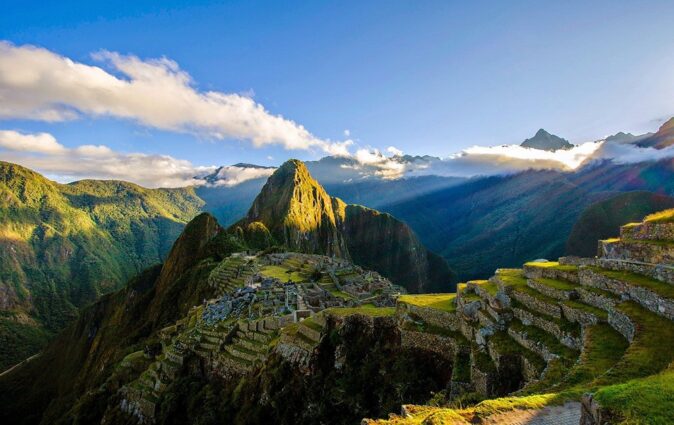
Once you’ve decided to go to Peru and visit Machu Picchu you’ll then have to plan how to get to Machu Picchu.
Most travelers get to Machu Picchu by train, either with PeruRail or Inca Rail.
Trains depart from Cusco (San Pedro or Poroy station) and the Sacred Valley (Ollantaytambo or Urubamba). Due to road restrictions near Ollantaytambo, some services are now bimodal, meaning a bus + train combination is included in the journey.
Travel time varies from 1h 40m (from Ollantaytambo) to over 4h (from Cusco San Pedro).
PeruRail has a range of options, from the budget-friendly Expedition to the panoramic Vistadome and the ultra-luxurious Hiram Bingham train. Inca Rail has similar options, including the affordable Voyager, the glass-roofed 360° train, and even private charter experiences.
Train tickets start around US $60 one way for standard trains and can exceed US $400 for luxury services.
All trains arrive in Aguas Calientes, the small town at the base of the ruins. From here, you’ll continue to Machu Picchu by bus.
From Aguas Calientes to Machu Picchu
Aguas Calientes, also known as Machupicchu Pueblo, is a small town and the gateway to Machu Picchu.
The town itself has many nice little restaurants for all budgets and there are several small markets to buy souvenirs. The prices here are higher than in Cusco, but if you need to kill a few hours the town has a nice atmosphere.
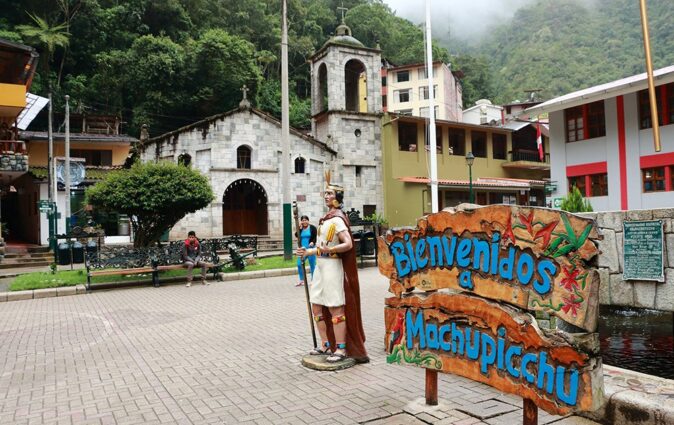
Aguas Calientes also has some hot springs not far from the center of town, so if you feel like a refreshing, warm dip this is the place to do it.
And if you choose to spend the night here, there are plenty of hotel options, ranging from basic backpacker hostels to five-star luxury properties.
I recommend using Booking.com to check out different hotel options.
To get to the Machu Picchu ruins you will need to take a bus that takes around twenty-five minutes up a windy road.
Buses leave every 10 minutes starting around 5:30 a.m. and drop you directly at the entrance. Tickets can be purchased in Aguas Calientes at the Consettur ticket office or online in advance.
Alternatively, some people choose to hike up to Machu Picchu from Aguas Calientes, but the trail is steep and takes 1.5–2 hours.
Entering Machu Picchu
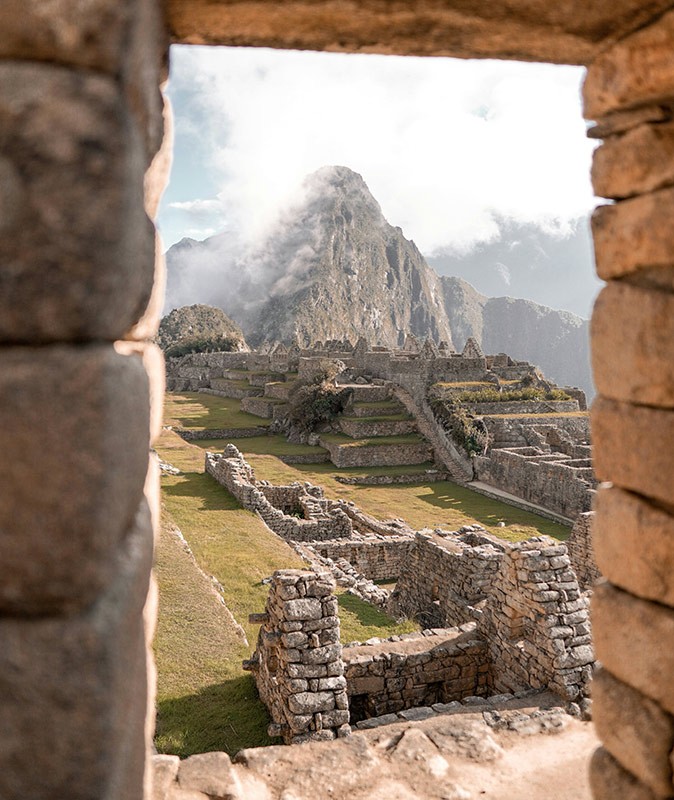
There is a limit to what you can do these days at Machu Picchu. Gone are the days when you could wander the ruins freely.
As of 2024, all visitors must book timed-entry tickets in advance and follow one of several set visitor circuits inside the ruins.
Each circuit offers different perspectives, and mountain hikes such as Huayna Picchu, Machu Picchu Mountain, or Huchuy Picchu require a separate ticket.
For the best price, book your tickets directly through the official government site machupicchu.gob.pe. Many third-party agencies sell tickets at a markup, so it’s worth purchasing straight from the source when possible.
On the government website you can select your date, entry time, and circuit, and add optional hikes if they’re still available.
Tickets go on sale for the following calendar year starting in mid-December, but availability fills up fast, especially during high season (April–October).
I’ve heard several people having issues booking online (especially from outside Peru), so there are two alternative options:
- Last-minute tickets are released daily at the Ministry of Culture offices in Cusco and Aguas Calientes (DDC offices). These are limited to 1,000 tickets and are for next-day entry. You can check availability in real-time here.
- You could book tickets or tours in advance through reliable international platforms such as Get Your Guide.
Hiking to Machu Picchu or Taking the Train to Machu Picchu
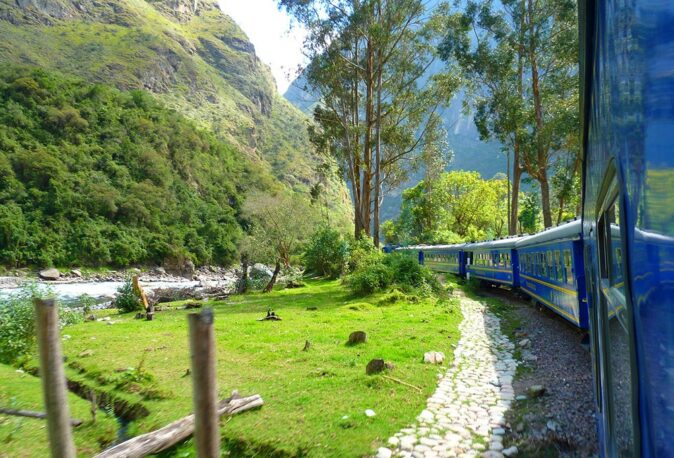
The train from Cusco is a great way to get to Machu Picchu if you are short on time.
Train tickets are available for purchase online or from the Peru rail offices in Lima or Cusco. If you choose to buy your tickets at the rail office be prepared to queue for a while but you may also save money this way.
Sometimes if you leave buying your tickets until the last minute, when you are already in Cusco, the tickets can be limited.
There are also many agencies in Cusco on the main square that will happily organize tickets for you for a fee.
The other way to get to Machu Picchu is by doing one of the many wonderful treks. The most popular trek is the Inca Trail, a four-day hike ending the final day at Machu Picchu.
The Inca Trail is by far the most famous trek in South America and is rated by many to be one of the best treks in the world.
In just 26 miles (43km) you will walk through beautiful mountain scenery, lush cloud forests, subtropical jungle, and a stunning mix of Inca paving stones, ruins, and tunnels.
People generally start the Inca Trail from Cusco, where you will be picked up from your hotel and taken to the starting point of the trek by bus.
Tips For Taking the Inca Trail to Get to Machu Picchu

Although the trek to Machu Picchu is not extremely difficult, it is still a multi-day hike and a hike at altitude.
If you decide to do a trek to Machu Picchu you will need to be reasonably fit, so it might be a good idea to do some hikes before you leave home.
You’ll need good walking shoes for the trek and layers of clothing, as you’ll experience all types of climates in a single day.
And please do not forget how strong the sun is at high altitude. A broad-brimmed hat and sunscreen are essential.
On the fourth day of the Inca Trail you’ll reach Machu Picchu and have a guided tour of the ruins.
Trekking to Machu Picchu instead of taking the train to get to Machu Picchu, of course, makes the whole experience even more rewarding!
At the end of day four of the trek, you can catch a train back to Cusco or choose to relax in Aguas Calientes for a bit.
Note: You can’t do the Inca Trail on your own. The official Inca Trail regulations state that anyone walking the trail must be accompanied by a registered tour guide.
Permits for the Inca Trail are limited and are not sold directly to travelers. You must book through a licensed tour operator. You can book the Inca Trail here.
If permits for your dates are already sold out, there are some good alternative treks such as the Salkantay Trek, Lares Trek, or the shorter 2-day Inca Trail, which still lets you arrive at Machu Picchu via the iconic Sun Gate.
Before Going to Machu Picchu
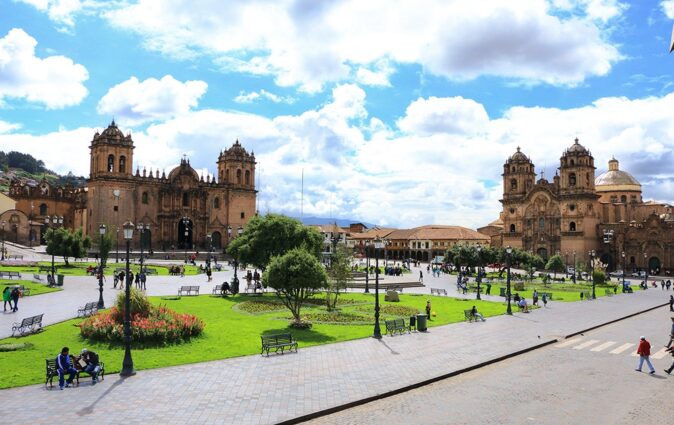
Cusco is at an altitude of 11,150 feet above sea level (3400 meters) meaning altitude sickness is a real possibility.
If you plan to do a trek to get to Machu Picchu, it is advisable to spend a few days acclimatizing to the altitude, and Cusco is not a bad place to do so.
Take a few days to rest before leaving on your trek. There are also several fun and easy Sacred Valley tours you can do from Cusco.
Cusco, which was once the capital of the Inca Empire, is a very pretty town. The center of town has a lovely main square, which is surrounded by restaurants and bars.
The town seems to be a magnet for people from all over the world, some of whom chose to stay, giving Cusco a large expat community.
If you plan to spend a few days in Cusco, there are plenty of interesting ruins and churches to check out, or if you prefer to do nothing, just hang out on one of the many balconies on the plaza and drink coffee.
It might be a good idea to not drink any alcohol or eat large meals your first few days in Cusco and drink plenty of water or coca tea.
If you are looking for a more laid-back experience before you travel to Machu Picchu you could consider staying at the beautiful Sacred Valley of the Incas.
Located around an hour’s drive by bus from Cusco, the Valley has a warmer climate and a lot fewer tourists. Here you will find some other impressive Inca ruins, rivers, and some beautiful hotels and resorts to cater to all budgets.
The Sacred Valley is popular with day-trippers who come from Cusco by bus, but spending more time in the valley is well worth your time before your visit to Machu Picchu.
If you decide to stay in the Sacred Valley you can either catch the train from Ollantaytambo in the Sacred Valley to Machu Picchu or go back to Cusco first and catch the train from there to Machu Picchu. Or start your trek to get to Machu Picchu of course!
But, no matter how you travel to Machu Picchu, it will be a unique experience!
The best times to visit are April–May and September–November, when the weather is good but the crowds are smaller. June 24 (Inti Raymi Festival in Cusco) and July 28 (Peru’s Independence Day) are busy but culturally unforgettable times to be in the region.
Bringing your children? Then read this article about visiting Machu Picchu with kids.
Also Read:
- Inca Ruins Near Cusco Worth Visiting – Machu Picchu is Not the Only One!
- Trekking Essentials for Any Type of Hike
- What it’s Like to Live in Lima, Peru
And if you are looking for another incredible trek to an almost equally impressive “lost city”, then check out this Guide to Trekking to The Lost City in Colombia.
Like this article about how to travel to Machu Picchu? Pin it!

Disclaimer: This post contains an affiliate link. I may receive a commission for purchases made through this link, at no additional cost to you.
It’s good to know that you should let your body adjust to the altitude of the area prior to visiting Machu Picchu. My wife is interested in visiting Machu Picchu for an anthropology essay, but she is worried that the altitude might make it hard to breathe due to her asthma. I’ll let her know that taking the time to get used to the altitude will help her make it to Machu Picchu.
This is very helpful information to make new visitors avoid any trouble when they are going to Machu Picchu. I was wishing to discover everything about Inca culture and before deciding to go I was looking at the internet some guide to have a better experience