
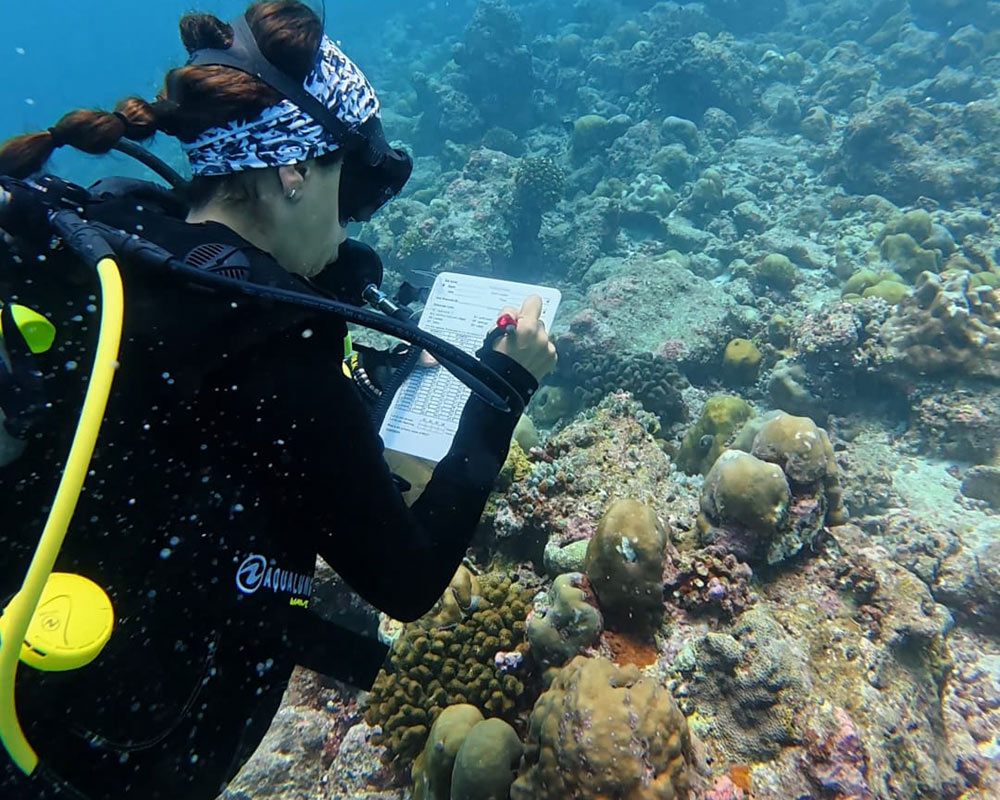
Recently, I joined Biosphere Expeditions for a week-long marine conservation expedition in the Maldives. An experience that turned out to be as inspiring as it was educational.
This wasn’t my first time joining Biosphere Expeditions. I have previously volunteered with them on an elephant research project in Malawi and a whale expedition in the Azores, both of which I loved. So, when I heard about their coral reef monitoring and whale shark conservation project in the Maldives, I knew I had to give it a try.
If you’ve ever dreamed of combining scuba diving with meaningful conservation work, this project might be exactly what you’re looking for. Here’s what my week was like, and what you should know before signing up.
Volunteering in the Maldives: What This Expedition Is About
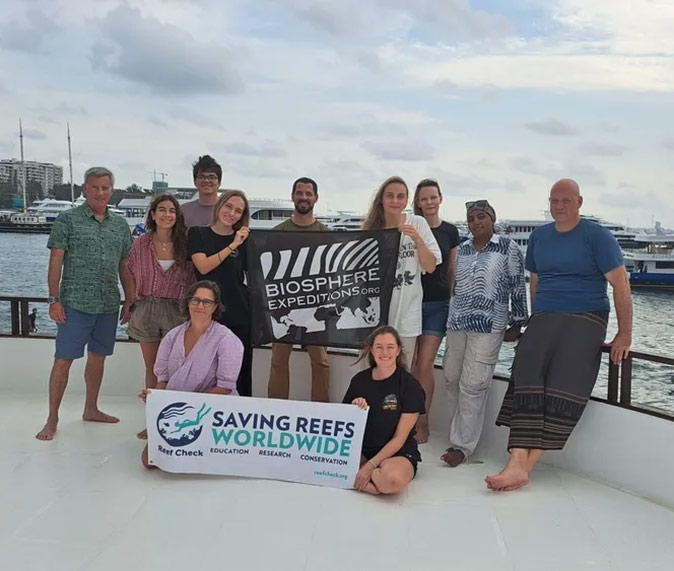
Biosphere Expeditions partners with the Reef Check Foundation to train volunteers — or as they call them, citizen scientists — to collect valuable data on coral reef health.
Each expedition is led by a professional scientist and an experienced expedition leader who guide you through every step: from classroom sessions and survey training to daily briefings and data analysis.
In simple terms, you’re not just diving for fun; you’re helping scientists understand how reefs are doing and what needs to be done to protect them. The data we collected contributes to larger databases used by Reef Check and other conservation organizations around the world.
And that’s one of the things I love about Biosphere Expeditions: you’re not just donating money or observing from a distance; you’re actively contributing to important, long-term research.
Becoming a Reef Check Ecodiver
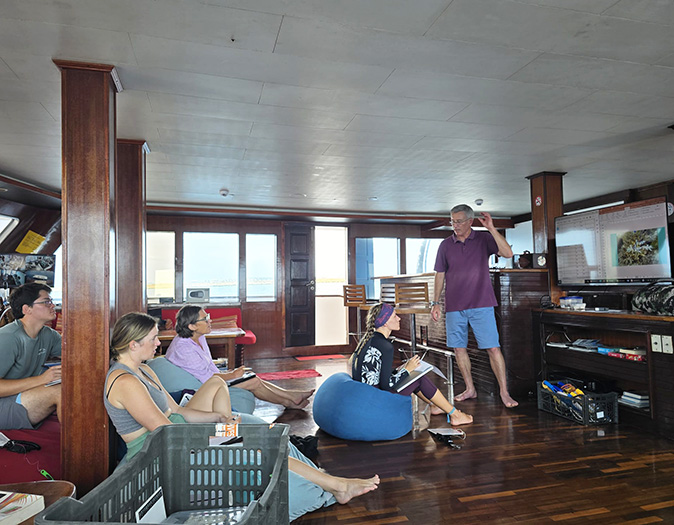
The first two days of the expedition are dedicated to the Reef Check Ecodiver course, which you need to complete before you can participate in the official survey dives.
You’ll receive the study materials beforehand, and I highly recommend going through them before arriving. It’s not overly complicated, but it’s a lot to learn in just two days — fish species, invertebrates, coral identification, and more.
The team is great at helping you through it, and it would be extremely unlikely for you not to pass. However, being familiar with the materials makes the process much smoother.
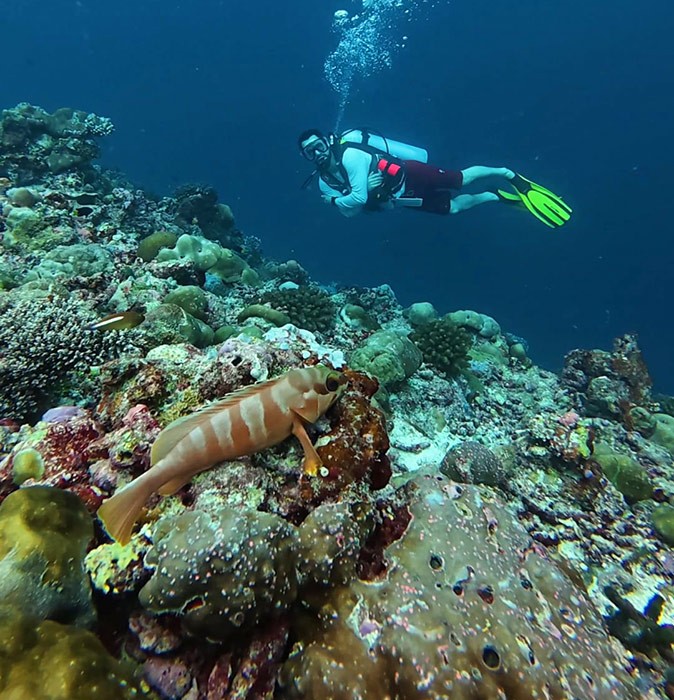
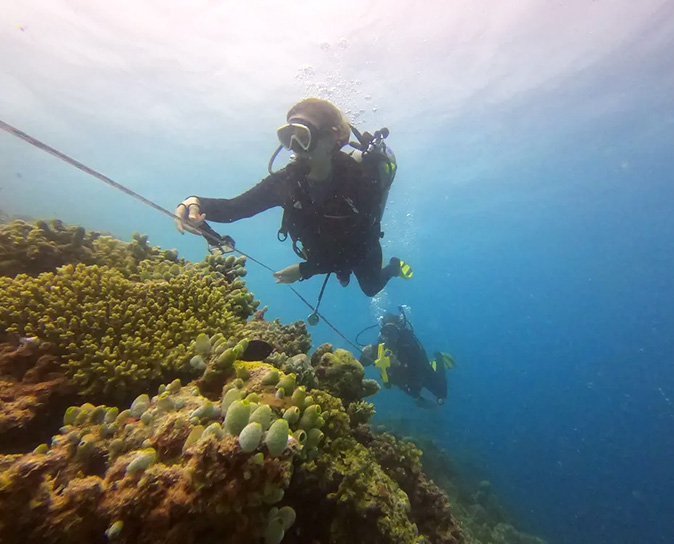
After getting certified, the real fun begins: two survey dives per day, where each diver is assigned a specific role: counting fish, checking for invertebrates, or noting the substrate (coral, sand, rock, etc.).
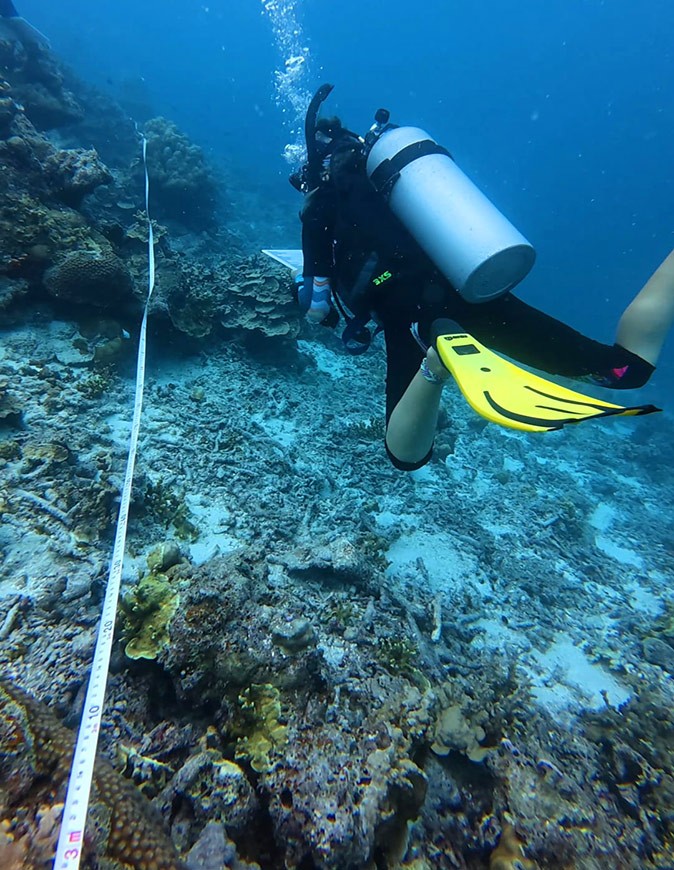
Each survey dive is followed by a data entry session where the group reviews and records everything we observed underwater.
Since this expedition has been running for well over a decade, most dive sites have been surveyed before, and our scientist was fantastic at showing us how our data compared to previous years. On some sites, for instance, we could see that hard coral cover had increased, while on other sites certain fish species like groupers had declined. It was interesting to see how our work fit into a bigger picture of long-term reef health monitoring.
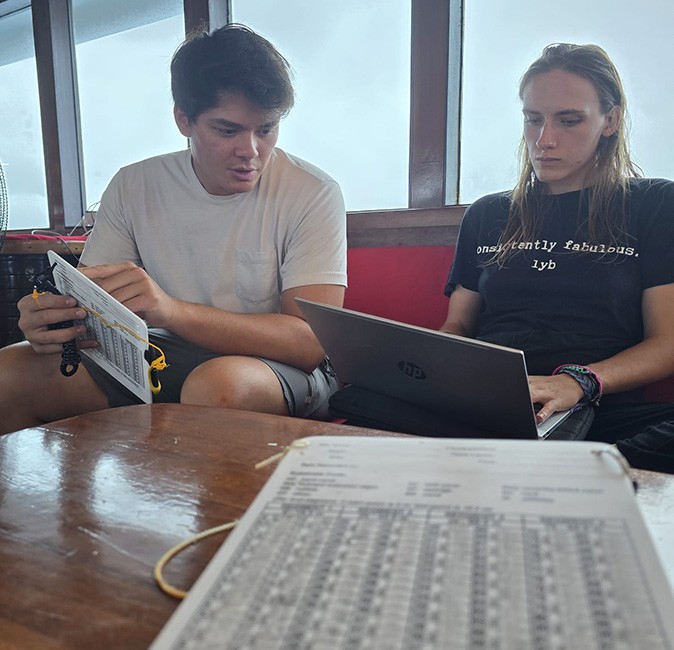
It’s structured, purposeful diving, and a very different experience from a regular dive trip. There’s something incredibly rewarding about surfacing from a dive knowing you’ve contributed real data that can help protect marine ecosystems.
Life On Board: The Liveaboard Experience
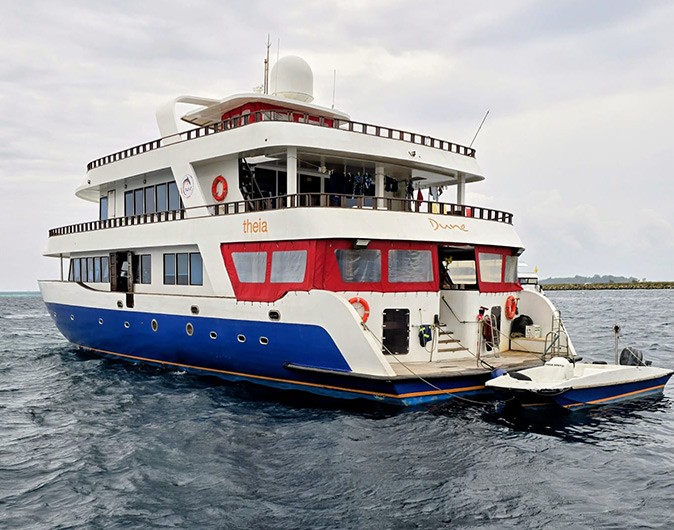
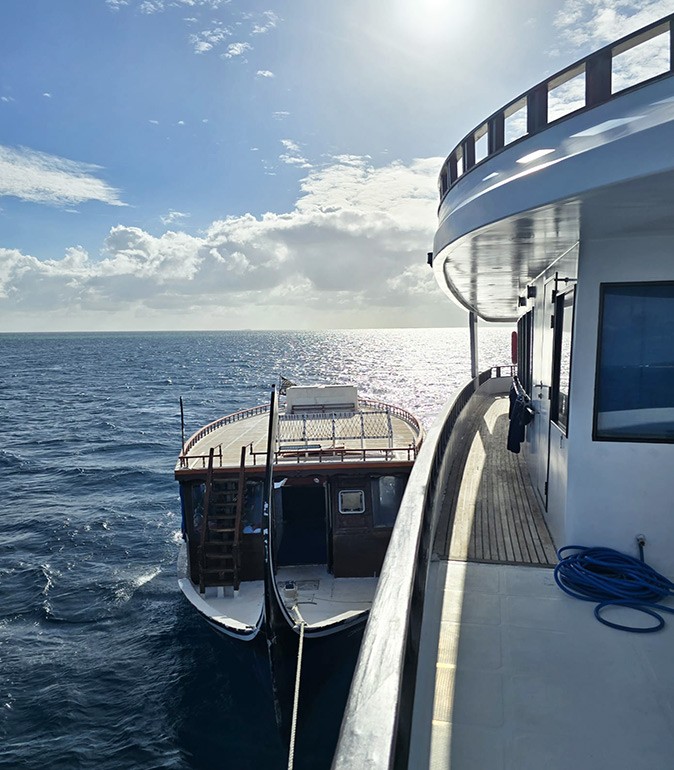
Like most diving trips in the Maldives, the expedition takes place on a liveaboard. For this one, we stayed on the MV Theia, a comfortable and well-equipped dive boat.
The setup is classic: you live, eat, and sleep on the main vessel, while dives are done from a dhoni; a smaller traditional Maldivian boat that carries all the dive gear and takes you to the dive sites.
Cabins are assigned randomly, and you might share with another participant. Some cabins have double beds, so if you prefer a private cabin, it’s worth requesting in advance (though not guaranteed).
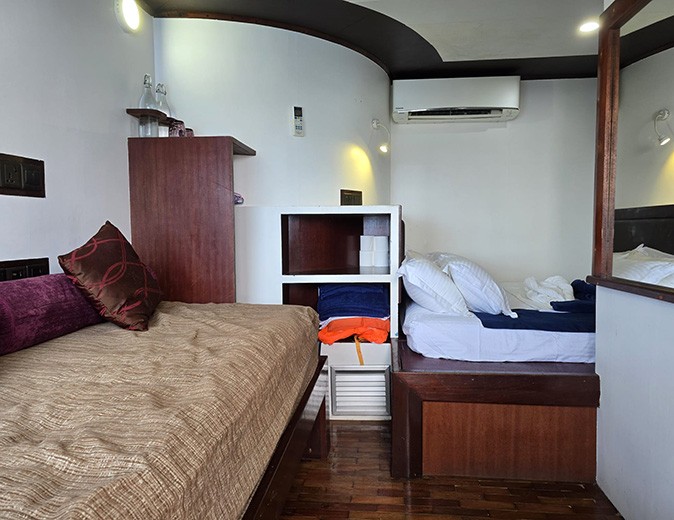
I was lucky enough to have a private cabin on the top deck — comfortable and cozy, much nicer than some of the liveaboards I’ve been on before.
Also Read: My Review of Liveaboard Diving in Thailand
The Theia isn’t the most luxurious boat you’ll see in the Maldives, but it’s well-maintained, comfortable, and has everything you need for a week at sea.
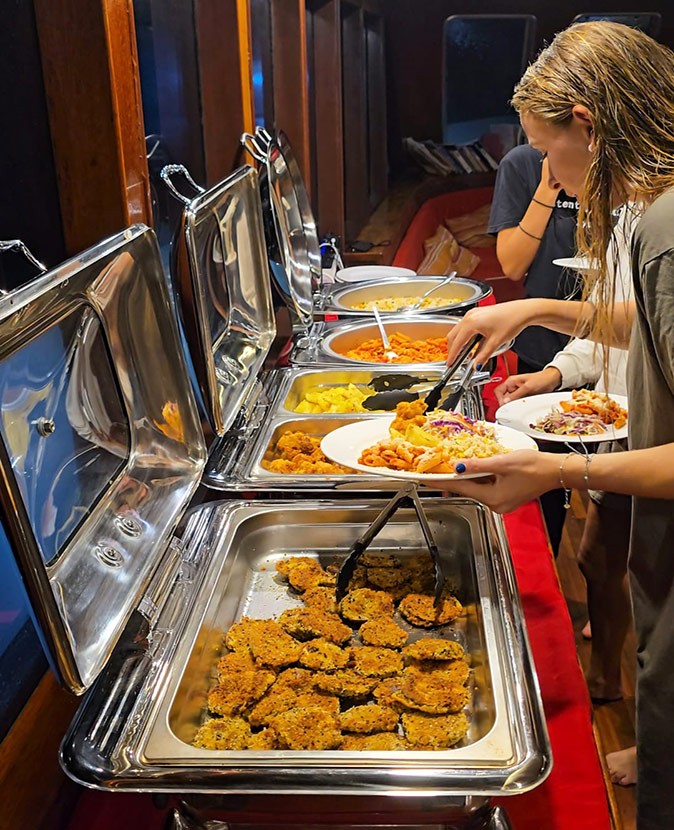
And the food? Absolutely fantastic. Three buffet-style meals a day, freshly prepared, varied, and delicious.
The kitchen and dive crew were all wonderful: always friendly, helpful, and incredibly efficient at managing gear and helping us in and out of the water.
The Diving and the Team
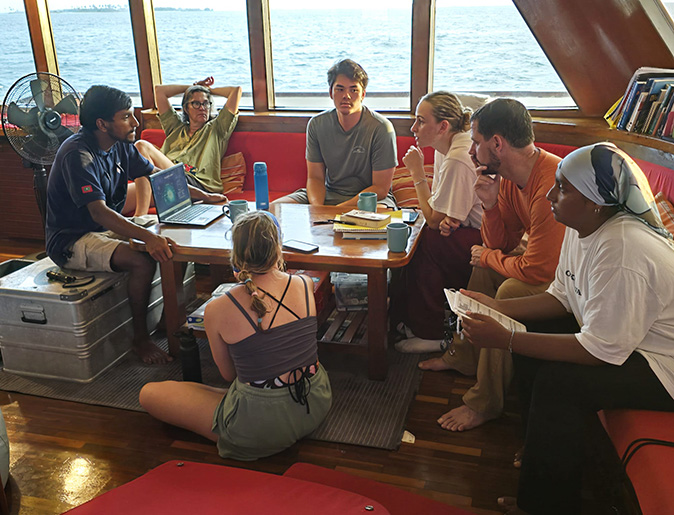
After completing the Ecodiver course, our days followed a good rhythm: two survey dives, sometimes followed by an optional non-survey “fun dive” if weather and time allowed.
Survey dives are in relatively shallow water (usually between 3 and 10 meters), making them manageable even for newer divers.
Still, I’d personally recommend having at least your PADI Advanced Open Water certification before joining. First of all, this extra dive experience will improve your buoyancy control, which helps a lot when working close to the reef. Additionally, non-survey dives are generally deeper, and with just an Open Water certification you wouldn’t be able to join those.
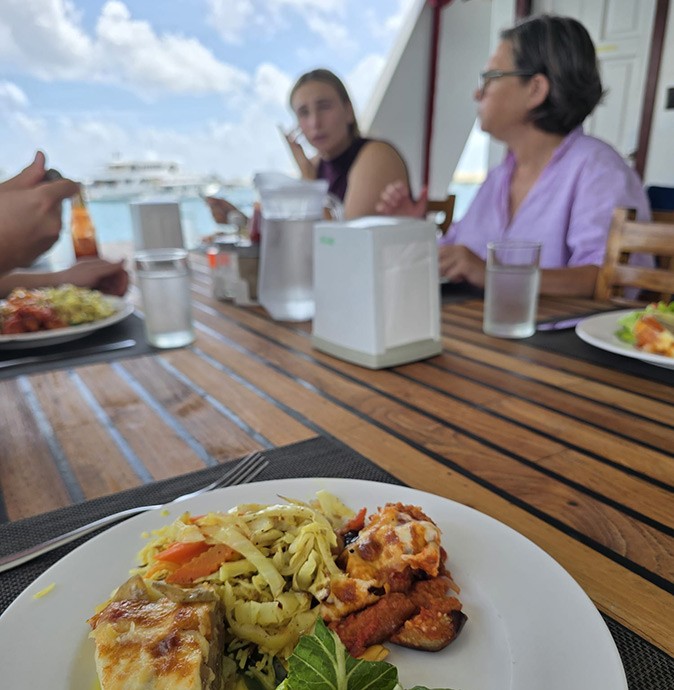
Our group included people from all over the world, from recent graduates to those recently retired, and that mix of backgrounds and life experiences made the trip extra special.
Between dives, meals, and evenings on deck, we had fascinating conversations about marine life, conservation, travel, and cultural differences. It was one of those rare trips where you instantly feel part of a community.
Whale Shark Monitoring
The expedition also includes whale shark monitoring.
Weather permitting, part of one day is usually dedicated to looking for whale sharks. If spotted, the team photographs the whale shark’s unique markings for identification and records data about nearby boats and snorkelers.
Unfortunately, during my trip, the weather wasn’t ideal, and we didn’t see any whale sharks. But that’s part of fieldwork. It’s important to know that sightings are not guaranteed, and the primary focus of this expedition is coral reef research.
If you do get lucky enough to encounter one, it’s an unforgettable experience, but I want to set realistic expectations… It’s not very likely!
What Is a Citizen Scientist?

You’ll see the term citizen scientist used a lot by Biosphere Expeditions. It simply means that you join as a volunteer who contributes to real scientific research, even if you don’t have a formal scientific background.
You pay an expedition fee, which funds the project’s running costs, training, and research. In return, you receive professional guidance, scientific training, and the chance to participate in meaningful conservation work.
So while it’s not a “free volunteer trip,” your contribution has real impact, and you gain valuable skills and knowledge in return.
Practical Tips for Joining
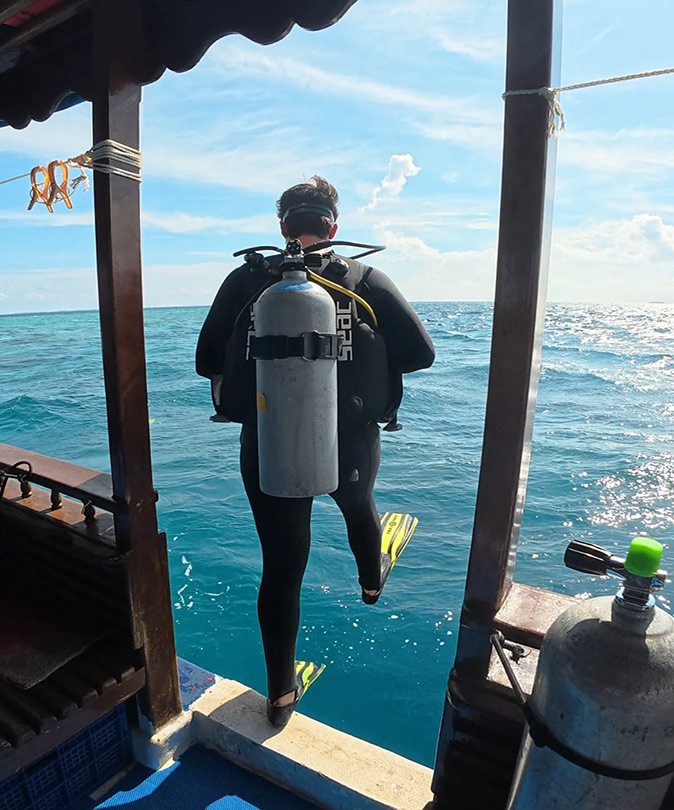
A few things that are useful to know before you join this marine conservation trip:
- Study before you arrive. Go through the Ecodiver materials at least once or twice.
- If you’re prone to seasickness, bring seasickness pills. The sea can get a bit rough when moving between atolls.
- Pack reef-safe sunscreen. I like the Stream2Sea brand (available on Amazon and reef-safe certified).
- You don’t have to have your own dive gear; you can rent gear on board. I rented a full set (minus dive computer) for $100 for the week.
- Get good travel insurance. Make sure it covers scuba diving and remote locations.
- Plan your flight carefully. On the last day there’s usually a non-survey “fun dive.” I missed mine because I booked my flight the same day, so if you can, fly out the day after.
Liveaboard diving can be tiring, but the pace of this expedition (two survey dives per day with a depth of less than 12 meters plus an occasional non-survey dive) felt very manageable. It offered a nice balance between work and downtime.
Biosphere Expeditions runs this Maldives marine conservation project every year, usually around the same time, continuing to build on years of consistent data collection.
Where to Stay Before and After the Expedition
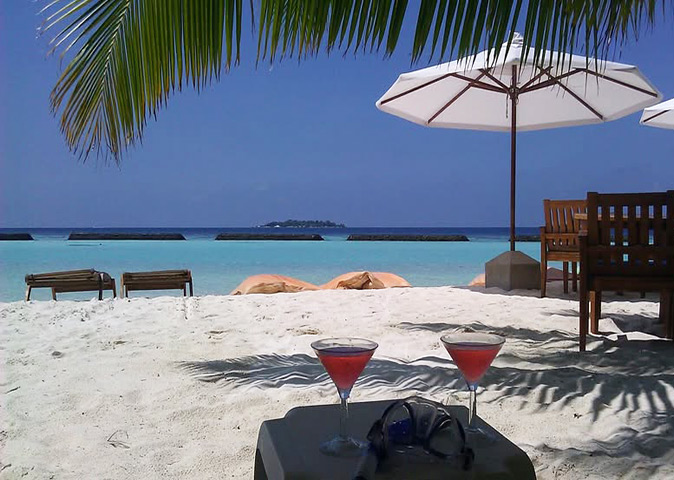
Most participants arrive a day or two early and stay near the airport. You have a few options here:
Malé: The capital city, close to the airport but busy and crowded. Great for short stays if you want to explore local life.
Hulhumalé: Just across a short bridge from the airport. It’s quieter, has a long beach, and is a popular place to stay before or after liveaboard trips.
I’ve been to both (in fact, I lived in the Maldives many years ago) and I’d recommend staying in Hulhumalé, especially as a woman traveling alone. It just feels a bit more laid-back. But, if you want the hustle and bustle of Malé, that’s an option as well, and both are a short and inexpensive (10 US$ or less) taxi ride from the airport.
Recommended hotel options in Malé: Summer Beach Maldives (budget-friendly and they offer a free airport shuttle) or Barceló Nasandhura (more high-end).
Recommended hotel options in Hulhumalé: Reef Guest House (basic, but very budget-friendly) or Hotel Ocean Grand (more high-end).
Nearby resorts: If you’d rather end (or start) your trip with a little luxury, Kurumba Maldives is a beautiful resort just a quick boat ride from the airport. I love Kurumba, I spent a lot of time here when I still lived in the Maldives, and can highly recommend it.
If you plan to stay in the Maldives longer though, I have written a separate article with my favorite resorts in the Maldives, which are located a bit further from the airport.
Final Thoughts
Honestly, this week with Biosphere Expeditions was one of those experiences that reminded me why I love slow, purposeful travel.
It wasn’t about luxury or ticking off famous dive sites. It was about learning, contributing, and connecting with like-minded people who care about the ocean.
Sure, I didn’t see whale sharks this time, but I came home with something even better: a sense that I’d been part of something meaningful.
If you’re a diver looking to give your time and skills a bit more purpose, Biosphere Expeditions’ Maldives marine conservation project is a great way to do it.
You can find more information about this marine conservation project here on their website.
Also, feel free to leave a comment below if you have any further questions about the volunteer work. Or check out my Instagram stories to see a day-to-day of my expedition experience in the Maldives.
Also Read:
- Why You Shouldn’t Buy Seashells or Take Them From the Beach
- Volunteering Abroad: Is It a Bad Idea?
- Volunteering With Whales in the Azores (Portugal)
- Volunteering With Elephants in Malawi
- Volunteering in the Philippines With Marine Conservation Philippines
Disclaimer: my volunteer program with Biosphere Expeditions was sponsored. As always though, all opinions are my own and I would never recommend anything I didn’t enjoy. This blog contains affiliate links. I may receive a commission for purchases made through these links, at no additional cost to you.