
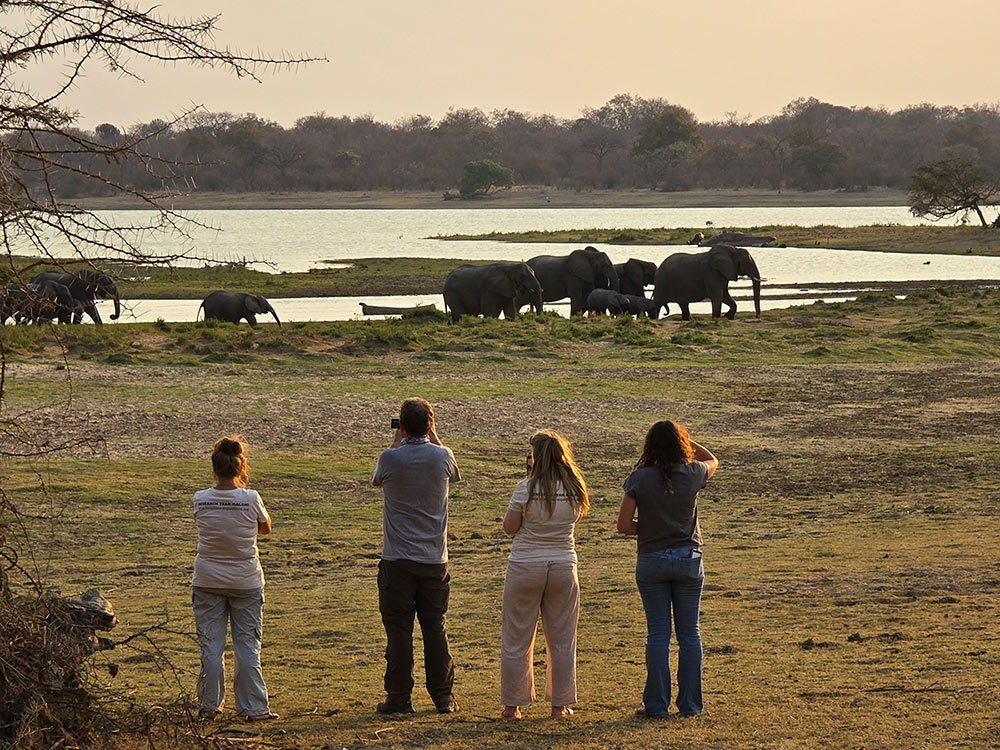
If you want to volunteer with elephants and enjoy visiting off-the-beaten-path destinations, this volunteer project might be perfect for you!
I spent two weeks in a nature reserve in Malawi, a country I have to admit I knew very little about before my trip.
But I did know Biosphere Expeditions, the organization in charge of the volunteer project. I had previously joined their volunteer project in the Azores, studying whales and dolphins, and loved it. So when I heard they had a spot left on their volunteer program in Malawi, studying elephants and hippos, I immediately signed up.
And it turned out to be an interesting experience! From having an elephant right outside my tent one night to spending afternoons sifting through elephant dung… there were a lot of ‘firsts’ on this trip!
In this article I want to share with you what this volunteer project is like. Both the positives and the negatives.
If you’re interested in volunteering with elephants, or are perhaps specifically looking for volunteer work in Malawi, I hope this article gives you all the information you need to decide if this project is for you.
Volunteering With Elephants, Hippos & Other Wildlife in Malawi, Africa
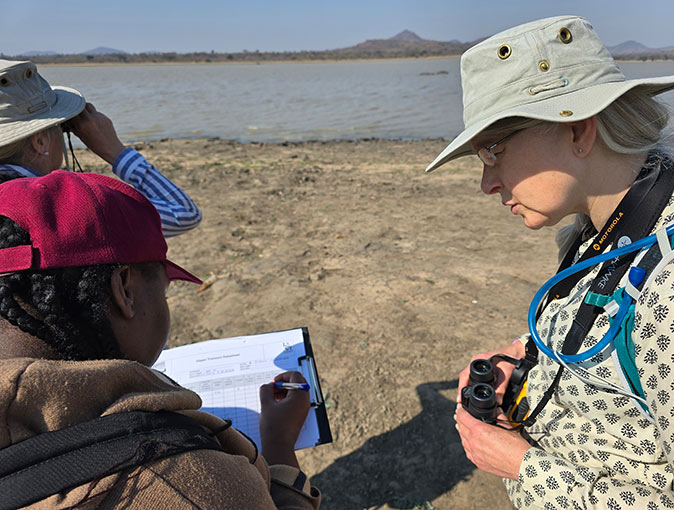
Every year, generally in September, Biosphere Expeditions organizes a volunteer project in Malawi to study the wildlife in one of the country’s nature reserves.
Two weeks, or 13 days actually, you’ll spend living in a camp on the edge of a lake inside Vwaza Marsh Wildlife Reserve.
What the Volunteer Project Does
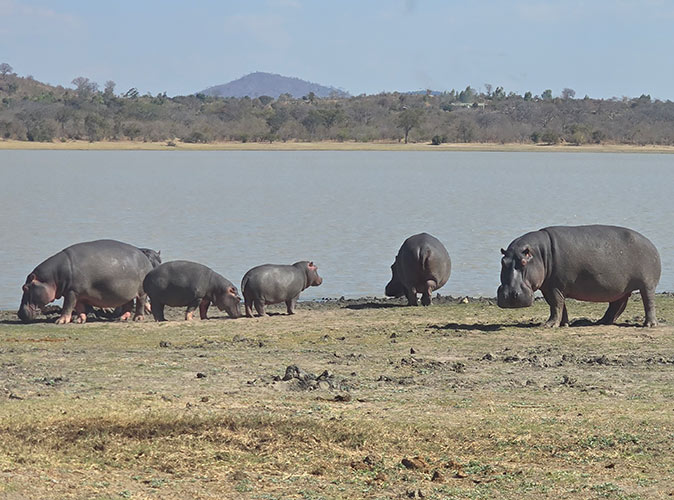
Biosphere Expeditions works with a local NGO called Lilongwe Wildlife Trust (LWT) to study elephants, hippos, and other wildlife inside the park.
Unfortunately, poaching and wildlife trafficking are still common here, as they are in many parts of Africa. The research done during this volunteer project helps local scientists gain a better understanding of the wildlife population and diversity inside Vwaza Wildlife Reserve.
There’s a very funny story of a poacher running out of the lake naked when one of our rangers spotted him placing nets… But that’s a story you’ll have to ask the team about when you join the project!
Additionally, deforestation and Malawi’s growing population have increased the human-wildlife conflict, especially with elephants. Elephants wander into or near villages, damaging crops and scaring villagers, sometimes leading them to retaliate by killing the animals.
Through this volunteer project, Biosphere Expeditions and LWT aim to gather data to understand how frequently elephants come into contact with humans and how this affects their population.
The Main Focus of the Volunteer Work
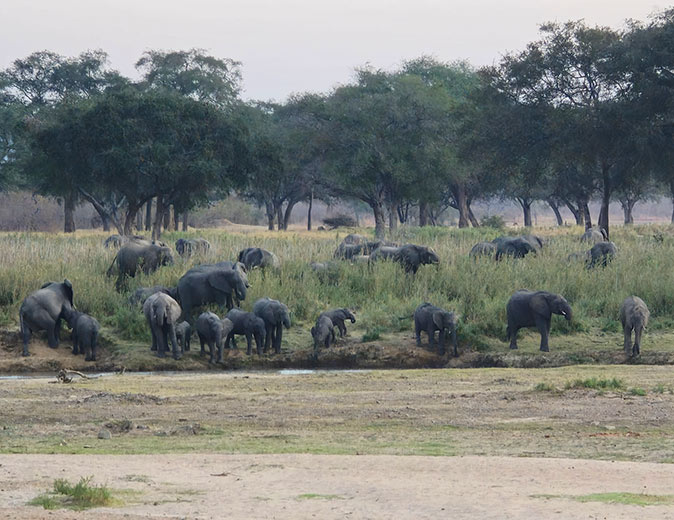
If you decide to volunteer here, you’ll mainly study elephants and hippos.
But, there’s more to the project than that. You’ll also help set camera traps to document animals we’d otherwise be very unlikely to see (think leopards, bushbabies, genets, and many other (nocturnal) animals).
There’s even a ”night drive” where volunteers help place a dead goat in front of a camera trap to (hopefully) attract hyenas!
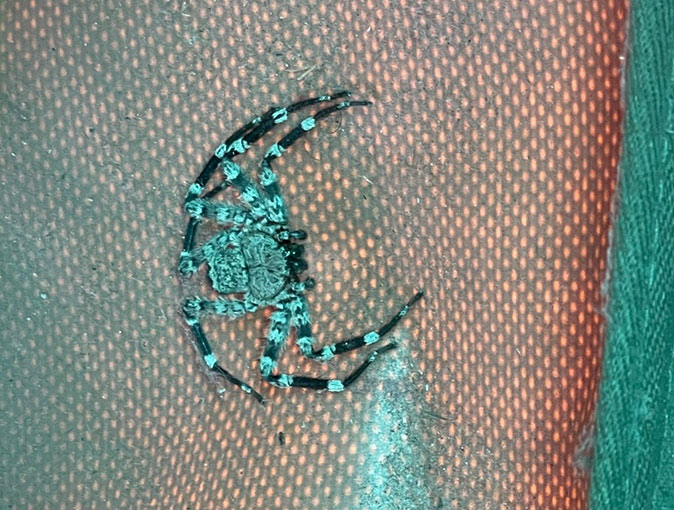
And, through an app called iNaturalist the volunteers collectively record all the animals they see during the volunteer project to show the biodiversity within the reserve. And yes, that includes anything from beautiful birds to that one tarantula someone spotted in the toilet!
Note: elephants will always be the main study subject of this volunteer project. But, other animals studied can vary. Past projects have also studied monkeys, bats, insects, and ants.
What a Typical Day as a Volunteer Looks Like
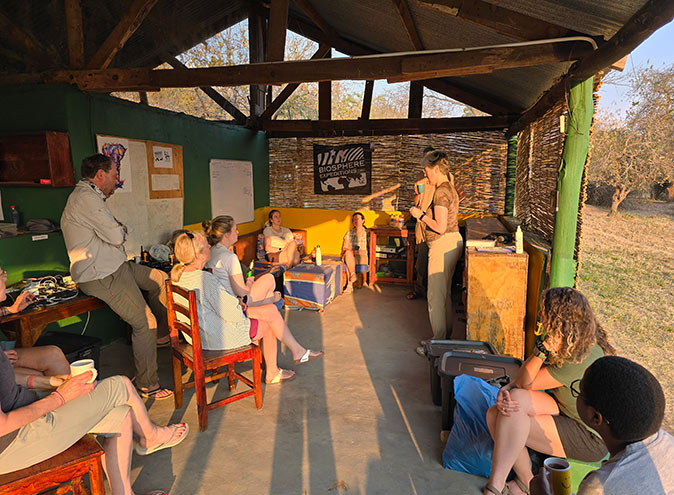
The volunteer project consists of a maximum of 12 volunteers. Additionally, there’s an expedition leader, a scientist, one or more (two in our case) LWT members to help run the project and collect data, and various rangers to keep everyone safe.
You don’t have to be a scientist or have any relevant experience to join as a volunteer. Therefore, the first day after arriving at the camp you’ll be trained in how to record elephant and hippo sightings, how to use the different tools, and anything else you need to know to perform the different tasks you’ll be doing as a volunteer.
Typically, as a volunteer, your tasks can be divided into two groups: fieldwork and camp-based tasks.
Fieldwork
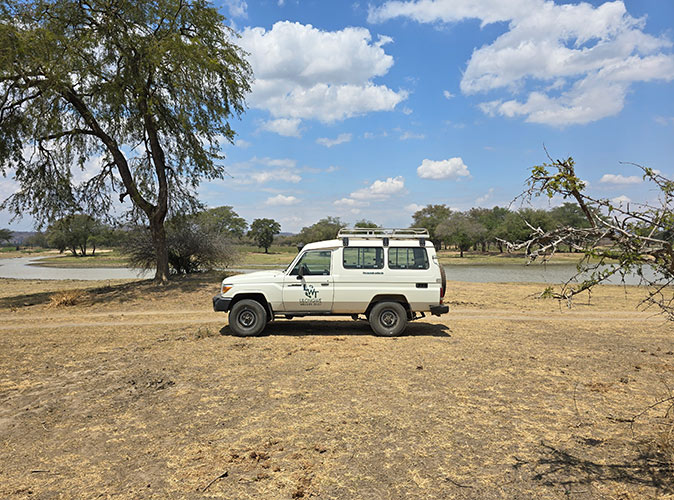
One of the perks of this volunteer project is that you’re quite free to choose which tasks you prefer to do.
So for example, if you’re not a morning person you could choose to skip most of the dawn drives and instead help out in the evening setting camera traps.
Again, every year the volunteer project will look a little different, but these would be your main tasks in the field:
1. Dawn Drives
Most mornings start with an optional dawn drive. Three or four volunteers can sign up to join one of the project members for a drive that starts just before sunrise.
It’s beautiful watching the sun come up while driving around the reserve, looking out for different animals.
2. Elephant Drives
The main objective of this volunteer project is studying elephants, so every day at least one car will go out to record all the elephants seen while driving specific routes inside the reserve.
Together with the other volunteers (generally three or four per drive) you have a number of tasks to complete. Every time elephants are spotted as much information as possible is collected. Things like herd size, number of male and female elephants, and the estimated age of the elephants are written down. GPS coordinates are added and if possible pictures are taken that could later be used to identify individual animals.
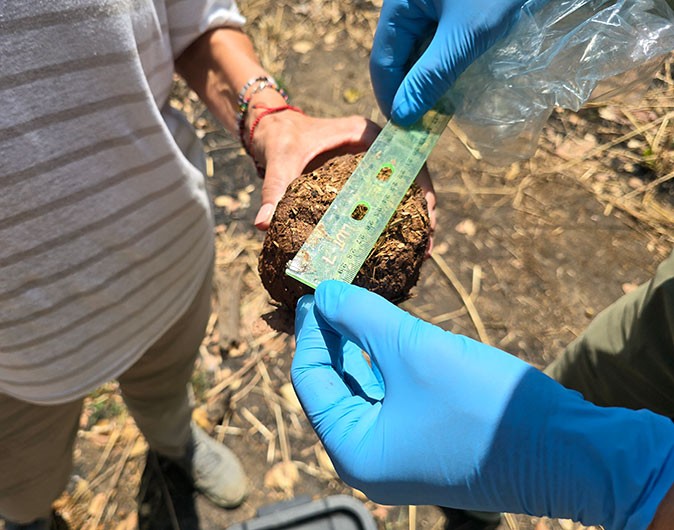
And then there is the dung collection… Ok it may sound disgusting, but it really isn’t. Believe me.
If, on either the elephant drive or the hippo transect, you come across elephant dung which is still fresh and untouched by other animals (monkeys love eating the seeds in elephant dung!) then you will collect some of it.
Why? I’ll explain that later.
3. Hippo Transects
Another important part of this volunteer project is studying the hippo population.
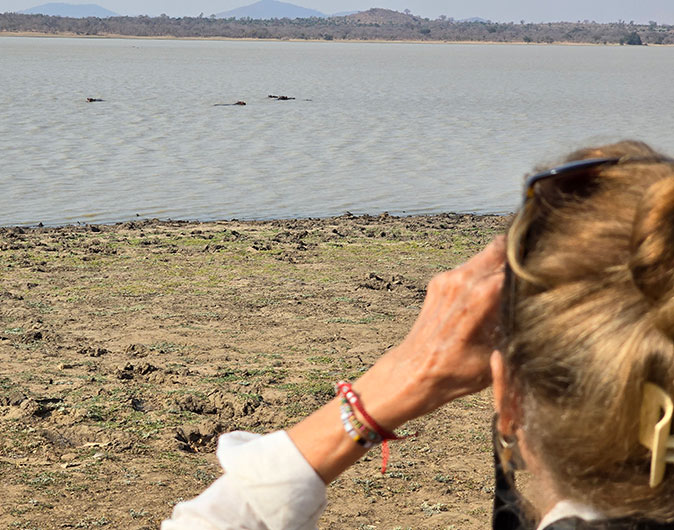
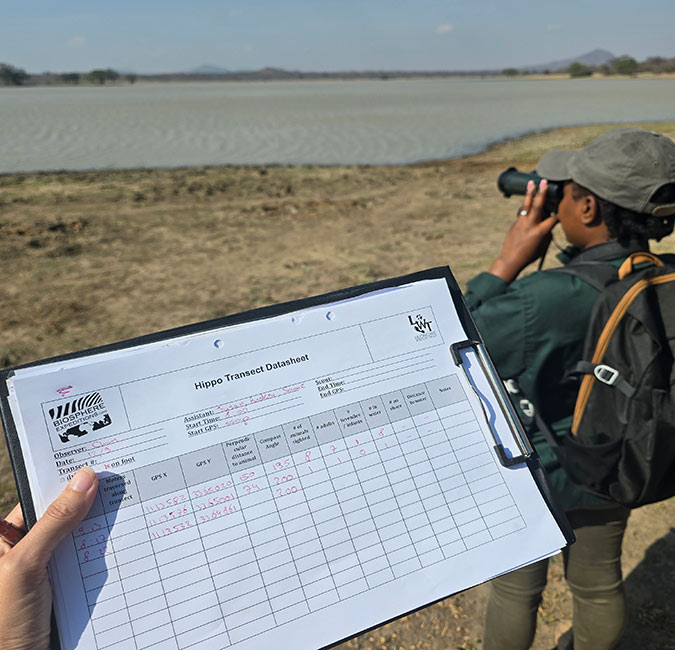
Every day a group of volunteers will go out, on foot, to collect data. Together with an experienced ranger and one of the project members you’ll walk a set transect of about 5km (3.1 miles) to record data on all the hippos you see.
I actually loved doing the hippo transects. Because, first of all, you’re guaranteed to see hippos while you won’t always see elephants on the elephant drive. And, it’s a really beautiful walk along the lake! The walk is always in the morning (it gets too hot later in the day) which makes it a great start of the day.
While walking the transect you’ll also see plenty of other animals such as antelope, warthogs, birds, baboons, and more. And sometimes, your walk will be cut short because of a herd of elephants! We had a large herd of elephants coming out of the bush one day, straight at us. And don’t forget, these are wild and very strong animals who can be unpredictable! Thankfully, the rangers are great. Our ranger spotted the elephants long before any of us did, so we had already turned around to get out of their way.
4. Setting Camera Traps
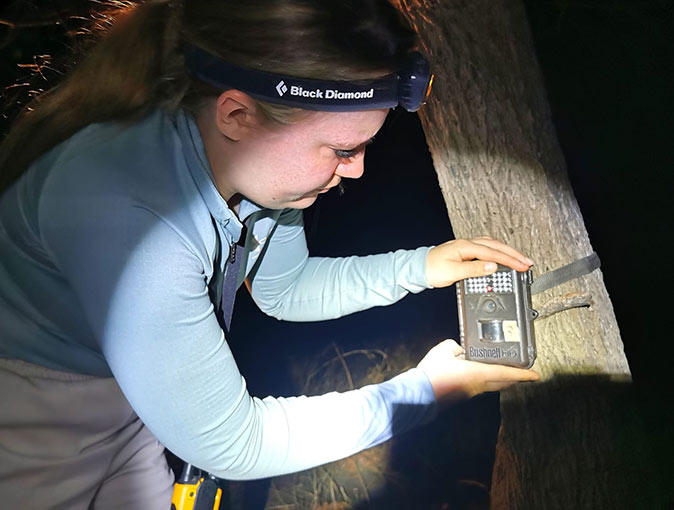
Special cameras are placed in strategic locations to try and capture images of animals we otherwise might never see.
Generally done as an evening activity, you as a volunteer can join to set up these camera traps in different parts of the reserve.
Towards the end of the volunteer project the cameras are collected to see which animals have been spotted, which can be a huge surprise!
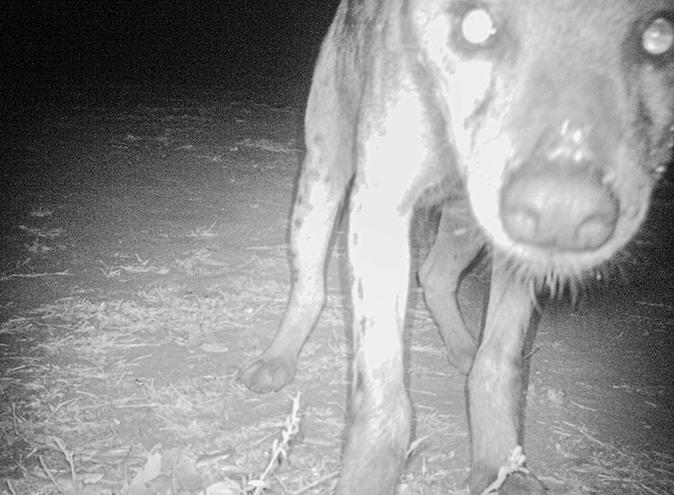
And yes, as I previously mentioned, on one or two occasions you’ll go out, if you choose to join, with a dead goat that is placed in front of one of the cameras to attract hyenas. I’ll skip the details, you’ll hear all about that if you join, but it was an interesting experience!
Data Entry & Other Tasks
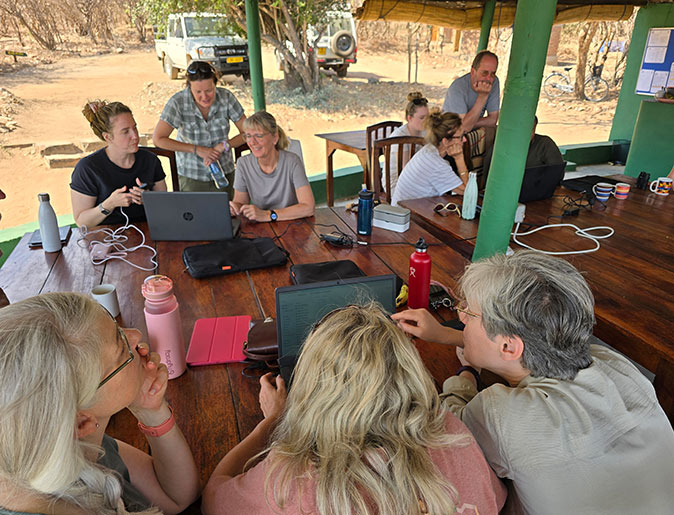
All the data collected in the field will have to be processed.
Therefore generally a few hours a day are spent entering previously collected data, going through any pictures taken of elephants to help identify them, and analyzing the collected dung…
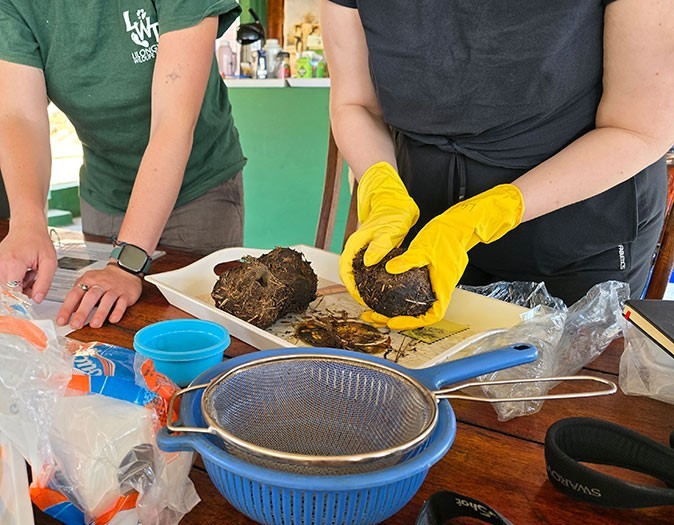
The dung samples are collected to get information about what the elephants eat and roughly how old they are. To get this information volunteers first measure the collected boli to determine the elephant’s age and then go through them to gather all the seeds.
Don’t worry, elephant dung isn’t as gross as it sounds—it’s mostly grass!
The collected seeds will later be analyzed by a seed expert to understand what the elephants have been eating.
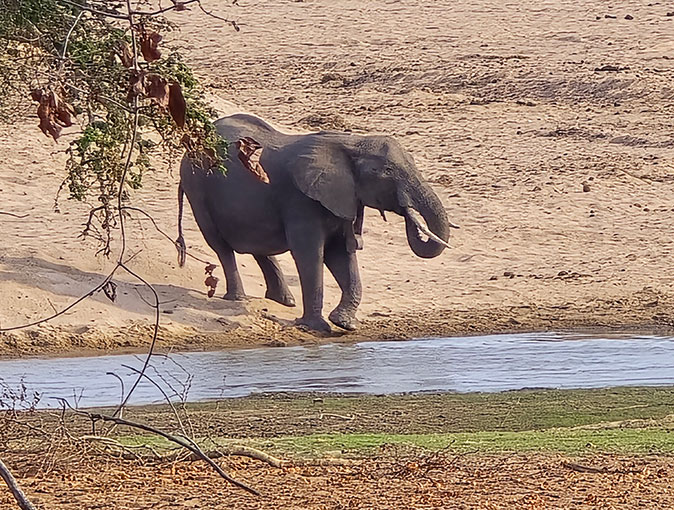
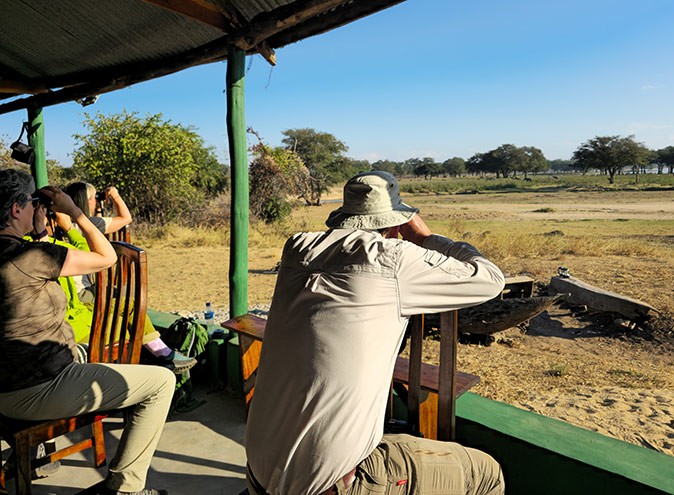
And, often while being at camp, a herd of elephants will show up by the lake, right next to the camp! It’s incredible to watch them feed, interact with each other, play in the water… I could sit there for hours looking at them! And of course, this is also a great time to collect detailed data.
Note: local staff takes care of all the meals and cleaning, so apart from cleaning up after yourself there are no household tasks at the camp.
Where You’ll Live During the Volunteer Project
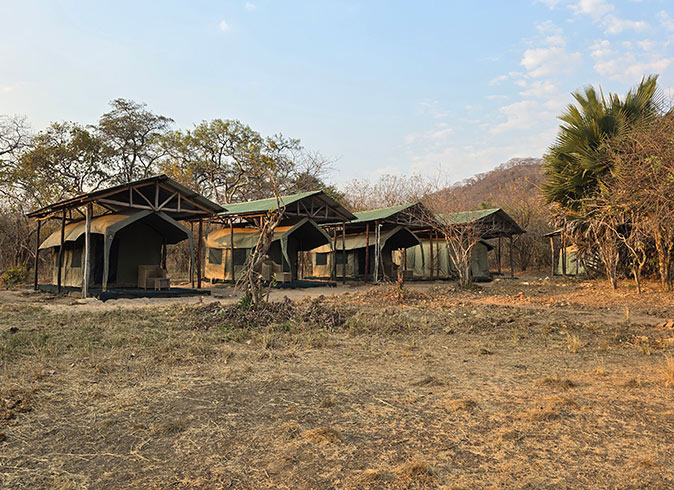
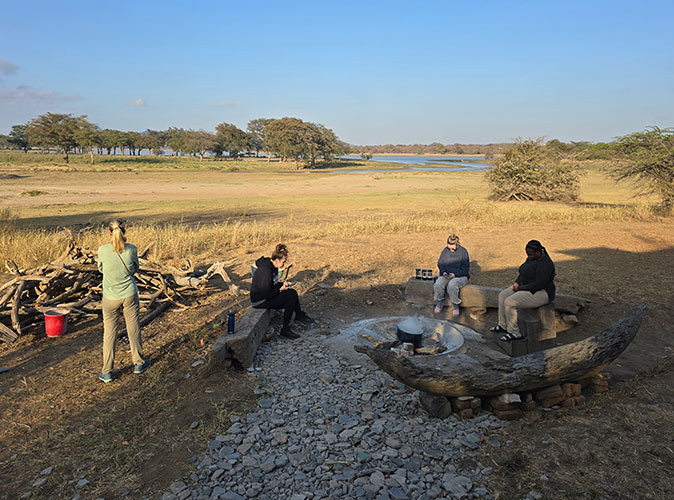
The volunteer project is based at a remote safari-style camp. The camp is basic but I’d say quite comfortable, set on the edge of a lake with stunning views and frequent baboon and elephant visitors to keep things exciting!
You’ll sleep in safari tents, either single or double. Tent assignments are made randomly—so you may have a private tent or share with one other volunteer.
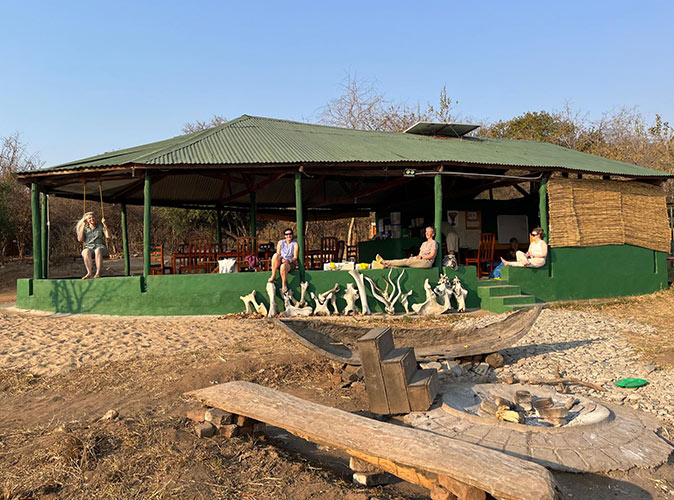
The heart of the camp is the common area, where everyone gathers for meals, training, and daily debriefings.
In the evenings, the campfire becomes a central spot—perfect for unwinding, sharing stories, or stargazing in the clear African skies.
Three meals a day are prepared by a great Malawian chef who manages to create varied, vegetarian food in the tiny camp kitchen. Quite impressive!
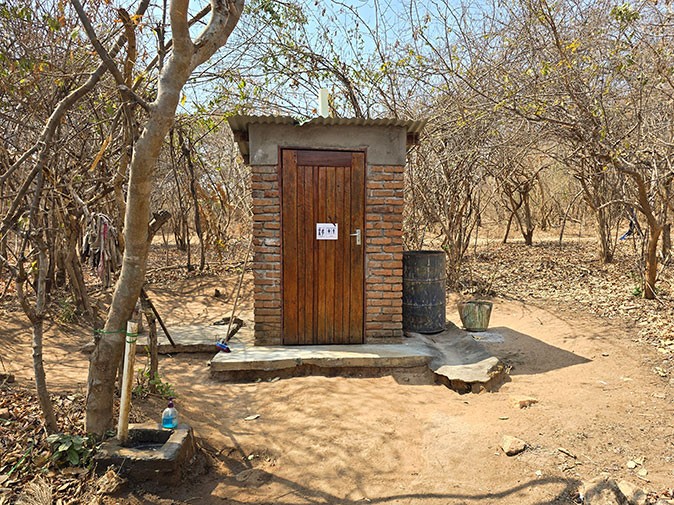
Facilities are rustic, but part of the adventure. The camp has two compost toilets (yes, they can get quite smelly) and three showers, with cold water only. But, during the hottest part of the day, that cold water feels quite refreshing.
Things You Should Know Before You Sign Up
1. There Are Certain Risks
As magical as it is to live among wildlife, this project does come with some risks.
You’ll be living in a remote camp within a wildlife reserve, where animals roam freely. While these close encounters with elephants, hippos, and buffalo are thrilling, they also come with inherent dangers, as these are wild animals after all.
That being said, the larger wildlife wasn’t my main worry. There are experienced rangers keeping you safe during any walks inside the reserve and the LWT staff and Biosphere’s expedition leader are very knowledgeable when it comes to spotting signs of aggression in any of the animals and knowing when it’s time to back off.
What I worried about most were the smaller, less obvious risks. Malawi is home to mosquitoes that can carry malaria, and tsetse flies that can cause sleeping sickness. We saw very few mosquitoes, thankfully, but there were plenty of tsetse flies.
To minimize the risk of bites, make sure to bring insect repellent with DEET (for mosquitoes, this won’t work on tsetse flies), and wear loose-fitting, long-sleeved clothing.
There are also various venomous creatures like snakes, scorpions, and spiders to be mindful of.
Biosphere Expeditions takes safety very seriously and detailed safety briefings are given at the start of the volunteer project. The expedition leader, along with the team from LWT, know what to do if someone gets bitten by something or falls ill.
As for vaccines, I didn’t get any additional vaccinations before going to Malawi. I did however take malaria pills during my entire stay.
I recommend talking to your local doctor or checking your country’s travel health website (CDC in the US, for example) to get the latest information about which vaccines and medications are recommended.
2. You’re Living in a Remote & Basic Camp
This isn’t a luxury safari lodge. The camp is basic and you’re in a remote area of a developing country. Be prepared for things to break or not work perfectly and just see it as part of the adventure.
Since you’re inside a reserve with elephants, hippos, and other wildlife, it’s not safe to just go for a walk on your own, and there are no nearby towns you could walk to, so in that sense, you’re a bit ”stuck” at camp.
But with its stunning sunsets, cheeky baboons running around camp, and elephants visiting almost every day, it’s not a bad place to be ”stuck” for a couple of weeks!
One experience I’ll never forget is when I’d just gone to bed in my tent. I’d closed the covers on the windows because it was cold. But I heard something outside, something big. I zipped open the window cover next to my bed and there it was… a single elephant, carelessly munching on some grass right next to my window! It heard the zipper, briefly looked up, and continued eating. To be within just a few feet (a meter or so) of an animal so beautiful, yet also strong enough to crush my tent in seconds, was both scary and exciting. And then, minutes later, a baby elephant joined! What a night!
3. Don’t Expect to See the Big 5
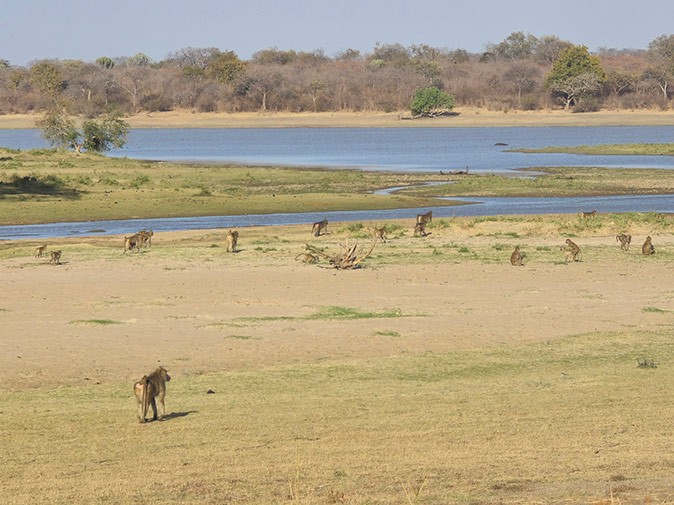
If you’re hoping to tick off all of Africa’s “Big 5” on this trip, it’s worth knowing that Vwaza Marsh Wildlife Reserve isn’t home to all of them.
You will definitely see elephants, almost every day, and there’s a good chance you’ll spot buffalo, but that’s the only two of the Big 5 you should expect to see.
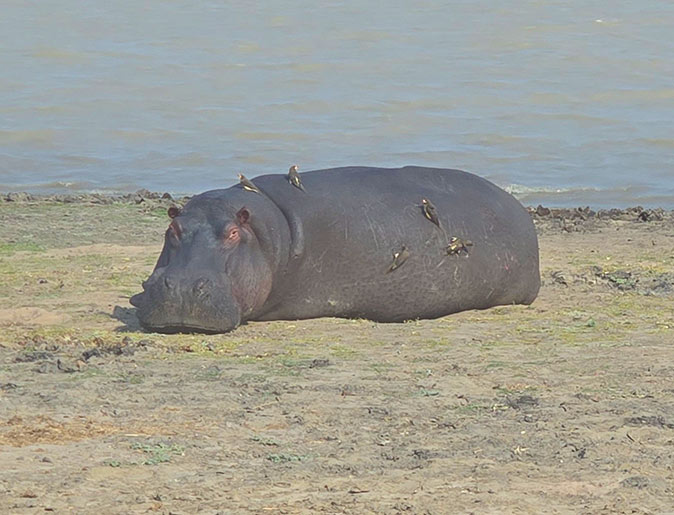
Leopards are seen on the camera traps from time to time, so if you’re lucky you’ll spot leopards that way. And, of course, there is much more to see than just the Big 5. I loved seeing warthogs, baboons, antelope, a wide range of birds, and of course the gorgeous hippos.
That said, this project is more about contributing to conservation and getting hands-on experience with wildlife research, rather than checking off a safari bucket list.
But, it’s worth knowing that Vwaza just doesn’t offer the same biodiversity as some of the famous safari parks in Africa.
Note: if you’ve already looked at this volunteer project on Biosphere Expedition’s website you might have seen lions mentioned several times. Lions haven’t been seen in Vwaza for years, so please don’t expect to see any!
4. You’ll Meet Some Amazing People
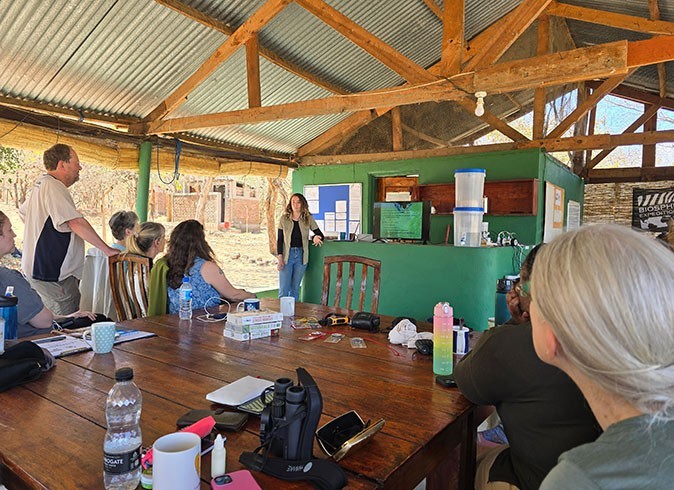
For me, one of the best parts of volunteering abroad is the people you’ll meet.
And something I really love about Biosphere Expeditions is that they attract people of all ages. The youngest person in our group was 29, and the oldest 70+. On my previous volunteer project in the Azores it was even more diverse, ranging from 19 to 70+.
Spending 13 days in a remote camp with a group of strangers gives you the time to really get to know each other, connect over travel stories, and potentially make some friends for life.
4. You Get One Day Off
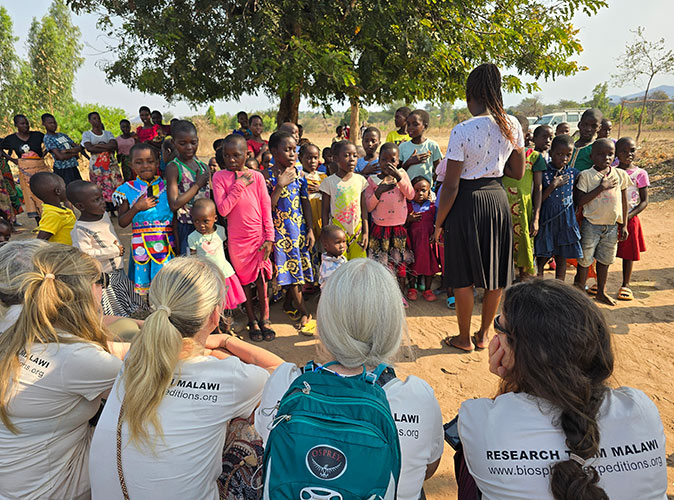
Of the 13 days spent at the project, you’ll get one day off, which is used as an opportunity to connect with the local community. The project organizes a visit to a nearby school, allowing you to experience a different side of Malawi.
Admittedly, I have mixed feelings about a group of Westerners being placed in front of a classroom and handing out toys, but we seemed very welcome and the kids were adorable.
Local woman even convinced us to dance with them to enjoy a bit of their culture.
We used the rest of our day off (which is free to spend however you want) to visit a local town, shop at a local market, and stop for a drink at a local bar.
5. Out of the 13 Days, You’ll Only Work For 10 Days
Although the project lasts for nearly two weeks, only 10 of those days are actual ”work” days.
Because of the remote location, the entire first and last day of the project are used to travel between capital city Lilongwe and the camp inside Vwaza Reserve. All the volunteers gather in Lilongwe from where a bus takes you to the camp. The drive takes about 8 hours, although in our case it was over 10 hours due to roadworks.
Then there is the one day off I mentioned, and your first day is a training day, so really only 9 days will be spent on research tasks.
This may sound short, and I agree that if volunteers would stay longer they could do more, and probably better, research and fieldwork. But, I think this 13-day project is the perfect length. It’s long enough to feel like you’ve learned something new and contributed something, yet short enough to keep it interesting.
6. The Weather
During the project, which is always organized in Malawi’s dry season, you can expect hot days and cooler nights.
The lowest temperature we experienced was 10°C (50°F) at night, and the highest temperature was 34ºC (93ºF) during the day.
Be prepared for both extremes by bringing layers of clothing, including light, breathable fabrics for the day and warmer options for the cooler nights.
And definitely pack sunglasses, a hat, and sunscreen—the sun can be fierce, especially when you’re out in the field for hours.
7. The Costs of Volunteering in Malawi
Volunteering abroad is a great way to contribute to conservation, but it does come with costs. The project has a participation fee that covers accommodation, food, and the resources needed for the research.
The fees help fund the work done in the reserve, and you’ll be able to see firsthand how your contribution makes a difference.
It still surprises many people that you have to pay to volunteer. I get it, yet it’s also your financial contribution that supports the research.
Without Biosphere Expedition’s volunteer project, these elephant and hippo studies would not take place.
You can find the current price of the volunteer project on Biosphere Expeditions’s website.
8. Things to Know About Malawi
The volunteer project starts in Lilongwe, Malawi’s capital.
I highly recommend arriving at least one day before the start of the project to avoid any issues with delayed flights or missed connections.
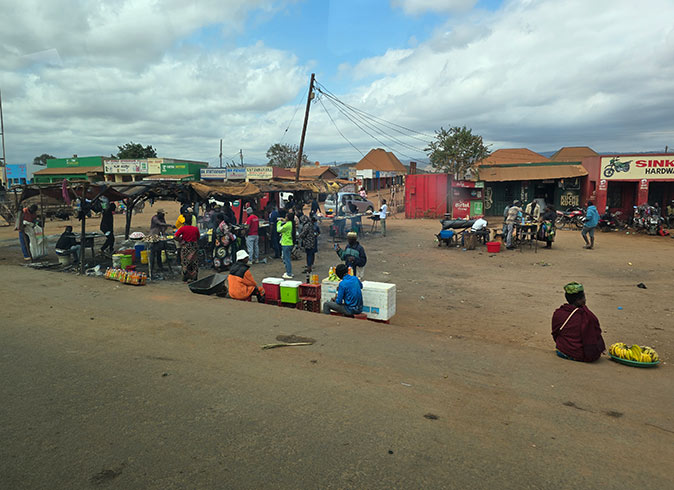
I have to admit, I was quite surprised by how expensive hotels are in Lilongwe. Especially seeing that about 70% of the population makes less than $2.15 a day.
The gap between tourist prices and local life seemed much bigger than most other countries I’ve traveled to. So, despite Malawi being a developing country, don’t expect it to be a very cheap travel destination.
As for where to stay in Lilongwe, I’ve stayed in various hotels and would recommend Woodlands Lilongwe. You can contact them directly through their Facebook page. If you say you’re volunteering with LWT they will most likely give you a discount. Alternatively, Sunbird Lilongwe is a good place to stay and can be booked online.
Tip: if you only visit one other place while you’re in Malawi, I’d recommend going to Cape Maclear on Lake Malawi. It’s a laid-back town on the edge of the lake with sandy beaches, boat trips, snorkeling, kayaking… enough to keep you entertained for a couple of days. I enjoyed staying at Thumbi View Lodge.
If you have more time, you might want to book an organized tour around Malawi because traveling around alone and using public transport isn’t easy. If I would have been traveling with someone else I might have looked into renting a car for a few days.
My Final Thoughts About This Volunteer Project
All in all, joining this project was a great experience and a great way to learn more about wildlife conservation in Africa.
As with most volunteering abroad projects I’ve done, certain things could have been organized better, and some additional funding to buy better equipment would have made our research better.
But, I do really believe that by participating in this project you contribute to something meaningful.
And, it’s a truly unique experience. Spending two weeks living in a remote camp with like-minded people, dedicating your days to searching for wildlife… it’s something I’ll remember forever!
If you want to know more about what my days in Malawi looked like, I’ve shared daily videos and pictures on Instagram which you can find in my highlighted stories titled ‘Malawi’.
About Volunteering With Biosphere Expeditions
This was one of three volunteer projects I’ve done with Biosphere Expeditions (the first time was in Portugal, which I really enjoyed, and later I joined them for a scuba diving volunteer expedition in the Maldives, which I absolutely loved).
The fact that I joined again of course says something. And many of the other volunteers I met have been on even more volunteer projects with Biosphere Expeditions.
Biosphere Expeditions, established in 1999, is a small non-profit research and conservation organization offering various volunteer projects in different countries.
Their mission is to promote sustainability by engaging volunteers in meaningful wildlife conservation and research efforts. Their expeditions aim to empower volunteers to make an impact while providing them with fulfilling and enjoyable experiences.
The volunteer projects have had measurable results and achieved great goals in various places, including the establishment of protected areas on four continents.
For more information about Biosphere Expeditions’ volunteer projects, click here.
I hope this article has given you a good idea of what volunteering in Malawi would be like. But of course, if you have any questions, just leave a comment below!
Also Read:
- Volunteering Abroad: Why You Should or Shouldn’t Do It
- What It’s Like to Live in Malawi – Interview With an Expat
- What is Ecotourism & How Can You Become a More Sustainable Traveler
- The Best Safari in Africa: 3 Things to Look For
- Volunteering in the Philippines With Marine Conservation Philippines
- Volunteering With Whales in the Azores (Portugal)
- Volunteering as an Ecodiver in the Maldives
Disclaimer: my volunteer program with Biosphere Expeditions was sponsored. As always though, all opinions are my own and I would never recommend anything I didn’t enjoy. This article contains affiliate links. I may receive a commission for purchases made through these links, at no additional cost to you.