
If you’ve already done the big London sights, my tip is to head southwest to Kew and Richmond.
It’s still London. You can ride the District line out here and tap in using contactless payment or an Oyster card, just as you would elsewhere in London. But as you head further southwest, London starts to feel very different.
There are deer in the bracken, a view people have been painting for two hundred years, and Victorian glasshouses warm enough to fog up your glasses when you walk in from the cold.
I went in late October, on my own. I’d booked it half-hoping a friend would come, but he had to cancel a week before. In the end, I was glad I went anyway. It was my first proper solo day trip in a while, and I really enjoyed having the freedom to explore at my own pace.
Also Read: Planning a Solo Trip – Practical Tips For Traveling Alone
I loved the mix of nature, history and beautiful architecture, although I made one big mistake: I tried to squeeze too much into a single day. Here’s what I’d recommend visiting, what you should know before going, and how I’d plan the trip differently next time.
What You Should Know Before Visiting Kew and Richmond
A few things I wish someone had told me:
- Kew Gardens costs money. It’s a paid ticket, though the Palm House, the Temperate House and the Treetop Walkway are all included. Booking online gets you the best value, so buy your ticket in advance instead of at the gate. Prices and hours change through the year, so check the Kew website before you go.
- Everything else here is free: Richmond Park, the view from Richmond Hill and the riverside.
- Kew has no lockers or bag storage. Leave the big backpack at your hotel.
- Bring a layer and something for rain. The weather out here doesn’t care about your plans.
- The deer in Richmond Park are wild. The Royal Parks asks you to stay at least 50 meters away and never feed them, and they mean it.
- If you need step-free access, Kew says the westbound platform at Kew Gardens station has no level access. Richmond station does, so it’s the easier one to use.
- Give it two days if you can. Kew and Richmond each deserve their own.
Places to Visit in Kew and Richmond
A good way to fit it all into one day is to start early in Richmond Park, walk down via Richmond Hill, then hop across to Kew Gardens for the afternoon.
But, if you have the time, I’d recommend spending one slow day on Richmond Park and Richmond Hill, and a separate day at Kew Gardens.
1. Richmond Park and Its Deer
The park is huge, and the earlier you get there, the quieter it is.
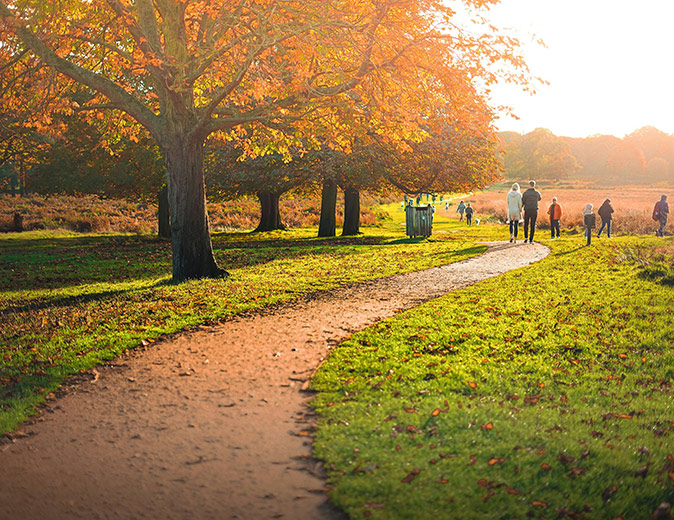
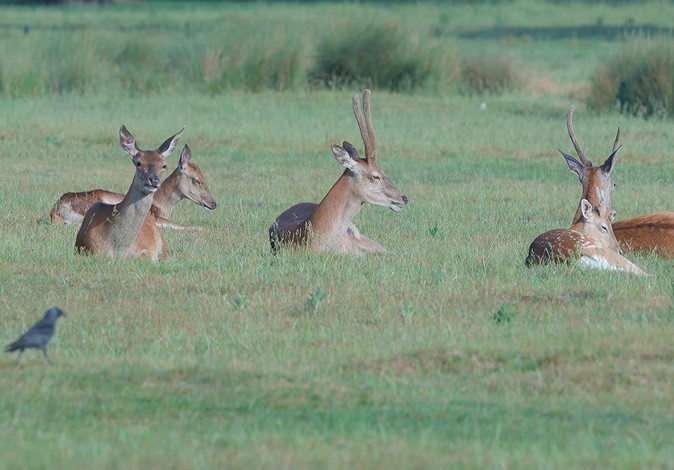
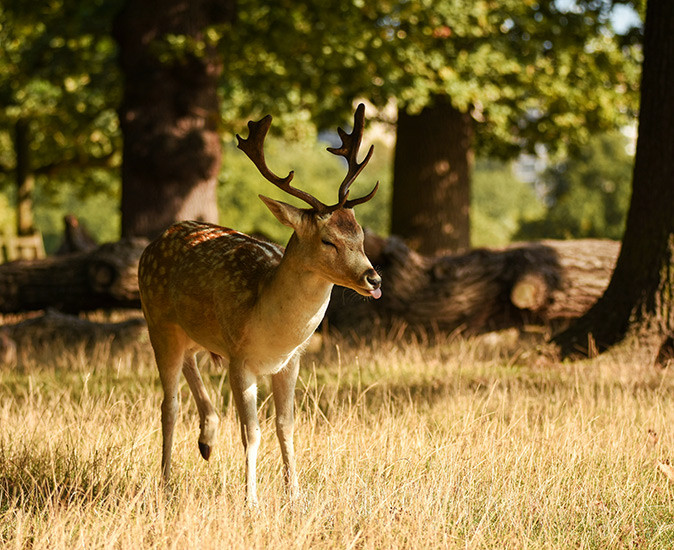
The Royal Parks says more than 630 red and fallow deer live here, and they’ve roamed freely since 1637, when Charles I brought them in. The whole park is a National Nature Reserve, and it feels like it.
I went during rutting season, and I heard a stag before I saw him: a deep, groaning bellow coming out of the bracken that I felt in my chest. Then he stepped out, maybe 60 or 70 meters away, breath steaming in the cold, and just stood there. I didn’t take a photo. I kept my distance and watched until he wandered off. A woman walking her dog stopped next to me, and neither of us said a word. We just shared this look of “can you believe this.” I think about that more than I’d admit.
Please take the distance rule seriously. The Royal Parks asks for at least 50 meters all year, and up to 100 meters when the stags are active during the autumn rut, from late September to early November. If you hear that roar, give them more room, not less, and use binoculars or a zoom lens instead of your feet.
From May to July it’s birthing season, so stay out of the long grass and bracken, and dogs must be on a lead everywhere in the park from May 1 to July 31.
Good to know: Don’t try to “do” the whole park. Pick one corner, wander, and let it be slow.
2. The View From Richmond Hill
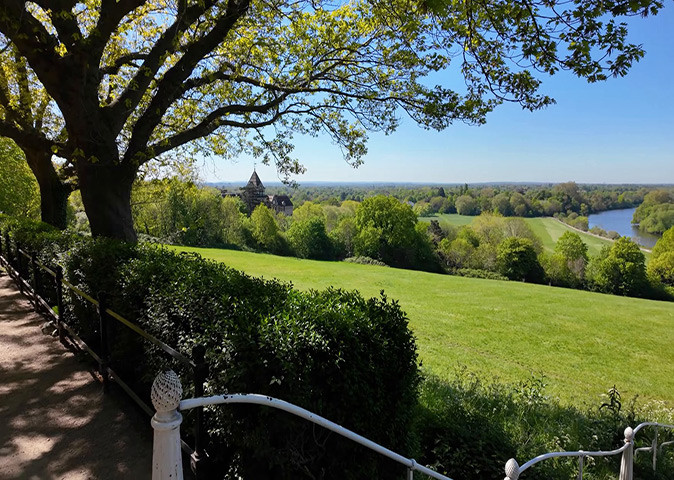
This is the view that got me. From the terrace near the top of Richmond Hill, you look out over Petersham Meadows to the wide, lazy bend of the Thames.
It looks like a painting because it literally is one: J.M.W. Turner painted this landscape. And it’s not luck that it still looks this way. The Richmond, Petersham and Ham Open Spaces Act of 1902 put Petersham Meadows and Petersham Common into public hands, which protects the view.
I did the walk up and stopped at the top, looking out over that bend in the river with the trees all gold and rust. It’s one of those views that makes your throat go a bit tight for no reason.
Then I ducked into The Roebuck, right there on the hill across the road from the terrace, for a pint and something warm. I sat by the window, watching the light go, phone face-down on the table. I felt like a grown-up doing life properly for once. The Roebuck says it has stood on Richmond Hill since 1717, and it serves food all day, so it works for lunch as well as that end-of-the-day pint.
My advice: find a bench or a window seat, sit down, and don’t rush. The view is free, and nobody will move you on.
3. Kew Gardens: The Palm House and the Temperate House
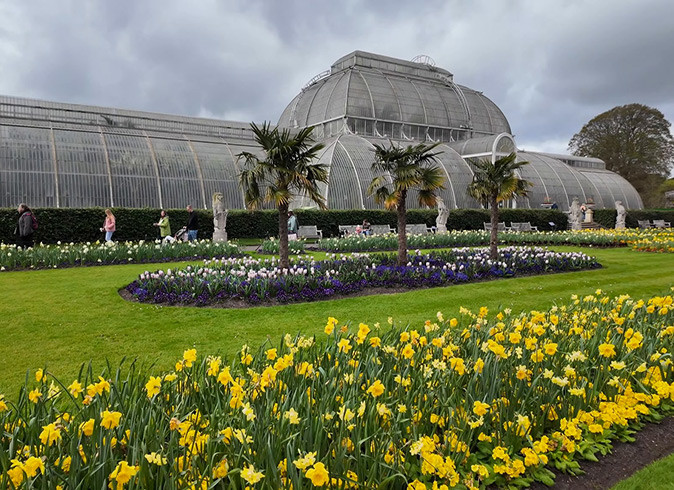
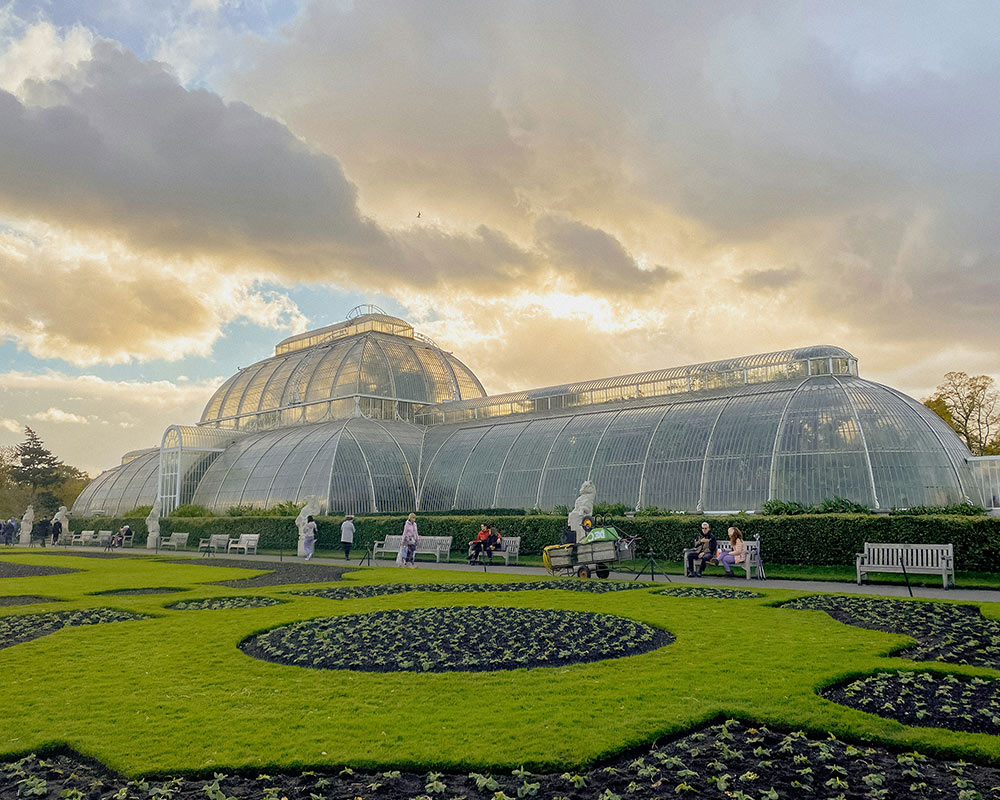
The Palm House is the building everyone pictures when they hear “Kew,” and everyone told me it would be the highlight. It’s gorgeous. Decimus Burton and iron-maker Richard Turner built it between 1844 and 1848, and they borrowed techniques from shipbuilding, which is why it looks a bit like an upturned ship’s hull.
Inside, it’s a proper indoor rainforest with more than 1,000 species, and a spiral staircase takes you up to a walkway among the palm fronds. In front of it, the flower beds of the Palm House Parterre are replanted each season.
Now the honest bit. The Palm House is getting ready for a big renovation planned for 2027, and Kew’s horticulturists have already started moving plants out. Kew says it’s still open, but it can look a little bare in places. If it’s your main reason for coming, check Kew’s website first.
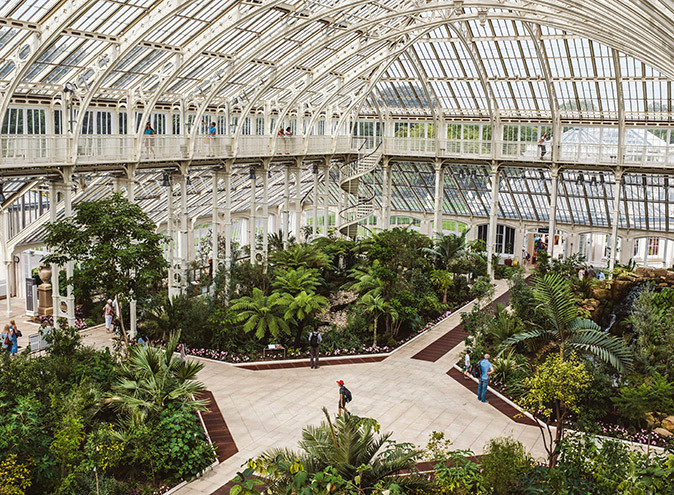
My close second at Kew was actually the Temperate House, which is the world’s largest Victorian glasshouse, with around 1,200 species from Asia, Australasia, the Americas and Africa. Coming in from the cold into that bright, warm glass room, my glasses fogged up completely, and I just stood there laughing at myself. It’s nearest to Lion Gate.
One tip: the glasshouses usually close an hour before the Gardens, so don’t leave them until last on a short day.
4. The Treetop Walkway
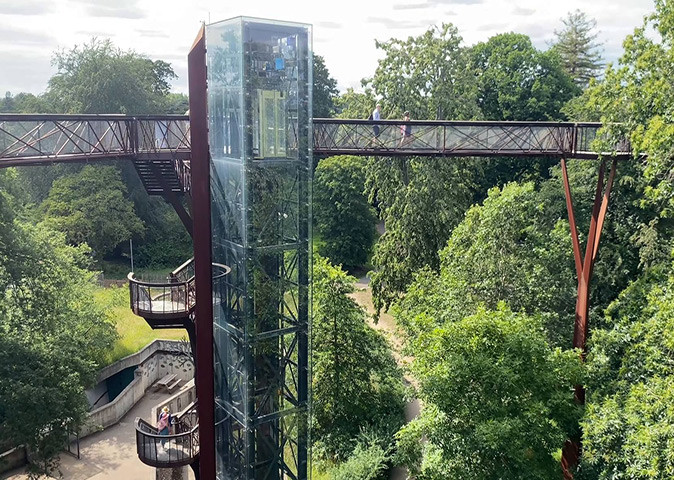
This was my favorite spot in Kew. The walkway is 18 meters up, threaded through sweet chestnut, beech, horse chestnut and oak, and its rusty steel columns are meant to blend into the woods.
Being up in the canopy with the leaves turning all around me, the walkway swaying ever so slightly, I felt like a kid again. It’s designed to flex a little in the wind, so that sway is meant to be there. If heights make you nervous, look out at the trees rather than down.
There are 118 steps, or a lift if your legs are done for the day. It can close in bad weather or for maintenance, so check Kew’s visitor notices before you head over.
Getting to Kew and Richmond
It’s an easy trip:
- Kew Gardens station is in Zone 3, on the District line (Richmond branch) and the London Overground’s Mildmay line. It’s 500 meters to Victoria Gate.
- Richmond station is one stop further and has a lift and level access.
- Bus 65 links Richmond station with Kew’s Lion Gate and Victoria Gate.
- The Thames Path runs along the river between Kew and Richmond, if you’d rather walk.
Contactless works exactly as it does in central London, so just tap in and out. Before you go, have a look at my map of London’s parks and gardens to see how Kew, Richmond Park and the other green spaces fit together.
Here’s What I’d Do Differently
I crammed Kew and Richmond into one day, and by the end my feet were wrecked and I was rushing things that deserved slowness.
Next time I’d give each its own day.
I’d also walk the Thames Path between them instead of taking the train back and forth. In autumn that riverside stretch looked beautiful from the window, and I regret not being on it.
And I’d book my Kew ticket online the day before instead of queuing like a muppet.
Kew and Richmond FAQs
How Much Time Do You Need?
Two days, if you can spare them: one for Richmond Park and Richmond Hill, and one for Kew.
If you only have one day and want to take it easy, choose one. Kew alone can easily fill a day, and Richmond Park plus the hill makes a lovely slow day that ends with a pint and that view.
Is It Worth It If You’re Only in London a Few Days?
On a first trip, I’d do the main sights first, and Mark’s guide to visiting London for the first time is a great place to start. But if you’ve already ticked off the landmarks, this is the corner I’d add. It’s the same kind of thinking as Helene’s insider’s guide to London beyond the obvious.
When Is the Best Time to Visit?
I went in late October, with the trees gold and rust and the rut in full swing, and it was beautiful. Just give the deer plenty of space at that time of year, and again during the May to July birthing season.
Spring brings the flowers at Kew, and a bright day is perfect for the Treetop Walkway.
Final Thoughts About Spending a Day in Kew and Richmond
This corner of London is quiet, green and slow, and a lot of first-time visitors never make it out here.
It isn’t all free, and the Palm House is undergoing renovation. But a stag stepping out of the bracken, that view from Richmond Hill, and the walk through Kew’s treetops made it one of my favorite days out in London, even though I tried to fit too much into it.
And if you want the complete opposite afterward, Sanne’s guide to a day in Camden Town is about as different as London gets.
Also Read: