

Many people consider living in Japan and I, living here myself, can see many reasons why.
There are convenience stores everywhere, low crime, and an endless number of travel destinations across the country.
However, when finally moving to Japan, there are culture shocks that you experience more as you live in the country.
Here is a list of some of the most important, and some surprising, things to know before moving to Japan, which will give you an idea of what to expect.
Things to Know About Life in Japan Before You Move Here
Living in Japan at a Glance |
|
|---|---|
| Cost of living | Moderate to high (Tokyo), moderate in most other cities |
| Safety | Extremely safe |
| Language | Japanese is essential outside major tourist areas |
| Healthcare | Excellent and affordable with health insurance |
| Public transport | Outstanding and highly reliable |
| Apartments | Generally compact, especially in Tokyo and Osaka |
| Vegetarian-friendly | Improving, but still more challenging than in many Western countries |
| Driving | Usually unnecessary in cities; useful in rural areas |
1. Japanese Toilets Can Be Surprisingly Confusing!
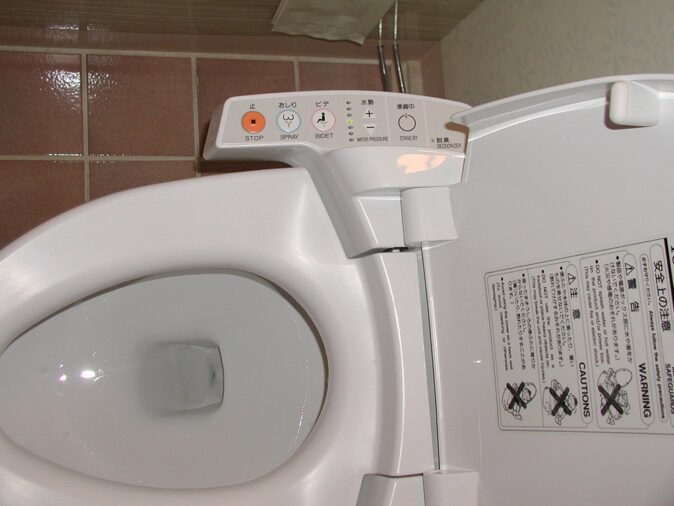
As weird as it sounds, flushing the toilet is something foreigners have trouble with in Japan.
Japanese toilets are very advanced, having features like a seat warmer, bidet, and deodorizer.
In some toilets, they’ve even replaced the traditional flushing lever with a button written in Japanese, confusing many who can’t read the language.
Don’t worry though, you’ll get used to it and will probably have a laugh figuring out how it works. Also, many newer toilets now include some English labels or icons, especially in airports, hotels and newer buildings.
Also Read: Facts About Japan – Some Interesting, Some Funny & Some Shocking!
2. No Trash Cans in Public

If you’ve walked around Japan, you may have noticed that it’s hard to find a trash can in a public place.
There are almost no trash cans in most open areas, and you end up having to take the trash all the way home.
When you’re carrying trash in Japan, there are occasionally trash bins in the train stations but the best option would be to check the nearest convenience store first. Although I have to say convenience stores are becoming less willing to accept outside trash than they used to.
3. Recycling is Mandatory
A useful thing to know if you are planning to live in Japan is that recycling is mandatory and also very specific.
Not only do you have to separate recyclables from other trash, but you also have to separate the different types of recyclables such as plastic bottles, cans, glass, and used paper.
In addition, trash that’s bigger than 30cm on at least one side is considered “big trash” and has a separate recycling process.
Here’s a guide that goes into detail about exactly how to separate trash in Japan.
4. Learn to Live in Small Spaces
If you decide to live in Japan, and especially Tokyo, you most likely will end up living in a room that’s much smaller than you’d expect.
It may be a bit uncomfortable, but sooner or later, it’ll teach you how to utilize small spaces.
Watch the funny video above to see just how small apartments in Japan can get!
Note: this mainly applies to Tokyo, Osaka and central Yokohama, and less so to regional cities.
5. Life in Japan is Expensive but Affordable
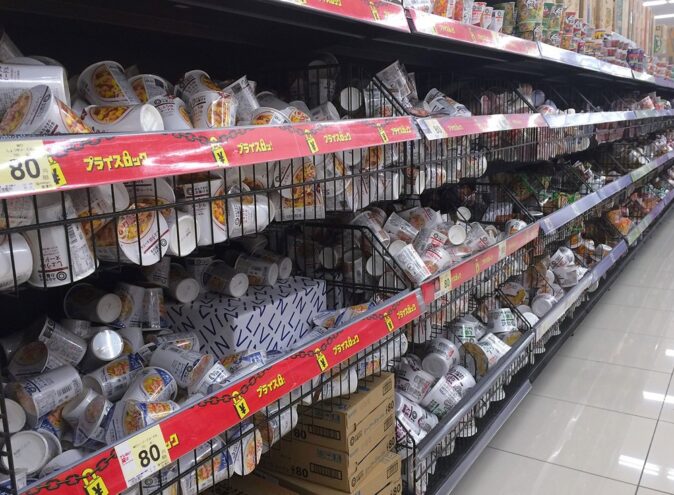
Japan has a reputation for being an expensive country, especially cities like Tokyo.
While the cost of living has increased over the past few years, everyday life in Japan is still surprisingly affordable compared to many major cities in North America, Australia, and Western Europe.
One of the great things about living in Japan is that there are plenty of simple ways to keep your monthly expenses under control.
Here are some of the best ways to save money while living in Japan:
- Convenience stores are fantastic in Japan, but grocery shopping and cooking your own meals will save you a lot in the long run.
- Shop at 100-yen stores like Daiso, Seria, or Can Do before buying household items elsewhere. You’ll be surprised by the quality and selection.
- Take overnight buses instead of the Shinkansen (bullet train) if you’re traveling between cities on a budget. They’re much cheaper, and you’ll save on a night’s accommodation too.
- Buy used furniture and household items from Facebook Groups (Sayonara Sales and Mottainai Japan, for example) instead of buying new ones. Local recycle shops often have excellent bargains too.
- Check Nitori before buying furniture. It’s one of Japan’s best-known affordable home furnishing stores and a great place to get started when furnishing an apartment.
- Shop at GU or Uniqlo for affordable everyday clothing. GU is generally the cheaper option, while Uniqlo offers slightly higher quality basics.
- Use public transportation instead of owning a car. In most cities, Japan’s excellent train and bus networks make owning a car unnecessary, saving you a significant amount of money on fuel, parking, insurance, and maintenance.
6. It’s Not Easy to Live in Japan as a Vegetarian
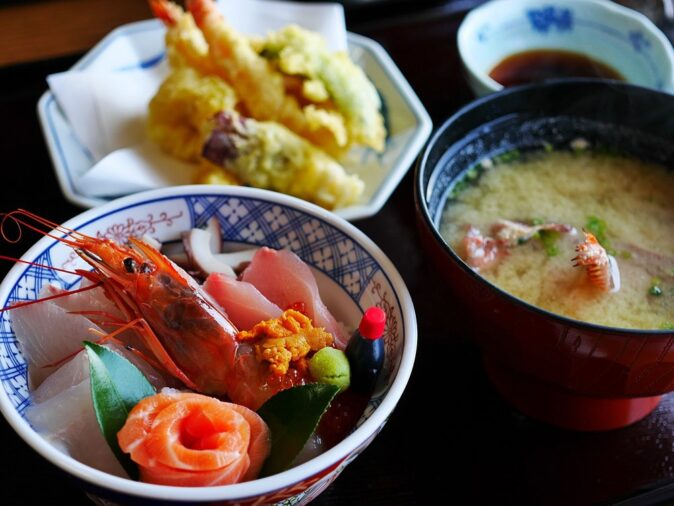
Japan is still one of the more challenging countries for vegetarians and vegans outside the major cities.
Ironically, it’s rare to find dishes with huge meat portions in Japan, but it’s also hard to find dishes completely meat-free.
Gyudon, rice bowls topped with meat, is one of the most common foods in Japan and even dishes like ramen, yakisoba, tempura, oden, and even miso soup contain some form of meat or seafood.
Also Read: Food in Japan – 8 Things not to Miss
7. Must-Have Apps When Living in Japan
Google Maps
For those who have iPhones, Apple Maps is not very accurate in Japan for some reason.
Plus, Google Maps has all the train timetables and bus routes.
There’s a local app called myNavi which shows directions between train stations, but it’s all in Japanese and there are paid features which are available for free on Google Maps.
Translation Apps
A good translation app will make everyday life in Japan much easier.
Google Translate and Google Lens are invaluable for translating conversations, menus, signs, and product labels, while many expats also use DeepL for more natural translations of longer text.
Google Translate has unique features like live translations and voice translations. Don’t forget to download the English and Japanese set for offline use!
8. Avoid Peak Time Trains If You Can
This video where the station workers are helping shove people into trains in order to close the door went viral.
Although the train workers don’t shove with all their force, this is actually very common, especially in Tokyo during peak hours.
Certain lines have incredibly crazy traffic in the morning and it’s wise to take this into consideration when you’re moving to Japan.
Although it’s impossible to know for every single route, a general note is that the lines that go from the suburbs (like Chiba, Saitama, Nerima, Hachioji) into the center of Tokyo are the most crowded.
9. Same Platform, Different Train
One of the reasons many people get lost in Japan is because they arrive at the correct platform but get onto the wrong train.
Some trains are express trains that don’t stop at local stops.
It’s important that you recognize the Kanji written on the train before riding. If you use Google Maps, it should tell you which trains reach your destination.
Local – 各駅停車 – stops at every stop
Express – 急行 – stops only at big stations
Semi express – 準急 – skips a few stops in the middle
Rapid – 快速 – similar to Express
Commuter express – 通勤 – skips a lot of stops for people commuting between cities
10. What to Do When You Miss Your Last Train
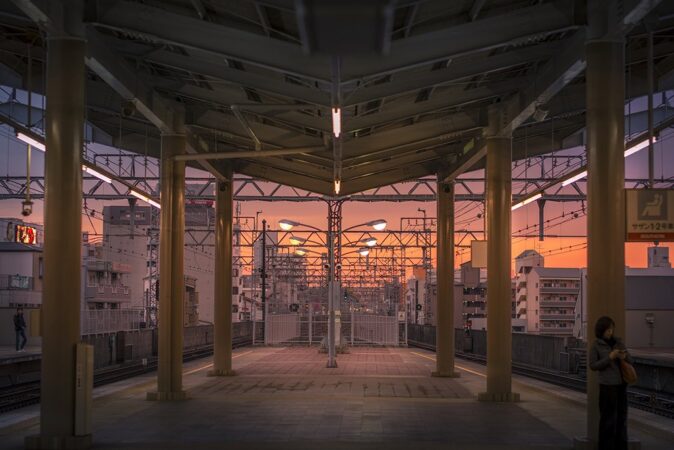
For various reasons, many people miss the last train back home.
Some choose to return by taxi, but taxis can be very expensive in Japan, especially with the extra charges at night.
So what do you do? Luckily, the first train is around 4:00 am- 5:00 am so you may have to wait for about four hours to take the first train home. Here are a few options to kill some time:
- Stay at a 24-hour restaurant (McDonald’s, family restaurants, etc)
- Spend time at a karaoke
- Get some snooze at a local manga cafe
- Relax at a 24-hour onsen or spa
- Stay at a capsule hotel
11. Get an International Driver’s Permit Before Moving to Japan

It depends a little on where your driver’s licence is from, but most nationalities can drive in Japan for 12 months with an International Driver’s Permit (IDP).
If you’re moving to Japan, I would therefore highly recommend applying for an IDP before arriving.
You cannot apply once you’re living in Japan and you would need to go back and live in your home country for three months in order to apply again.
Even if you know that you won’t be driving, having an IDP can be good for many reasons. One is that you’re able to rent a car when you go traveling to rural places.
Japan has many popular tourist destinations but many hidden gems are hard to access by public transportation.
Here are some places worth checking while living in Japan that are hard to access without a car:
Another reason to get an IDP is that it’ll be much easier to get a driver’s license in Japan later on. If in the future you want to apply for a Japanese driver’s license, you’d be able to legally practice driving before taking the driving test with the IDP.
The easiest way to get an IDP is by ordering it online.
For more information about driving in Japan with a foreign licence, check Japan Automobile Federation.
12. Don’t Show Your Tattoo
Tattoos have a bad reputation culturally in Japan as being linked to the yakuza (members of Mafia-like criminal organizations).
It was completely prohibited to have tattoos in most places in the past. And although having a tattoo is okay now, you’re not allowed to show it in certain areas such as some hot springs, beaches, and swimming pools.
In addition, you won’t be able to apply for jobs dealing with customers if you have visible tattoos.
13. What to Do When You Lose Your Wallet
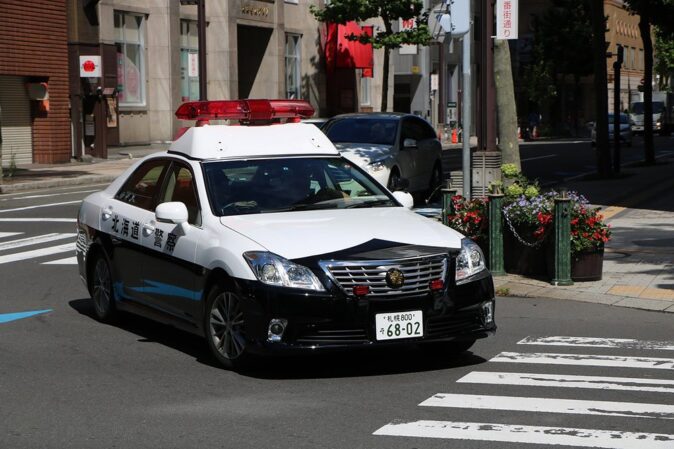
Japan’s crime rates are very low and if you lose your wallet, there’s a good chance that you may be able to find it again.
Try making a few calls to places where you may have lost it and visit the train station lost and found. Try visiting the police box or Koban near where you walked.
Even if some cash may be missing, you’d still be able to get back everything else which isn’t common in most countries.
14. Natural Disasters are a Concern
Crime may not be a big issue in Japan but natural disasters are.
Japan is an island located in the Pacific Ocean Ring of Fire, so it’s to be expected that earthquakes and typhoons are common things.
Although most of them are mild and won’t affect your daily life, it’s important to pay attention to weather forecasts and listen to warnings when announced just in case a huge one might occur.
These are useful links to an earthquake preparation guide and a live typhoon watch:
Another tip is to always keep a small umbrella with you. Rainfall can be very random in Japan and you don’t want to buy an umbrella every time it starts raining!
Final Thoughts: Is Japan a Good Place to Live?
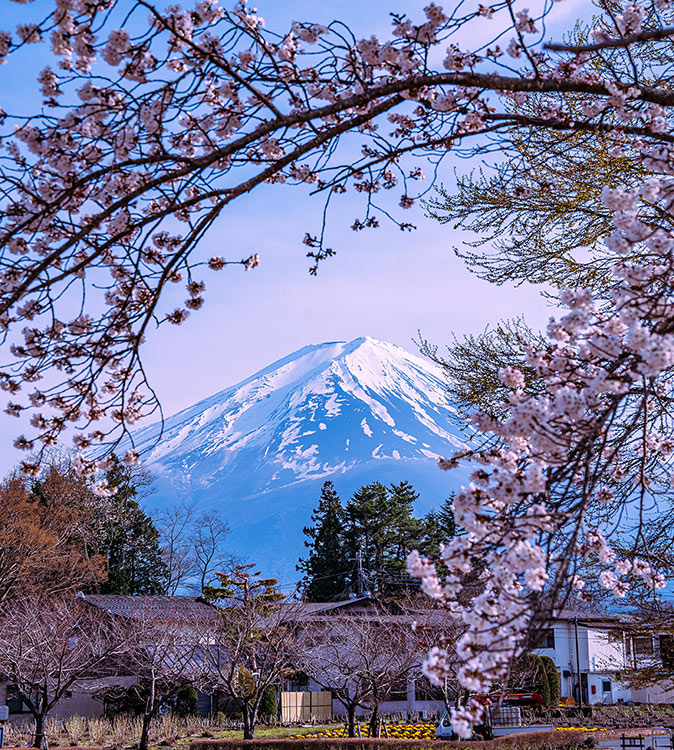
Japan is an incredible place to live if you value safety, cleanliness, reliable public transport, and a high quality of life.
Daily life here is very organized, cities are remarkably clean, and it’s easy to travel around the country by train. Add in the incredible food, beautiful nature, and the changing seasons with events like cherry blossom season and autumn leaves, and it’s easy to see why so many people fall in love with Japan.
That said, life here isn’t always easy. The language barrier can make everyday tasks more challenging than many newcomers expect, paperwork and bureaucracy often require patience, and making close local friends can take time. Apartments in major cities are generally small, and Japanese work culture can be demanding depending on your employer.
What Surprised Me Most When I First Moved to Japan
A few things caught me off guard after moving here:
- Paperwork takes time. Registering your address, setting up utilities, and opening a bank account often involve more forms and office visits than you might expect.
- Apartments are smaller than I imagined. Especially in Tokyo and Osaka, making the most of limited space quickly becomes a useful skill.
- Convenience stores are genuinely convenient. They’re great for affordable meals, paying bills, sending parcels, and much more.
- Recycling rules are taken seriously. Every municipality has its own system, so learning the local rules early will save you headaches.
- The trains really are that punctual. Once you get used to trains arriving almost exactly on time, it’s hard to go back.
Overall, if you’re willing to embrace a different culture and adapt to a few everyday challenges, living in Japan can be an incredibly rewarding experience.
For me, it’s a country that quickly started to feel like home.
Also Read: Things to Consider Before Moving Abroad
If You Are Thinking About Visiting or Living in Japan, Also Read:
- 8 Things Not to Miss for Food Lovers Traveling to Japan
- 40 Interesting Facts About Japan
- Nature in Japan – Where to Go & How to Explore the Japanese Countryside
- 7 Places to Visit in Tokyo if You Love Tech & Gaming
- Interview With an Expat About Life in Tokyo
- Wellness in Japan: The Best Onsen, Retreats & More
Like this article about things to know about living in Japan? Pin it!
This article contains affiliate links. I may receive a commission for purchases made through these links, at no additional cost to you.
I’m planning to move to Japan in the next few months and this post has been incredibly helpful in giving me an idea of what to expect. I’m looking forward to learning more about the culture and customs, and discovering all the hidden gems that Japan has to offer. Thanks for sharing your insights!
I would state the importance of learning the language before moving to Japan. I made the mistake of moving here without any Japanese skills and it’s been a significant challenge. It’s amazing how much easier everything becomes when you can communicate effectively. I’ve also found that making local friends and connecting with the community is crucial for making the most of your time in Japan. Great post!
As a psychologist and person who has been living in Japan for several years, I can say that Japan is a good country that has a lot of mentally ill people. The best things in this land are the transportation system and the toilets. Do not trust the Japanese.
This feels like a very Tokyo/Osaka-centric article. Article should be titled “Living in Osaka/Tokyo, Japan”.
I’ve lived in Shikoku, Tohoku and Hokuriku and in those places much of your list doesn’t apply.