

Traveling through South Africa in two weeks is an exhilarating and immersive experience. You’ll explore the rich cultural heritage, breathtaking landscapes, and diverse wildlife of this amazing country.
Affectionately referred to as the Rainbow Nation, South Africa is a vibrant and multi-ethnic country. You’ll find a unique blend of traditions, languages, and customs.
South Africa is one of my favorite countries in the world. And therefore I’m excited to share this two-week South Africa itinerary that will take you on an unforgettable journey through the best of this country.
You’ll see the exciting cities of Johannesburg and Cape Town, the epic wildlife of Kruger National Park, and the heartstopping vistas along the Garden Route.
Whether you are interested in history, adventure, or relaxation, South Africa has something to offer every type of traveler. Below you’ll find your path through the Rainbow Nation. Add your own tweaks to make your time in South Africa the trip of a lifetime.
Let’s go!
2 Weeks in South Africa
Day 1-3: Johannesburg
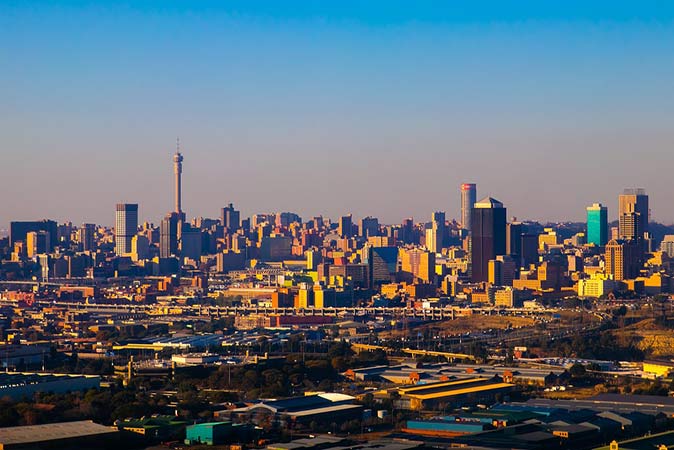
Fly into Johannesburg’s OR Tambo International Airport, and rent a cart here, get an Uber, or a hotel shuttle to your accommodation.
Start your 2 week South Africa itinerary by spending a few days getting to know Johannesburg, South Africa’s largest city.
Visit the Apartheid Museum to learn about the country’s history, and explore the city’s vibrant neighborhoods like Maboneng and Newtown.
Don’t miss a visit to the Top of Africa, the tallest building in Africa, for stunning panoramic views of the city.
Best time to go: any time of year is amazing.
Where to Stay in Johannesburg
Budget:
Once in Joburg: This hostel is located in the high-energy central neighborhood of Braamfontein.
It offers dormitories and private rooms at affordable prices. It has free parking, and airport transfers, and is close to a lot of great restaurants and attractions.
Mid-Range:
voco Johannesburg Rosebank: you’ll have parking on request, tours and activities organized for you, and vegan food options in the restaurant.
The hotel’s location is great, close to bars, restaurants, and shopping.
Luxury:
Saxon Hotel, Villas and Spa: This award-winning hotel is located in the upscale neighborhood of Sandhurst.
It offers free parking and luxurious rooms, suites, and villas. The hotel has a spa, a pool, several restaurants and bars, and a beautiful garden.
Day 4-5: Kruger National Park
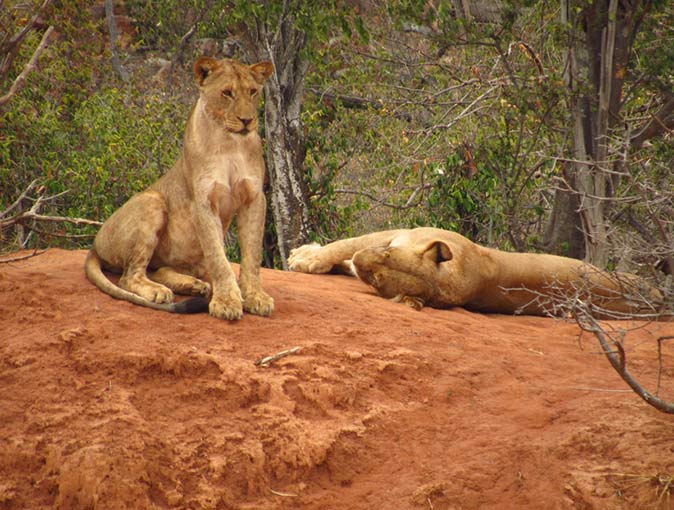
Take a flight or drive to Kruger National Park, one of the best places in South Africa to see the Big Five (lions, elephants, leopards, buffalos, and rhinos).
If you have two weeks in South Africa, I’d recommend spending two days exploring the park on game drives or guided walks.
It’s about 400 km, or 250 miles, from Johannesburg to the park. If you choose to fly, the park has its own airport, and you can rent a car right there. Kruger is a great place for a self-drive safari. A 4×4 isn’t necessary as most roads are fine for a sedan.
If you drive from Johannesburg, check out the map of the park to decide which gate to enter from. This will depend on which camp you’re staying at (see below).
The park is about 220 km, or 137 miles, from north to south, to give you an idea of the scale.
You can enter Kruger Park at a gate farther from your camp and enjoy spotting the animals on your way there, or enter nearer your camp if you’d like to settle a bit before heading out.
Keep in mind that the camp gates close at sunset and open at sunrise. There’s a fine for trying to enter after the gate is closed.
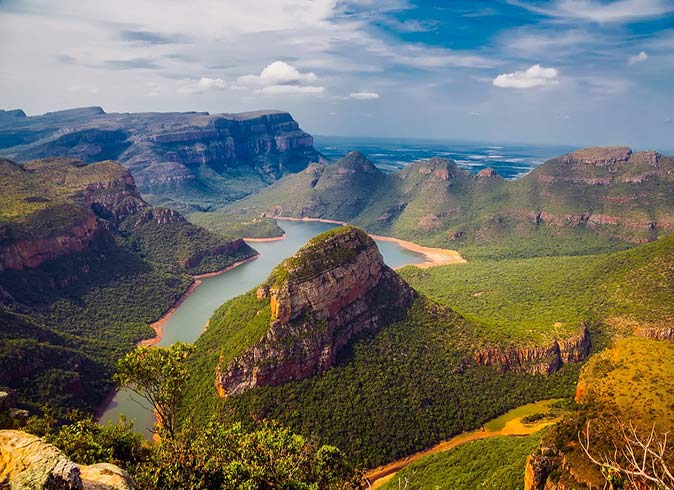
If you decide to drive to Kruger NP, you’ll be traveling through the area known as the Panoramic Route. A main attraction along the way is the stunning Blyde River Canyon, a “green canyon” full of tropical flora and waterfalls. It’s the third-largest canyon in the world.
If you’re driving in this direction, take N12 out of Johannesburg and set your GPS for the landmark known as the Three Rondavels, located on the edge of the canyon. These unique natural structures are an impressive site with stunning views from the top, and it’s a good spot for a short hike.
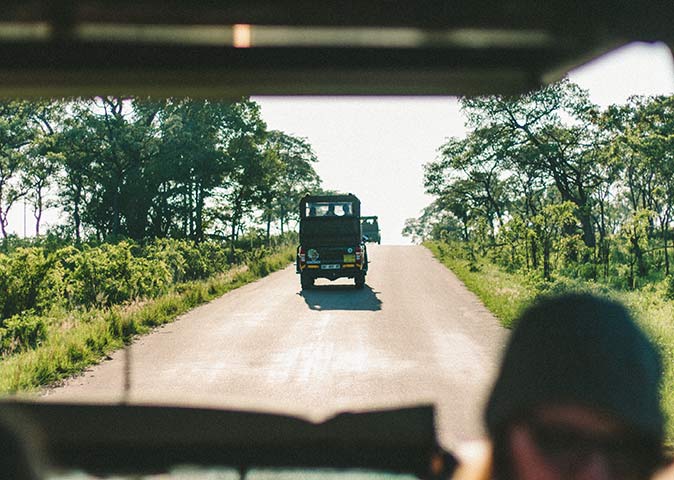
A great way to make the most of your time in Kruger National Park is to mix up driving with a guided early morning or night safari. The guides are experts in spotting the animals and knowing where to find them. They can also fill you in on some great facts about the area and the wildlife.
Best time to go: May to September for the dry season.
Also Read: What to Look For to Have the Best Safari in Africa
Where to Stay in Kruger National Park
It would be easy to spend several weeks in Kruger with the epic wildlife. But when you’re seeing South Africa in 2 weeks, a traveler needs to use their time wisely.
Choosing which of the park’s 23 camps you decide to stay at is important, as they all have different facilities, different sightings, and their own energy. But, they all offer the opportunity for some great wildlife sightings.
Here are some top choices for camps to stay at:
Skukuza Rest Camp: This is the largest camp in Kruger National Park, and it is located in the southern part of the park.
Skukuza Rest Camp offers a variety of accommodation options, including chalets, cottages, and safari tents. The camp has a restaurant, a swimming pool, and a large shop. It is also the headquarters of the park, so it’s busy, and great for meeting other travelers.
Satara Rest Camp: This camp is located in the central part of the park and is known for its great lion and leopard sightings.
The “Cat Camp” has accommodation in guesthouses, bungalows, and tents. There is a restaurant, a swimming pool, and a shop. It is a great place to stay if you want to see lions and other big cats.
Lower Sabie Rest Camp: Located in the southern part of the park, Lower Sabie is on the banks of the Sabie River.
This rest camp offers a range of accommodation from campsites to chalets and bungalows. It has a restaurant, a swimming pool, and a shop.
A lot of wildlife is attracted to the water sources around the camp, so you can sit and enjoy the show.
Mopani Rest Camp: This camp is located in the northern part of the park, and it offers spectacular views of the Pioneer Dam.
Mopani Rest Camp has accommodation in chalets and tents. There’s also an unbelievable ‘sleep-over’ game viewing hide, the Shipandani hide – be sure to keep this in mind when you book your stay.
Mopani has a restaurant, a swimming pool, laundry, and a shop. It is a great place to stay if you want to see elephants, buffalo, and other animals that visit the dam. Bushwalks are also available here – outstanding.
Private game lodges: There are several private game lodges located within or near Kruger National Park, offering a more luxurious experience.
These private lodges offer exclusive safari experiences, with experienced guides and trackers, and luxurious accommodation. Examples of private game lodges include Sabi Sabi, Singita, and Londolozi.
Important tip: Accommodations in Kruger Park tend to book up far in advance, especially in the dry season and during school holidays.
I recommend booking as far in advance as you can, and always booking on the SanPark website or by calling directly. They will have the most current availability. Other sites might say that a camp is full when there actually are spots open.
Also, you’ll need to arrange for your own mobile data if you’d like it, as most places in Kruger Park won’t have WiFi for you.
Day 6-7: Durban
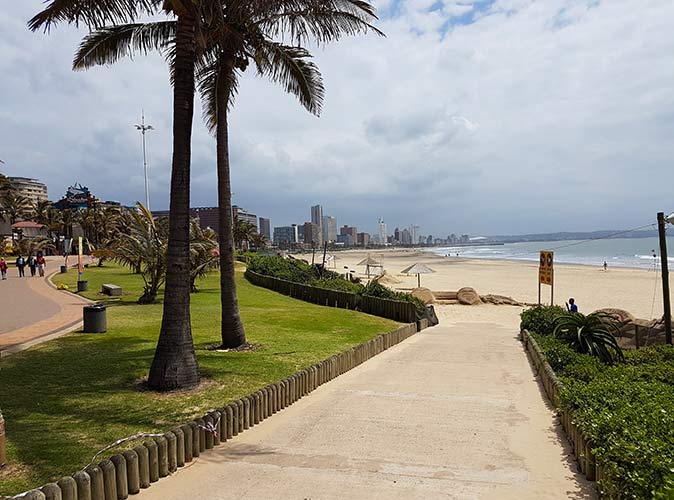
From the airport in Kruger NP, fly to the coastal city of Durban. It’s about a 10-hour drive from the southernmost Kruger Gate, Crocodile Bridge, so flying will save time.
Durban is known for its great beaches, delicious Indian food, and reliably warm weather.
A great place to start here is Minitown, one of Durban’s favorite attractions. It will give you a bird’s eye view of what there is to see in town, plus a good idea of what you’d like to visit in person. It’s a great way to put the sights of Durban into perspective, as the buildings are about knee-height and you can see the entire city all at once.
Be sure to take a stroll along the Golden Mile while you’re here. Minitown is found along the Mile, a lively beautiful promenade that runs along the coastal beaches of the Indian Ocean. You’ll come across many things to see and do in this area, such as traditional Zulu craft stalls and the Time Warp Surf Museum.
Best time to go: year-round, but maybe avoid the rainy season from October to March.
Also Read: Where to Find the Best Breakfast in Durban
Where to Stay in Durban
Budget:
Located on North Beach along the Golden Mile, the Belaire Suites Hotel is a budget-friendly option with kitchenettes in the rooms and a great café on site.
It’s also got a breakfast buffet on the top floor with great ocean views, and private parking. The hotel is close to everything the Mile has to offer.
Mid-Range:
Located near Golden Mile in Durban, The Travel Inn Durban is a popular mid-range hotel that offers comfortable and stylish accommodations.
The hotel offers bike rentals, a community kitchen, and a grill.
It’s very close to the Rhumbelow Theatre and about 8 km, or 5 miles, from the Golden Mile and the beautiful Durban Botanic Gardens.
Luxury:
The Oyster Box Hotel is a luxurious, five-star hotel located in the exclusive coastal suburb of Umhlanga Rocks, just north of Durban.
The hotel features elegant rooms and suites, a spa, an outdoor pool, and direct access to the beach.
It is also within easy reach of many of the area’s top attractions, including the Umhlanga Lighthouse, Gateway Theatre of Shopping, and the Africa Art Gallery.
The hotel’s award-winning restaurants serve a range of delectable cuisine, including traditional South African dishes and fresh seafood.
Day 8-9: Drakensberg Mountains
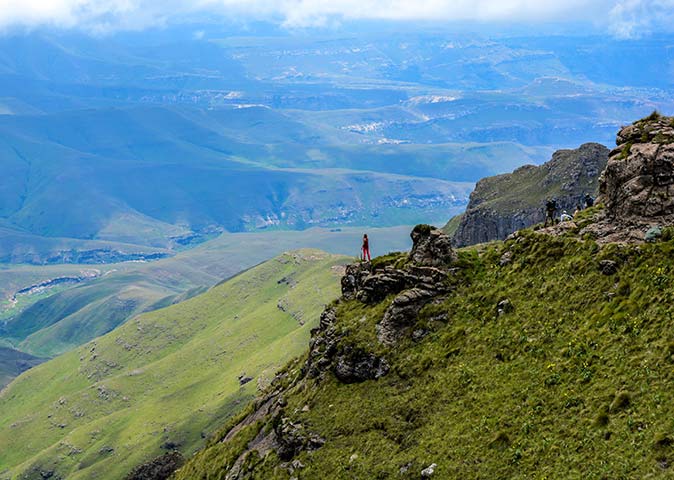
Drive from Durban to the Royal Natal National Park in the Drakensberg Mountains. Three thousand meters high and also known as the uKhahlamba-Drakensberg Park, they’re a UNESCO World Heritage Site.
Drakensberg Mountains, Afrikaans for ‘Dragons’ Mountains’, are famous for dramatic peaks, valleys, and cliffs.
The views are breathtaking, and there are some really unique hiking experiences. Spend your two days exploring the area, and hike to the Tugela Falls, the second tallest waterfall in the world.
There are several other hiking trails available, as well, for all levels of fitness, from easy strolls to challenging multi-day treks. You can also go horseback riding, mountain biking, or rock climbing while you’re here.
Aside from fantastic hikes, amazing stops in these mountains include Cathedral Peak, Giant’s Castle, and the Amphitheatre.
The drive from Durban to the Drakensberg Mountains takes about 3-4 hours. Once there, you can choose to stay in one of the many lodges, hotels, or campsites in the area.
Best time to go: April to May for autumn colors and mild temps, or September to November for spring wildflowers.
Also Read: Tips for Driving Abroad for the First Time and What to Bring on a Hike
Where to Stay in the Drakensberg Mountains
Budget:
Ledges Retreat is a budget-friendly accommodation option located near the Royal Natal National Park.
It’s in a gorgeous setting with mountain views, a seasonal outdoor pool, and free parking. Breakfast is included, there is a communal kitchen, and laundry service is available.
Mid-Range:
Montusi Mountain Lodge is a popular mid-range accommodation option in the Drakensberg Mountains.
This resort offers a range of accommodations, including rooms, suites, and cottages. The family-run lodge also has a great restaurant, amazing staff, a spa, and free parking. All with a view of the Amphitheater.
Luxury:
The Montusi Mountain Lodge, above, also offers luxury accommodations. You can’t go wrong by staying at this spectacular lodge.
The views, the friendly atmosphere, and the superb location will make it hard for you to leave.
Day 10-12: Cape Town
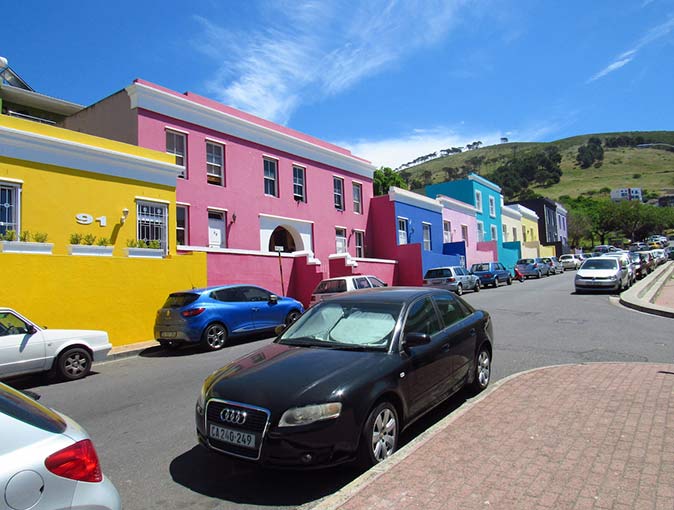
Fly from Durban to Cape Town, absolutely one of the most beautiful cities in the world and a place that can’t be missed on any 2 week South Africa itinerary.
Also called the Mother City, Cape Town is full of amazing sights and fun things to do.
I’d recommend catching the double decker Hop-On Hop-Off Bus during one of your days. You can choose the route that best suits your interests.
Jump off when you see something you like, maybe Clifton Beach or Kirstenbosch Botanical Gardens – both highly recommended. Then hop back on when you’re ready to move on. I rode this bus for two days because it was so convenient, and there was so much to see.
Table Mountain, one of the most iconic landmarks in South Africa, can be summited by way of a few different hikes, or you could ride the gondola up in good weather. The view from the top is incredible, and there are a few hikes around the top, as well.
Make a trip out to Boulder’s Beach in Simon’s Town to see the African penguins. It’s one of the best places anywhere to see these adorable penguins in the wild. If you go swimming at the beach, you may even find yourself in the water with a few.
In addition, don’t miss a visit to the Winelands. A driving tour of Cape Town’s Winelands is a great way to explore the region at your own pace and discover some of the best wine estates and scenic routes.
Start your tour with a drive through the historic town of Stellenbosch. Get there on N2 and R310 from central Cape Town. Stellonbosch is well-known for its Cape Dutch architecture and wine estates.
Here, you can take a stroll along the quaint streets, and visit the local markets, boutiques, and cafes. And, of course, explore some of the many wine estates that are in the area. Don’t miss Simonsig – my favorite.
From Stellenbosch, take a scenic drive through the beautiful countryside toward Franschhoek. Along the way, you can stop at the different wine estates you’ll pass to sample some of the region’s finest wines and learn about the winemaking process.
Once you’re in Franschhoek, take a stroll through the pretty town and check out the art galleries, museums, and shops. The town is also home to a wide range of restaurants, serving up delicious local cuisine and wine pairings.
A really good alternative to a self-drive wine tour is a hop-on hop-off style tour. This allows you to taste the excellent wines to your heart’s content, and still make it home safely. The Hop-On Hop-Off Bus mentioned above travels along the wine routes, and another option is the Vine Hopper.
Or you can even book a bike tour of the wineries!
If you’re driving, conclude your day with a scenic drive back to Cape Town, taking in the breathtaking views of the surrounding mountains and vineyards. Along the way, there are lots of viewpoints and landmarks, such as the historic Huguenot Monument, to stop at before arriving back in Cape Town.
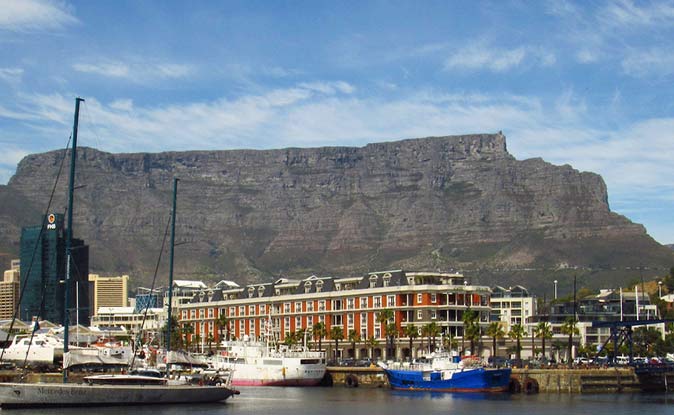
If you have time left in Cape Town, make your way down to the V & A Waterfront. Take a harbor cruise, wander through the shops, and stop for lunch at the glorious Cape Town Fish Market. AND stop for dessert at the decadent Dip ‘n Dip.
Best time to go: November to March for warm weather.
Where to Stay in Cape Town
Budget:
Never at Home Kloof Street is a popular and affordable hostel in the trendy Kloof Street area, close to some of the city’s best attractions.
The hostel has dormitories and private rooms, plus free parking and free Wi-Fi. It’s a friendly place with an energetic vibe in a great, safe location about a 45-minute walk to the V & A Waterfront.
Also Read: Staying in a Hostel – Pros, Cons and Other Things to Know
Mid-Range:
Abbey Manor Luxury Guesthouse is a mix of modern and antique, located in the vibrant Oranjezicht neighborhood.
It’s in the foothills of Table Mountain and offers stunning views of the city. They have rooms and cottages, plus a pool, free parking and WiFi, as well as laundry services.
Abbey’s is in a great location – walking distance to Table Mountain, and about 2.25 km, or 1.4 miles, to Greenmarket Square. The square is quintessential Cape Town, full of markets and art, music, and food. Try to spend some time there.
Luxury:
The Queen Victoria Hotel and Manor House is a luxurious world-class hotel in the heart of the V&A Waterfront. It offers stunning views of the harbor and Table Mountain.
The hotel boasts a gym with a personal trainer, pool, and hot tub. Childcare is available, and a free breakfast is served with your harbor view.
Nearby are the well-known Iziko Bo-Kaap Museum and the colorful Bo-Kaap area. Take a stroll down the cobblestone streets and learn the history behind the area.
Day 13-14: Garden Route
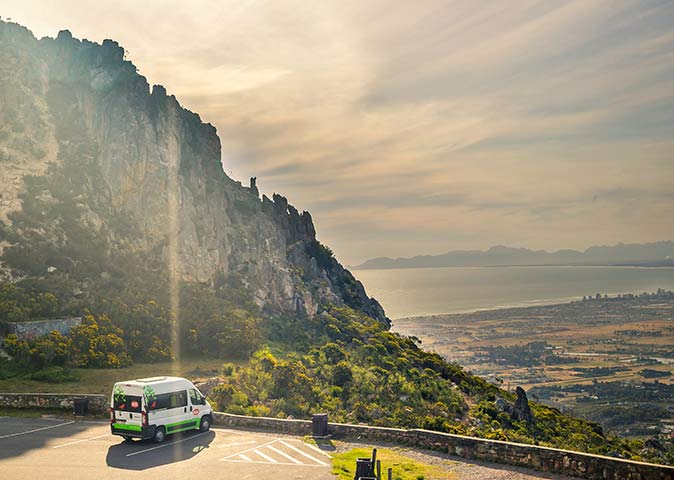
Spend the last 2 days of your South Africa trip on the Garden Route, an incredibly scenic stretch of coastline.
The route officially starts in Mussel Bay, about 380 km, or 236 beautiful miles, east of Cape Town. It runs along the coast for 200 km on the N2 to the little town of Stormrivier.
The Garden Route is an enormously popular drive because of the sheer beauty of the area. It has mountains, valleys, lakes, rivers, forests, ocean views, and innumerable stops along the way to hike, swim, and sightsee.
There are many hikes along the way, but a great short one, only 2 hours or so, is near the town of Knysna. It’s a circular route called the Millwood Mine Walk. You’ll see the remains of an old gold mine with equipment still there to poke around. Stop for a break at the lovely waterfall, and take in the gorgeous wildflowers, plants, and birdlife in the area.
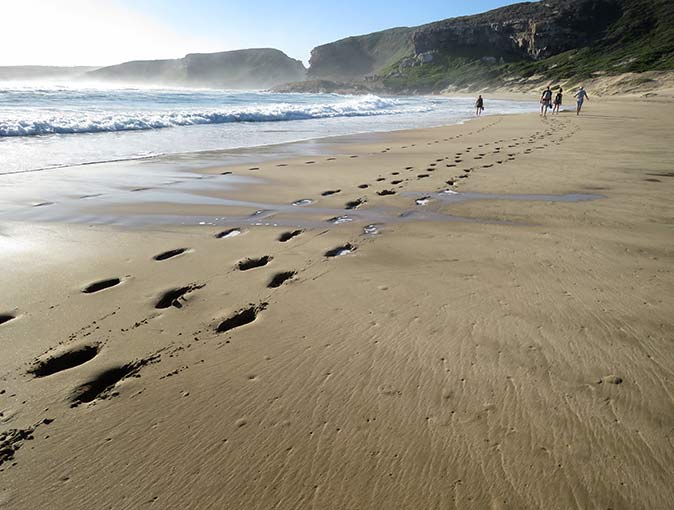
Even if you’re not up for hiking, stop at towns like Knysna and Plettenberg Bay, and visit attractions like the Cango Caves and Tsitsikamma National Park. Take in as much as you have time for.
It’s about a 7-hour drive without stops. Drive as far as you like, and stop when you see something you like.
There are places to stop for the night all along the route. You’ll find a few suggestions below.
Best time to go: year-round, but you might want to avoid the peak season from December to January.
Also Read: What to Bring on a Hike
Where to Stay on the Garden Route
Budget:
Panoramic Blue B&B is a great budget option in Plettenberg Bay.
The B&B offers amazing value and equally amazing views. You’ll have free parking and WiFi, room service, and BBQ facilities.
A beautiful place to stay while you’re in the area.
Mid-Range:
Stanley Island is a mid-range accommodation in Plettenberg Bay. It’s a beautiful property that’s minutes from the beach.
Units have a kitchen and dining area, and guests have access to a year-round pool and BBQ area. There is free parking, as well as a restaurant and bar.
Luxury:
For those looking for a luxurious getaway, the Candlewood Lodge is a top choice in Knysna.
This B&B has a beautiful outdoor pool, a hot tub, and a deck for lounging. It serves a delicious breakfast, and is near golfing and beaches.
The rooms are gorgeous – you may just want to spend the rest of your stay right here.
Final Words – South Africa in 2 Weeks
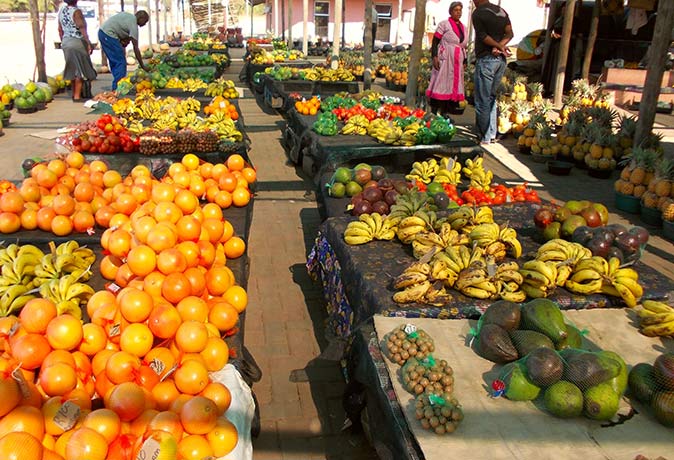
This 2-week itinerary offers a mix of urban and natural experiences and allows you to see some of South Africa’s most iconic sights.
Of course, you can fine-tune it to your interests and your preferences.
Whether you’re a wildlife lover, a culture buff, or an outdoor enthusiast, South Africa has something for everyone. Enjoy!
Also Read:
- The Best Safari in Africa – 3 Things You Should Look For
- Things to Know Before Booking Your First African Safari
- The Best Breakfast in Durban – 6 Places to Check Out
- Things to Do Before Going on Vacation (Besides Packing)
- What to Look for in Travel Insurance
- 15 Best Beaches in the World – Including 1 in South Africa
Like this 2 week South Africa itinerary? Pin it!
This itinerary for 2 weeks in South Africa contains affiliate links. I may receive a commission for purchases made through these links, at no additional cost to you.