

What’s it like to move to and live in Oviedo?
As Spain seems to be getting hotter and hotter, Northern Spain is becoming increasingly popular, both as an area to visit and an area to live in.
For that reason I’m very excited to interview my friend Jan, whom I met when we were both living in Valencia. He traded life on the Mediterranean for life in cooler Asturias and in this interview we’ll find out what life is like there and how it compares to other parts of Spain.
This interview is part of the Ask an Expat series. In this series I interview people living all over the world but outside of their country of birth. I try to help paint an honest picture of the ups and downs of living abroad, share tips for anyone thinking about moving abroad, and information about the place the expat now lives in.
Living in Oviedo, Spain
Name: Jan Peeters
Age: 47
Hometown: I’m originally from Limburg, Belgium
His Story:
“My connection to Spain goes back to 2000, when I did a student exchange in Madrid.
That was my first real experience of Spanish life, and I loved it. People here in Spain really seemed to enjoy life more fully. There was a relaxed rhythm, a stronger connection to tradition and national identity, and just a more grounded outlook compared to Northern Europe.
After that, life took me to different places. I lived in France, Switzerland, and the UK, but I always kept one foot in Spain.
In 2013, I settled in Valencia, drawn by its climate, energy, and excellent travel connections.
As an international consultant working mostly outside of Spain, I could live wherever I liked, and Valencia made a lot of sense. I registered as autónomo (self employed) in 2016 and kept working remotely from there.
For years, Valencia was a great base. It’s a walkable city with great food, fantastic cycling paths, good public transport, and overall a healthy lifestyle.
Also Read: What’s it Like to Live in Valencia
But after the pandemic and a very long lockdown in a small flat, my wife and I started to take a hard look at our setup.
Summers were getting hotter and longer, rents were climbing fast, and the city itself was changing, becoming more touristy, more Airbnb, more brand stores, and the city center started losing its character.
That pushed us to look elsewhere.”
Why Did You Move to Oviedo?
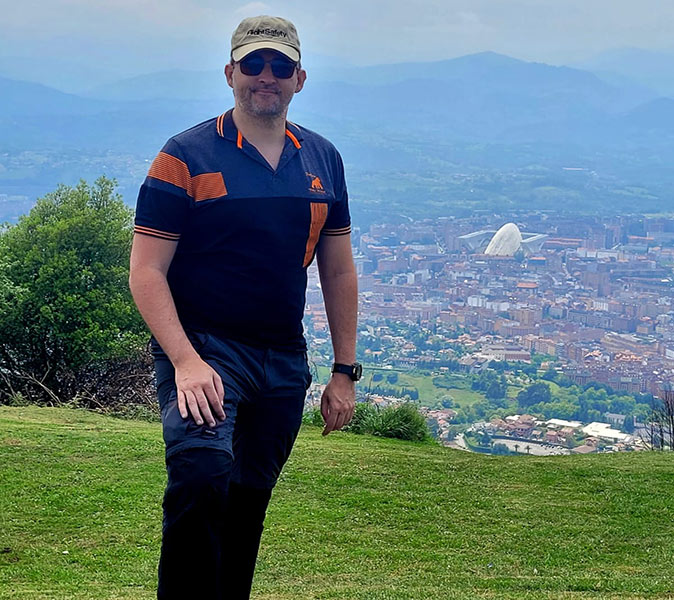
“We were searching for a better balance. A city that felt livable year-round, had a cooler climate, a slower pace, and, ideally, affordable housing.
We scouted parts of northern Spain and Portugal and kept coming back to Oviedo. It wasn’t the most obvious choice; it’s a smaller city, tucked behind a mountain range, but it had the right vibe. Calm, green, authentic.
We ended up buying a fully furnished three-bedroom flat here for under €100,000, and it became our base.”
What Do You Like About Living in Oviedo?
The climate has been a game-changer. Oviedo has mild summers, cool nights, and no need for air conditioning, even when the rest of Spain is baking in 40°C (104°F).
Winters are manageable too, and houses here are built better than in the south, so heating costs stay low.
The city itself is walkable and compact. We live on the edge of town, but can be in the center in 20 minutes or in the mountains in 10.
Nature is everywhere, and the pace of life is more grounded and relaxed than what we were used to, not just back home in Belgium but also in Valencia.
Socially, it’s been surprisingly easy to connect. We joined a few English-Spanish language exchange groups and made friends quickly.
People here seem friendlier, and there’s a stronger sense of community than in more transient, tourist-heavy places like Valencia.”
What Do You Dislike About Living in Oviedo?
“In the beginning, the biggest downside was how disconnected the city felt. Traveling in and out of Oviedo used to be tricky, with limited flights and slower train links. But we were willing to accept that because everything else made up for it.
Thankfully, things have improved a lot. Asturias Airport (just outside Avilés) now has better connections, and the long-promised AVE high-speed train is finally running. We can now be in Madrid before 10 AM, which is a big deal for work trips or city breaks.
If there’s one other thing to note, it’s that Oviedo feels like an “older” city, demographically and socially. The average age is higher than in nearby Gijón, and that’s reflected in the local vibe.
You won’t find tons of trendy bars or a buzzing nightlife scene here. It’s more about cafés, sidrerías, and a quiet evening out. For us, that’s fine, but someone looking for a younger, more dynamic social scene might find it a bit slow.
And yes, in general, the climate here is more rainy, but it tends to be variable. After a few rainy days you appreciate the sun so much more.”
Also Read: Things to Consider Before Moving to Another Country
Is Oviedo Safe as a Place to Live?
“Absolutely.
Oviedo is calm, orderly, and feels very safe at all hours. In general, there aren’t that many young people, which also reduces some of the associated problems.
From Thursday to Saturday nights, there is usually a “Bottellón” in the center of town, which is a large gathering of mainly younger people, with plenty of alcohol involved. They are fine earlier in the evening, but in the late hours you might want to avoid them as it can get a bit rowdy.
In general though, we’ve never had any issues with safety in Oviedo. And that peace of mind is one of the many things we value about living here.
That’s not to say every neighbourhood is completely safe. Like in any other city there are poorer parts of town with high unemployment, which you’d better avoid at night.”
Is Oviedo Expensive as a Place to Live?
“Not at all. Oviedo is probably one of the more affordable cities in Spain, especially when you compare it to places like Madrid, Barcelona, or Valencia.
Daily expenses are still reasonable (although they are going up here as well), and the housing market still offers decent value.
However, since the AVE was inaugurated there has definitely been a surge in real estate prices. The really cheap deals seem to be gone.
In 2021 we bought a 3-bedroom apartment (70m2) for less than € 100,000; now it’s probably worth around € 140,000.
Not needing air conditioning in summer and only needing minor heating in winter makes a noticeable difference in our energy bills, compared to using air conditioning for several months in Valencia.
One other thing we noticed is that the construction quality in Oviedo is a lot better than in Valencia, where the walls seemed to be paper-thin with no insulation.
Rental prices are going up at the moment. You’re now paying around € 600 for a small 1 or 2-bedroom apartment. And like in so many other places in the world right now, availability is an issue.
If you arrive here without a local employment contract or fixed income to show, then renting something at a fair price might be difficult. So expect it to take time.
All in all though, I’d say life in Oviedo is very budget-friendly without sacrificing quality of life.
Eating out is very inexpensive, especially if I compare it to back home in Belgium. I can have breakfast consisting of a nice slab of tortilla de patata or a pincho and a café con leche for €3.50. In most other cities in Spain that would cost at least €4,50 or €5.
Portion sizes also tend to be big here by the way! If you order one full menu it’s enough to feed two people and have leftovers for the next day.
The average menu del dia (a lunch menu) costs about €13 (outside of tourist areas).
If we go out for dinner with friends and really have a nice evening, which includes a few drinks, main courses, desserts, etc., we still rarely spend more than €25 per person.”
What Is Your Favorite Thing to Do in Oviedo?
“Honestly, just walking and having a coffee on a terrace or in a bar with the locals whenever I feel like it.
Whether it’s heading into the hills right behind our place or strolling through the old town, Oviedo is a city made for slow exploration.
Oviedo isn’t exactly a big city; you can see the whole old town in an afternoon, but it’s big and diverse enough to remain interesting.
We really enjoy the local culture. Going to cafés, chatting with locals, or heading to a language exchange in the evening. It’s simple, but meaningful.
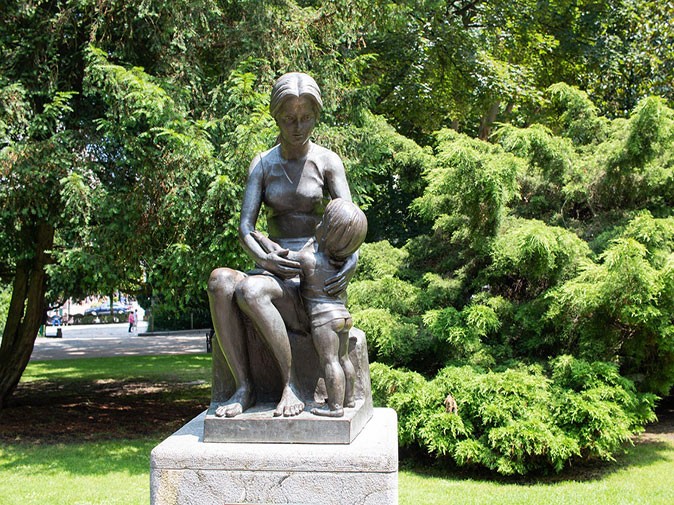
Also, for the size of the city, there is a surprising number of large parks.
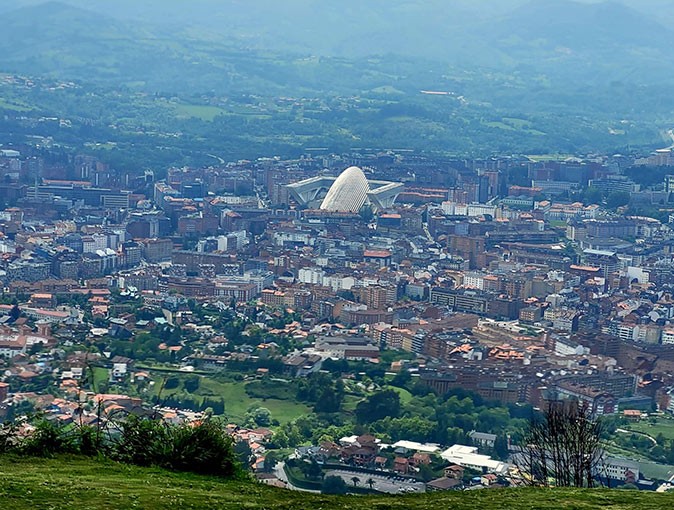
If you’re after a relaxing walk, the Pista Finlandesa is a great forest trail with beautiful views, just north of the city. And for something a bit more active, hiking up Monte Naranco is a solid choice. You can literally be in the woods within 20 minutes.
Recently, we bought a small plot of rustic land within walking distance from our apartment. It’s been great to spend the sunnier days there, planting vegetables, and enjoying being in nature so close to the city. Rustic land is very cheap, by the wa,y because you’re not allowed to build on it. On top of that, the number of farmers here is decreasing, so there’s less demand for this type of land.”
Any Favorite Bars and Restaurants in Oviedo You’d Love to Share?
“You really can’t go wrong eating out in Oviedo. In fact, Oviedo was named the Gastronomic Capital of Spain in 2024.
It feels like every other bar or restaurant here at one point has been a finalist in some kind of Cachopo or Fabada championship.
Also Read: Famous Spanish Food to Try
A solid go-to is Tierra Astur. It’s a chain, but it’s all about high-quality local Asturian products, and locals genuinely eat there too—it’s always busy, always reliable.
For good cachopos, I’d recommend Sidrería Pichote and La Puerta de Cimadevilla. Both do excellent versions and have that lively, authentic sidrería atmosphere.
For good traditional Asturian dishes, I’d go to Sidreria El Gato Negro.
If you’re in the mood for a good steak and a view, Parrilla Buenos Aires is up on Monte Naranco and does a great Argentine grill. It’s a bit of a hike to get there, but totally worth it.
In terms of drinks and hangouts, El Mono Que Lee is a cool little bar in the center, a perfect spot for a vermut in the afternoon.
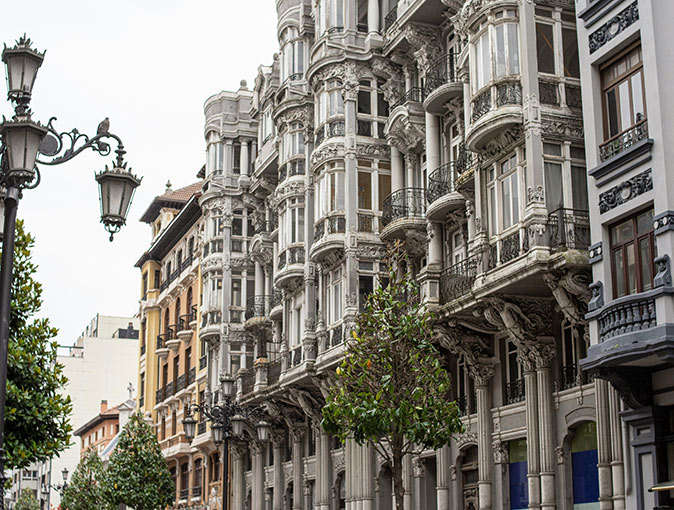
And really, the whole old town is full of cozy places to explore. There’s a great mix of traditional and modern spots tucked into those narrow streets.”
What Is the Expat / International Community Like in Oviedo?
“It’s small but solid.
You won’t find massive expat enclaves like in some coastal cities, but the people who moved here seem genuinely interested in integrating and connecting.
Language exchanges have been great for meeting both locals and fellow internationals, and I feel that because the pace of life is slower, you get to know people more deeply.”
Any Tips for Moving To / Living in Oviedo?
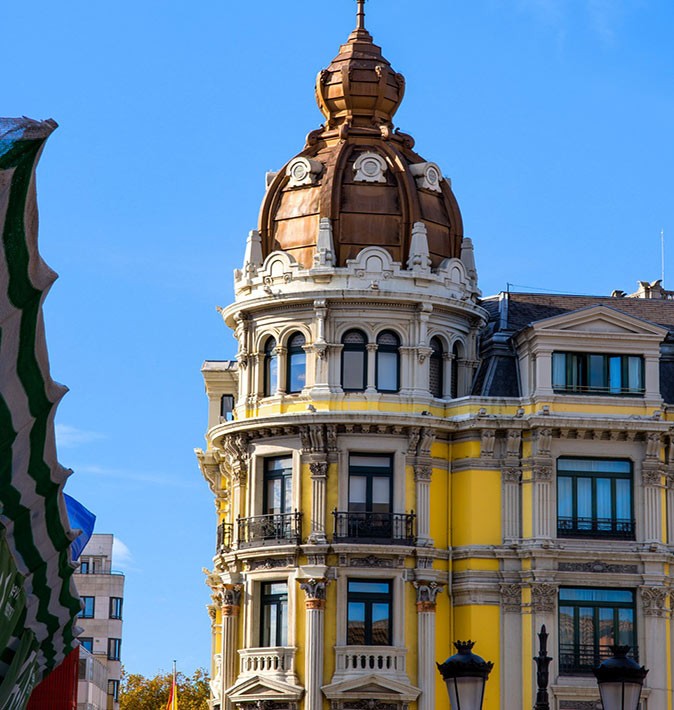
“First of all, don’t be put off by the reputation for rain.
Yes, it’s greener here for a reason, but the climate is shifting, and summers have become very pleasant.
If you’re looking for a base that offers good value, nature, safety, and a strong local culture, Oviedo is a solid choice.
If you want to buy property, now’s still a good time. Prices are reasonable, and the quality of construction is generally better than in the south.
One thing to look out for, whether you’re buying or renting, is that the place has plenty of sun exposure: it makes all the difference!
The fall and winter months can feel dreary, especially in the city center, because the streets are narrow, and places that don’t get a bit of sunlight can get damp, which affects the temperature in the house a lot.
You should definitely consider buying a dehumidifier, especially for rooms that get little sunlight and ventilation.
Then, to meet people and build a social life, join local meetups or language exchanges early on. It really helps you settle in and build a circle quickly.
I’d recommend investing some money in good-quality, breathable rain gear. You can find excellent deals on Vinted or Wallapop, and you can often sell it back for the same price once you are done with it.
And one final thing, you can perfectly live without a car in the city center, but to really enjoy the countryside, you’ll need a car. You don’t necessarily need to buy one though. There are plenty of rental options as well.”
Any Resources You Found Useful During the Process of Moving to and Building a New Life in Oviedo?
“Idealista and Fotocasa were our go-to websites for house hunting.
But be careful, many houses on there look “too good to be true”, and they usually are. Sometimes they are properties with very problematic legal issues, or properties that say they are located in Oviedo, but are actually in the “concejo” next to an industrial site, which is really undesirable.
So basically, if it sounds too good to be true, it probably is. And, never rent a property on these platforms without visiting it in person.
If you are looking to buy a property, I highly recommend using a buyer’s agent. They work for a fee and often have personal lists of properties which you won’t necessarily find on the main websites. And, they can help you make sure the property is fully legal, all permits are in order, etc.
If you’re just moving to Spain, I recommend using MovingtoSpain.com for any legal matters. Think visa application, tax advice, health insurance, etc.
We also found value in a couple of expat Facebook groups and used Meetup.com to find language exchanges and social events.”
Is There Something You Just Have to See or Do When You Are in Oviedo?
“Hiking up Monte Naranco is a must. It gives you an amazing view over the city and the surrounding hills.
The Pista Finlandesa trail is also a favorite for a more relaxed stroll.
Oviedo’s old town is full of charm, and a slow wander with no set agenda is a great way to take it all in.
And don’t leave without trying Asturian cider in a proper sidreria where they pour (“escanciar“) it for you. It’s not just a drink, it’s a ritual, and a big part of the local culture.”
About Oviedo, Spain
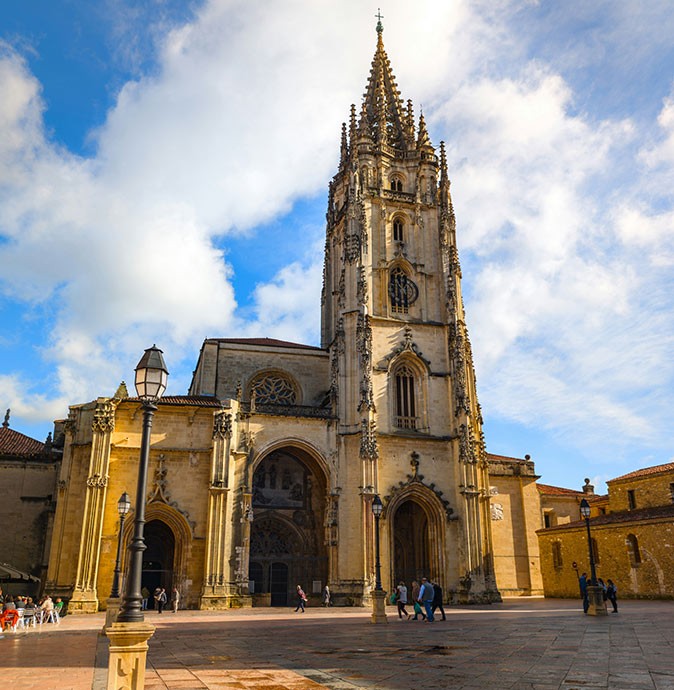
Oviedo is the capital of Asturias, a lush and mountainous region in northern Spain known for its cider culture, friendly locals, and slower pace of life.
With a population of around 226,000, Oviedo offers the amenities of a small city without the stress of a big metropolis.
Oviedo is clean, safe, and walkable, perfect for those who value quality of life over hustle and bustle.
Plus, you’ll find a growing community of remote workers and expats who appreciate its affordability, nearby beaches and hiking trails, and excellent public healthcare system.
Whether you want to live in the historic center or in one of the quieter nearby towns, Oviedo is a charming, underrated place to call home.
Also Read:
- Why Moving Abroad is Such a Valuable Experience
- The Best Places to Live in Spain
- How to Retire Abroad Early
- Interviews with other expats about living in various parts of Spain: Madrid, Barcelona, Valencia, Granada, Malaga, Mallorca, Alicante, Denia, and Altea.
The article contains an affiliate link. I may receive a commission for purchases made through this link, at no additional cost to you.