
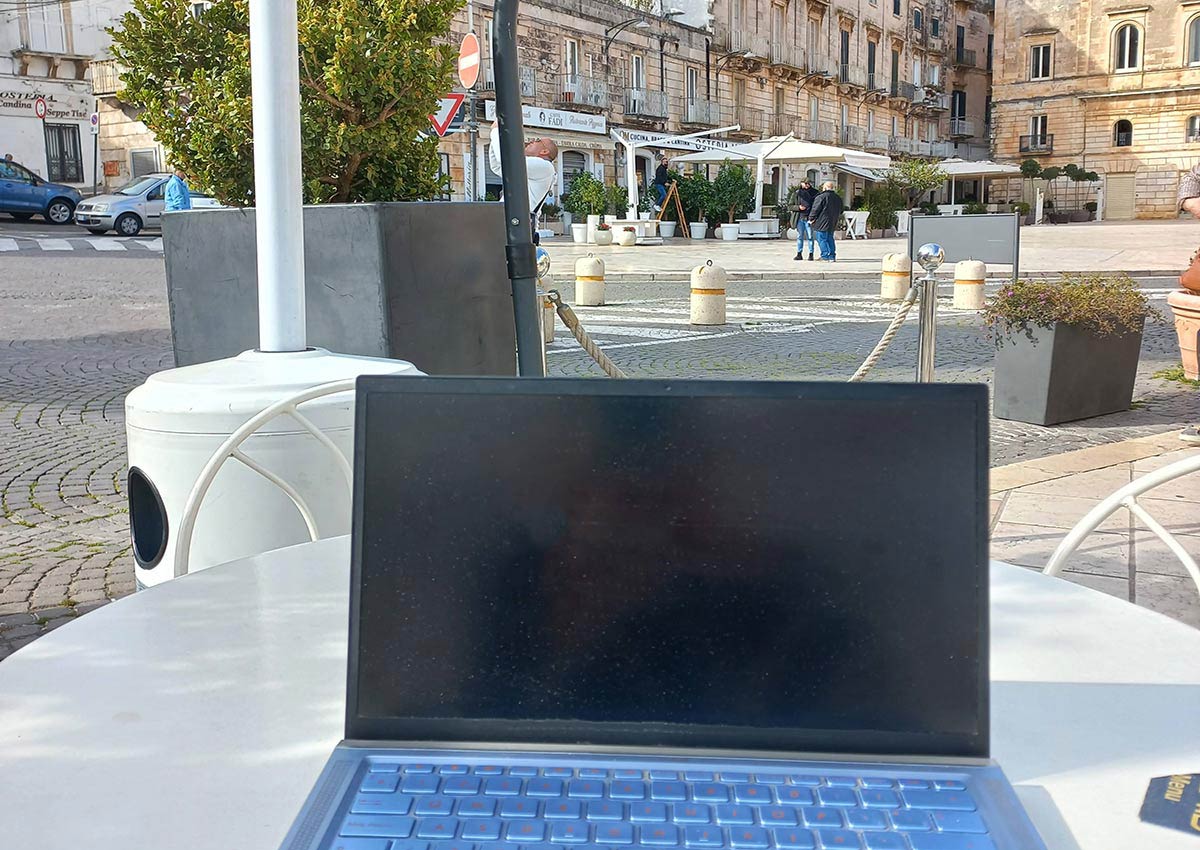
What is it like to work remotely from Italy?
Well, Italy is a large and diverse country, so it of course very much depends on where in Italy you choose to work from.
I lived in Rome for a few months several years ago, and that city vibe was very different from my most recent experience, spending a month working remotely in Ostuni, a beautiful small Italian town in Puglia.
In this article I want to share various things. I’ll try to paint an honest picture of what it was like to work remotely from a small Italian town, what it was like to join a remote work program, and I’ll share some general tips and information about working in Italy.
Working Remotely From Italy

1. My Experiences Working Remotely From Ostuni, Puglia
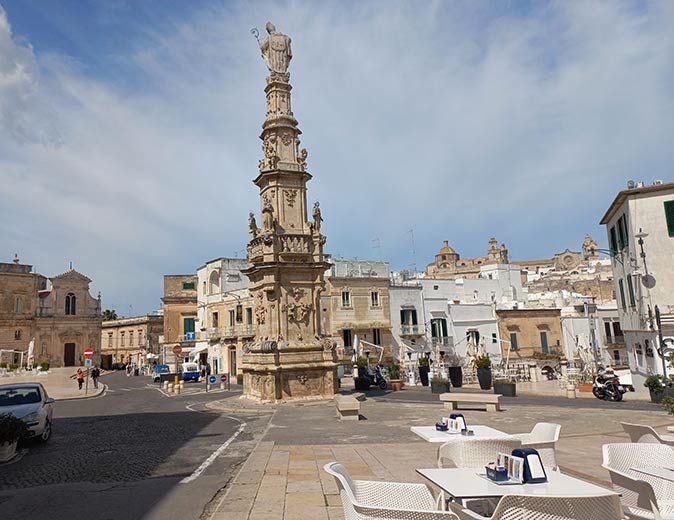
I joined KINO, a remote work program that offered four-week stays in Ostuni, a small town in the southern Italian region of Puglia.
Note: unfortunately KINO has recently closed their business. But, there are several other coliving and remote work programs in Italy, including in Ostuni, which I will describe later.
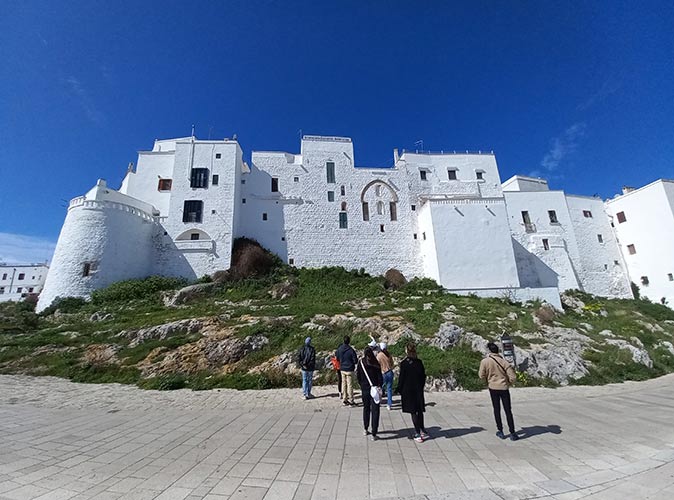
Ostuni is known as the “White City” because of its whitewashed houses, which gives the town a very charming look.
Its historic center is a maze of winding alleys, lined with traditional houses, boutiques, and some cozy cafes and restaurants.
Perched on a hilltop overlooking the Adriatic Sea, Ostuni is a nice base to explore Puglia from.
Arriving in Ostuni, my first reaction was ‘what a beautiful town’! It really is, and I understand why it attracts a lot of tourists in the summer months.
In winter and early spring though, which is when I was there, Ostuni is a quiet Italian town. And that does mean not much happens as far as events and entertainment go, and some bars and restaurants are closed.
I have to admit, if I would have been there on my own, it wouldn’t have been the easiest place to meet people and build a network.
But, being here with a group of 7 remote workers created a nice community and a good starting point to meet locals as well. Plus, as with most coliving spaces or remote work programs, there was a community manager who organized regular activities ranging from shared dinners and a cooking class to a cycle tour around the countryside.
I really enjoyed getting to know a great group of remote workers from all over the world. In the end, these types of remote work programs are about community, and spending time with other remote workers.
At the same time, spending time in a small, quiet town with others who also need to work, gave me a great opportunity to focus on work. I often struggle to combine work and travel (I just want to see and do too much!), and being in a small town with like-minded people definitely helped me to focus.
Being in Ostuni for four weeks offered a nice mix of getting to know new people, both remote workers and locals, and exploring a new destination.
Also Read: Things to Know Before Going to Puglia and Interview With an Expat About Living in Puglia
3. Remote Work Programs in Italy

As working remotely and the digital nomad lifestyle keep gaining popularity, more and more remote work programs pop up everywhere, including in Italy.
You’ll find them under various names: coworking retreats, coliving spaces, coliving programs, remote work programs, and variations of this. They all try to solve some of the challenges of digital nomad life.
What they offer is essentially the same: a place to live temporarily, a place to work from, and a community of like-minded people.
Almost all coliving programs will also arrange a variety of activities which can differ a lot and is worth having a closer look at.
For example, I’ve seen coliving retreats that focus a lot on well-being, offering daily yoga classes, meditation, etc. But there are also coliving programs that have much more of a business focus offering professional speakers, mastermind sessions, etc. Or, you can find programs that focus more on exploring the region you are in, offering tours and activities to get to know the area.
At the moment it looks like new coliving ventures come and go quite rapidly.
As I have experienced with the program I joined, it’s not easy to make it profitable, and it’s also not easy to make everything work perfectly, especially in remote locations.
A few remote work programs currently operating in Puglia are Taste Remote, Masseria Olga, and La Vita Sukha. Or join Tursi Digital Nomads in the neighboring province of Matera.
But a quick Google search for ”coliving in [your favorite part of Italy]” will give you options in other parts of Italy as well. And Coliving.com is a good website to find an overview of popular colivings in Italy and other countries.
Many coliving programs in Italy don’t run all year round, so check the dates carefully.

Weekdays at the remote work program I joined were mainly about work, but on weekends they organized a range of activities to help connect with the local community and explore the region.
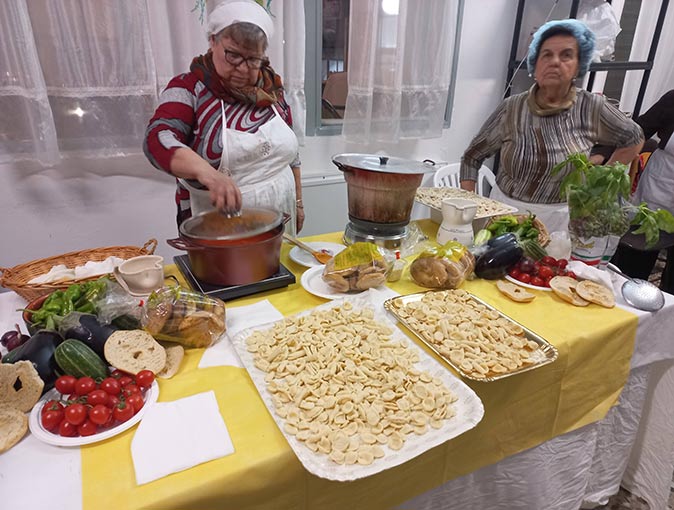
During my stay we had an incredibly fun cooking class with local nonnas (grandmas), a walking tour through Ostuni, and a cycling tour to explore the countryside and learn about the olive oil production.
To see more of the area I also rented a car with two of the other remote workers. Because although Italy’s public transport isn’t bad, if you want to explore smaller towns and the countryside, driving is really your best option.
4. Are Coliving Programs Worth Joining?
This, in my opinion, really depends on what you are looking for.
Coliving programs are a great way to connect with other remote workers and spend time in a new place.
And isn’t it great to arrive in a new country (or a new part of a country) without having to research where to live, where to work from, and how to meet like-minded people? As work often keeps me busy, I think there is great value in programs like this. It just makes your transition to a new destination easy and comfortable!
But, coliving spaces do tend to create a bit of a bubble. You’ll spend most of your time with your fellow remote workers. From cooking together to going for drinks after work together and spending your weekends together. If that’s not your thing then you might be better off renting your own accommodation and maybe joining a coworking space or attending a few events to meet other people.
And, of course, these coliving programs will almost always cost more than just renting a room or an apartment on your own.
Italy as a Destination for Working Remotely

With working remotely and digital nomad life becoming more popular, various destinations have popped up as ‘digital nomad hotspots’.
Lisbon, Medellin, Chiang Mai and Bali are all good examples of this.
Italy doesn’t have these hotspots (yet).
You’ll find people working remotely in the bigger cities such as Rome and Milan, but there isn’t a large community of digital nomads like there is in other countries.
And of course, as the number of remote workers worldwide increases, so will the number of remote workers in Italy.
But I see a few issues that may stop Italy from becoming a popular digital nomad destination.
First of all, the high cost of living in the big cities and the steep rent increase in smaller towns in high season can discourage digital nomads from choosing Italy as a base.
Many smaller towns, like Ostuni, become very affordable in winter, but they also become very quiet, and various shops and restaurants close. Of course, if that’s something you like, then these small Italian towns can be a great escape in winter.
Because that is the other side of the coin: we don’t all want to be surrounded by other digital nomads all the time. And the fact that there aren’t masses of them here might just give you a more authentic experience.
That being said, there are some parts of Italy that are more popular among digital nomads and remote workers.
Popular Places for Working Remotely in Italy

Rome is the obvious first choice for people thinking about working remotely in Italy. It’s the city with the most facilities and the most cosmopolitan vibe. Milan is another city that’s high on many people’s lists.
Genoa and Florence are also often mentioned as suitable cities for digital nomads.
And to me Palermo, in Sicily, sounds like a good choice for digital nomads looking for a mid-sized city with an international community.
In Puglia, if I would be traveling alone, I’d choose Bari. Bari is the capital of Puglia and the city with the largest expat community in Puglia, which would make it a little easier to find a community. Plus, it has coworking spaces and is a good place to explore Puglia from.
Brindisi has also started to promote itself as a destination for digital nomads and workations. But it hasn’t managed to create a good community yet and has a lot less to offer than Bari.
Practical Things to Know About Working Remotely From Italy
1. Coworking Spaces & Cafes to Work From
In many cities you’ll be able to find one or several coworking spaces, but once you go to smaller towns your options for working outside of your home are limited.
In a small town, don’t be surprised if the cafe owner has a puzzled look on their face when you pull out your laptop. And wifi often isn’t the best, if they have it at all.
2. Internet in Italy
I was surprised by how bad internet sometimes is in smaller towns.
Both wifi in Airbnbs and my phone signal were sometimes terrible, making small Italian towns less than ideal for anyone who needs consistent high-speed internet.
3. Finding Information About Living in Italy
To find information about living in different parts of Italy I’ve found Facebook groups for expats very useful.
There are many of these groups for different Italian cities and regions, and they are a great way to meet people as well. I even made some useful business connections through them.
For Ostuni, there’s the Facebook group Expats in Ostuni.
4. The Language
In smaller towns, but even in bigger cities, you’ll regularly run into people who don’t speak any English.
But, in general, Italians are very friendly and willing to help. So with a bit of Google translate, some hand signals, and some patience, you can figure anything out.
Although I’d recommend learning some Italian, definitely don’t let a language barrier stop you from coming to Italy.
5. Why Work Remotely From Italy
Overall, I think working remotely from Italy can be a great way to explore the country and truly experience the Italian way of life.
It’s such a beautiful and diverse country so you’ll need months, if not years, to get to know the different parts of Italy!
Final Thoughts About Working Remotely From Italy with a Remote Work Program
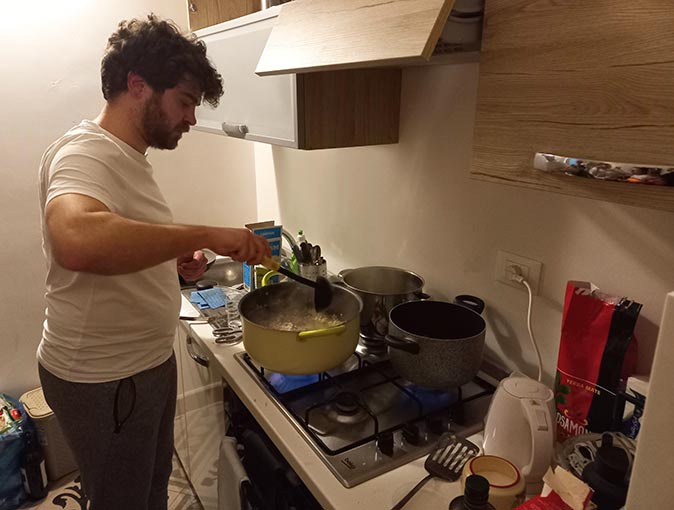
Over the years I’ve joined several remote work programs like this one in Italy.
When Serena and Andrea, the founders of KINO Italy, contacted me and asked me if I wanted to come to Italy I didn’t have to think long before I said yes.
What I love about remote work programs is that they give you an opportunity to get to know a new location and connect with a group of like-minded people at the same time.
Some people may think digital nomads just sit around on the beach sipping cocktails all day, but in reality, most of us have quite busy lives. And combining that with travel planning can be very time-consuming.
These remote work programs do the planning and organizing for you. They arrange housing, sightseeing, and events and they get a community together.
I’ve met great people from all over the world on these programs and there is great value in that!
If you’re interested in experiencing life in a smaller Italian town, if you love sharing this experience with other remote workers, and if you appreciate an organization arranging this for you, then I can highly recommend joining one of the remote work programs!
I joined Tursi Digital Nomads, who run remote work programs in both Italy and Greece, and you can read my review of that experience here.
Feel.Travel also runs some coliving trips to Italy (and several other European countries). I joined them on a coliving trip to Sweden, and wrote a review of my experience here.
For a review of a remote work program I joined in Lloret de Mar, Spain, please read: A Workation Retreat in Lloret de Mar – My Honest Review
If a fully organized remote work program isn’t what you are looking for, then staying in a coliving space can be another great option to connect with like-minded people and experience a new destination. Coliving.com is a good platform for finding coliving spaces all over the world.
To get an idea of what staying in a coliving space could be like check out Coliving and Coworking in Montenegro and A Digital Nomad’s Guide to Coliving in Spain.
Also Read:
- 7 Emotional Challenges of Digital Nomad Life
- Working Remotely From Spain
- Tips for Working Remotely & Remaining Successful
- How to Be Productive While Working Remotely
- The Best Jobs for Digital Nomads (And How to Get Them)
- My Review of a Remote Work Retreat in Romania
Disclaimer: My remote working trip to Italy was sponsored by KINO Italy. However, as always all opinions are my own and I would not endorse anything I did not enjoy! This blog contains affiliate links. I may receive a commission for purchases made through these links, at no additional cost to you.