
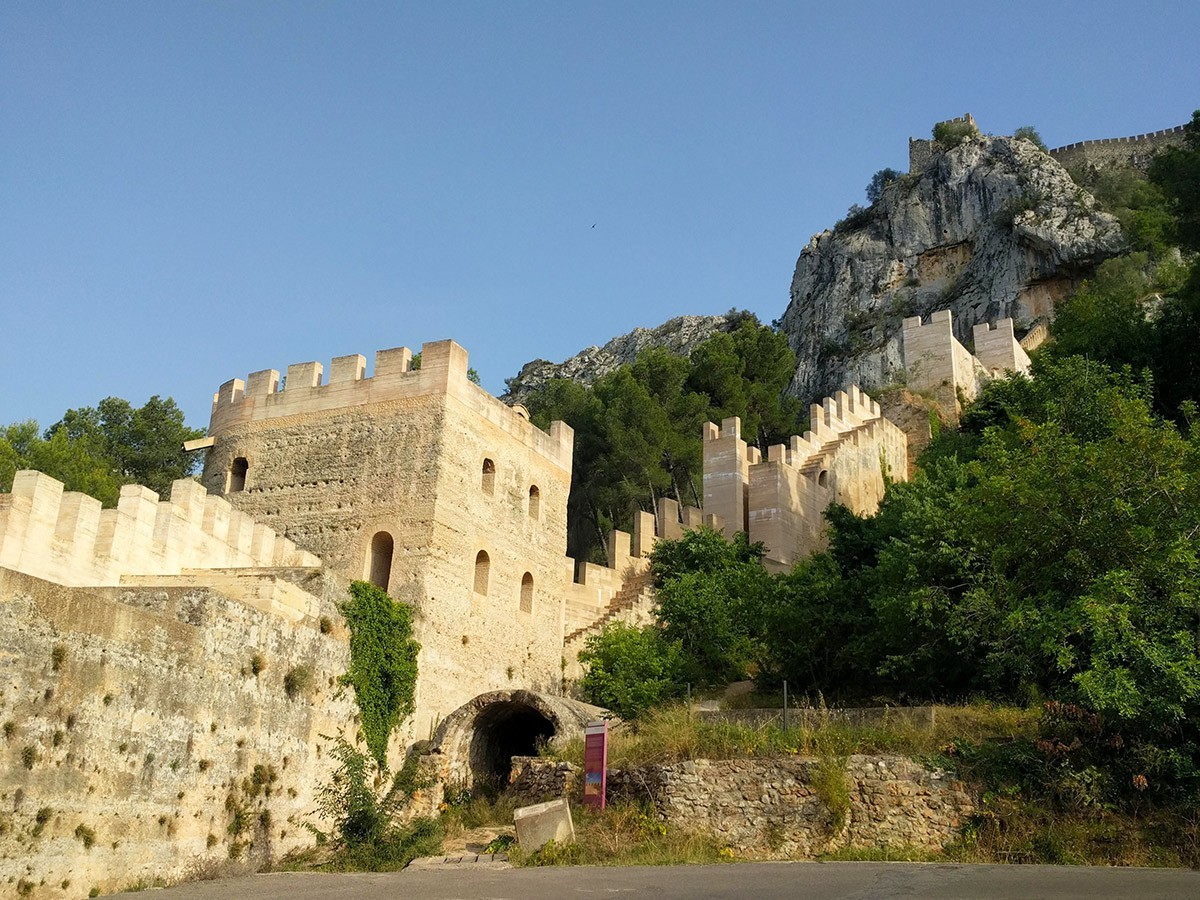
Are you looking for day trips from Valencia, either by car or by public transport? Then continue reading!
One of the things I love about living in Valencia is the city’s proximity to so many other great places to visit.
To the north and west, you have mountains. Immediately south you have a gorgeous coastal plain. Along the coast are picturesque Mediterranean towns. And dotted around the area are old castles and hill forts built centuries ago to protect the area from invaders.
These are my recommendations for day trips from Valencia.
The Best Day Trips From Valencia
1. Albufera

Albufera is the name of the lake just 20 minutes south of Valencia as well as the natural park surrounding it.
The lake itself is the largest in Spain and an important wetland preserve, which has a rich biodiversity and some world-class birdwatching.
The area is surrounded by pines, and the lake itself is separated from the sea by sandy dunes. Some of the best dunes are in the village of El Saler, on the northeastern edge of the lake. If you’re looking for a quiet, secluded beach day, El Saler is the place to go.
Traditionally, the area around Albufera was used for growing rice. That’s why some of the best paella in Valencia can be found down here.
In the village of El Palmar, on the southeastern edge of the lake, you’ll find restaurants like Pasqualet, Restaurante Bon Aire, and El Graner, each of which has a fair claim to serving Spain’s best paella.
Tip: I highly recommend taking a boat trip on the lake. And if you do, start just before sunset because watching the sunset from the lake is beautiful!
You don’t have to book these boat trips in advance as there are plenty of boat owners eager to take you out onto the lake. You can find them all along the east side of the lake, including in the town of El Palmar, which makes it a perfect activity for after your paella lunch.
How to Get to Albufera by Public Transport
Of the day trips from Valencia you can take, this is the shortest and easiest.
You can take Bus No. 24 from the city all the way down to El Palmar and beyond. The bus runs infrequently, however, and service stops in the early evening.
Use the EMT Valencia trip planner or Google Maps to work out departure and return times.
Alternatively, you can book a tour to Albufera from Valencia by Jeep.
Or, to make it a more eco-friendly activity, you can cycle to Albufera in about an hour.
2. Xàtiva
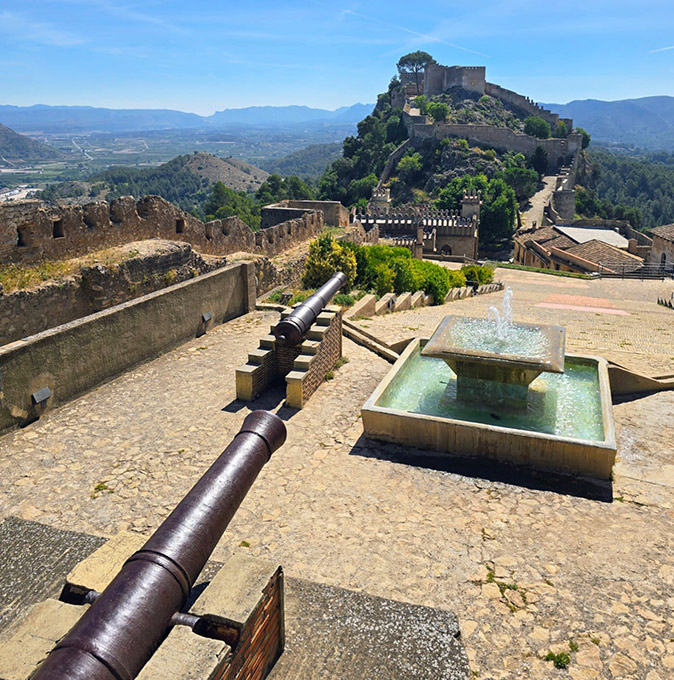
About an hour south of Valencia nestled at the foot of a mountain, you find the town of Xàtiva.
Xàtiva was an important center of learning and papermaking during the Al-Andalus period of Spain’s Middle Ages.
The town’s biggest draw nowadays is its castle, which you can climb up to in about half an hour (note: there’s also a train that runs up the hill from the town).
The castle’s history is rich, with its foundations dating back to at least Roman times, but most of the fortifications were built during the Medieval period when local Arabs and Christian crusaders fought to secure the area.
Bring water and good shoes if you plan to climb up to the castle. And try not to make the trip during peak summer months — Xàtiva is famous for its scorching heat.
Xàtiva is also a cute town to wander around in and to have some tapas and a drink. I would recommend El Gourmet del Socarrat in the center of town or the stylish upscale restaurant at Hotel Mont Sant, close to the castle.
Do keep in mind that, as with many smaller towns in Spain, shops in Xàtiva close for siesta, and the streets can get so quiet it’s almost eerie.
How to Get to Xàtiva by Public Transport
Regional trains (Cercanias) run frequently between Valencia’s Estació Nord train station and Xàtiva.
3. Montanejos

Montanejos, about an hour and a half by car north of Valencia, is famous locally for its hot springs, which maintain a comfortable 25 degrees Celsius year-round.
The surrounding hills make for beautiful scenery, too.
If you plan to spend the day, there are all kinds of hiking trails, and the village has a handful of restaurants and bars where you can pop in for a snack.
Montanejos is a good option if you’re looking for a day trip from Valencia that’s fun, relaxing, and outdoors. That said, there are plenty of opportunities for cliff-jumping, too.
Note: on weekends Montenejos can get quite crowded. And I’d recommend bringing water shoes if you don’t like walking on rocks in the water barefoot.
How to Get to Montanejos by Public Transport
There is a bus that runs between Valencia and Montanejos, but it is infrequent, and the schedule isn’t accommodating. It’s better to go to Montanejos by car.
4. Requena

An hour west of Valencia and in the heart of the Utiel-Requena wine region, the city of Requena is an excellent day trip for anyone looking to explore Spanish wines.
Utiel-Requena isn’t as well-known of a Denominación de Origen Protegida as, say, La Rioja, but it has a rich history.
The primary grape grown here is the Bobal grape, which for ages was mostly used to produce cheaper bulk wines. But, today local winemakers are working hard to explore the grape’s expression and raise its prestige.
There are about five dozen wineries in the region, and many of them will offer tours and tastings.
I’ve done a vineyard tour with Vera de Estenas, which I really enjoyed. It’s quite far from Requena however, so you’ll need a car to get there, and they only offer tours on Saturdays and Sundays. You can book a tour on their website or just give them a call before you go there.
A popular vineyard for tours and tastings that’s closer to Requena is Pago de Tharsys. You don’t have to book in advance but you can, on their website.
Outside of wine production, Requena has a rich history as a center of silk production and as an important town during the pre-Reconquista Medieval period. You’ll find museums dedicated to both in the city.
Tip: if you visit Requena, definitely take the audio tour (available in English) at the Cuevas de la Villa, in the center of town.
And if you are looking for a nice place to eat, check out Restaurante El Yantar La Cocina de Pilar, which is located in a cave!
How to Get to Requena by Public Transport
Regional trains (Cercanias) run frequently from Valencia Nord to Requena. You can check train times here – Renfe’s dedicated Cercanias section.
There are also frequent trains from Valencia Joaquin Sorolla to Requena-Utiel, but while the Requena station puts you right in the town of Requena, the Requena-Utiel station leaves you in between the two towns. If you do want to take this train you can find train times and book tickets on Renfe.com
Alternatively, you can book a guided tour to Requena which includes transport, lunch and wine tasting.
5. Port Saplaya
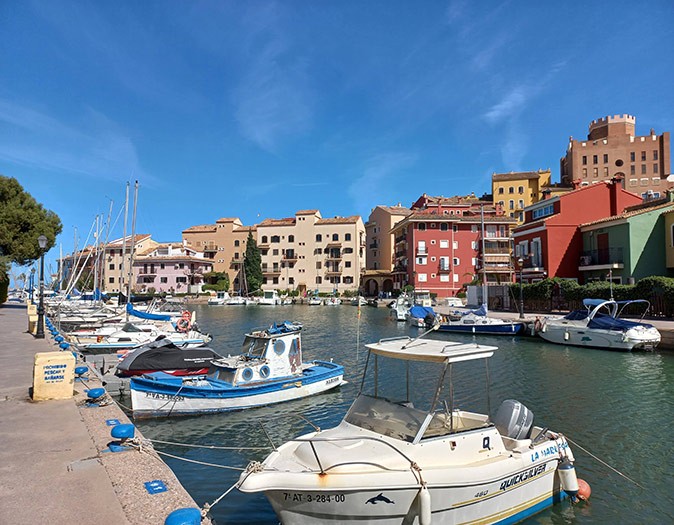
If you’re looking for an easy day trip, or even a half-day trip, from Valencia, Port Saplaya is a good option.
It’s a colorful seaside development that is sometimes called “Little Venice”, because of its canals lined with pastel-toned houses and docked sailboats.
Now don’t get your hopes up, it doesn’t look anything like Venice if you ask me, but it’s a nice and picturesque area for a stroll nonetheless.
When I lived on my sailboat, I actually stayed in Port Saplaya for a while, so I got to know the area very well.
There’s a beach on either side of the marina. Both are nice, sandy beaches. If you love a quiet beach, go to the northernmost one.
Walk around the marina to admire the boats, which is also a popular spot to take pictures. You’d be surprised how many couples I’ve seen in their wedding attire taking pictures!
Stop for lunch in one of the many cafes around the marina. I really like the food at Abantu Cafe and they have a terrace overlooking the marina.
On sunny weekends it can get quite crowded, while during the week, outside of high season, it’s perfect for a calm, scenic escape from the city.
How to Get to Port Saplaya by Public Transport
The easiest way to get to Port Saplaya is to take bus L112, which runs from Valencia and drops you off right in Port Saplaya.
Alternatively, you can take the metro to Alboraya and then hop on the local Alboraya bus to Port Saplaya, but unfortunately this bus doesn’t run very frequently.
What I did quite often was take bus 31 to the end of Patacona and then walk from there. It’s about a 30-minute walk to get to Port Saplaya from there.
If you have a bike, you can also cycle from Valencia. It’s an easy and scenic ride. Unfortunately, Valenbici doesn’t have stations in Port Saplaya, so you’ll need your own bike.
6. Chulilla

About 45 minutes northwest of Valencia is Chulilla, a mountain village on the edge of the rugged Chera-Sot de Chera Natural Park.
Chulilla is famous among rock climbers because of the abundance of sheer limestone faces around the village. There are hundreds of climbing routes that appeal to climbers of all abilities.
Surrounding Chulilla, too, are dozens of excellent hiking routes.
This is a great day trip for anyone who wants to spend a day climbing and hiking. You can find most hiking trails around Chulilla on Alltrails.com
Also Read: Hiking Essentials to Bring on Any Hike
How to Get to Chulilla by Public Transport
Public transport to Chulilla is non-existent. You’ll need to go by car.
7. Morella

About two hours north of Valencia lies Morella, a gorgeous town surrounded by old walls with a hilltop castle perched in the middle of it all.
It’s worth spending an afternoon just to walk around the city and take in its splendor.
Two sights worth checking out in Morella if you enjoy history:
- The Santa Luciá Aqueduct, a marvel of Gothic engineering from the late Middle Ages.
- Morella La Vella, a rock shelter where you’ll find prehistoric cave paintings.
How to Get to Morella by Public Transport
Options are limited, and you would have to book a series of connections to make it work. It’s better to rent a car and drive to Morella.
8. Sagunto

About 30 minutes up the coast from Valencia is Sagunto, a city that, like Xàtiva, boasts a spectacular and ancient hilltop castle.
In Roman times, the city was known as Saguntum, and when Hannibal’s army from Carthage laid siege to and captured the city in the 3rd century BCE, it sparked the Second Punic War. This is all to say Sagunto has a deep, rich history that’s evident all around.
There are two major sights here.
The first is the castle, which is so prominent you can see it from the train on the Barcelona–Valencia line. This is the thing Hannibal’s army laid siege to 2200 years ago. The complex is pretty vast, and it’s a moderately easy walk up from Sagunto’s city center.
Halfway up the hill to the castle is the other major sight, the old Roman theatre. This is a controversial landmark among Valencians because of its recent restoration.
On the one hand, the restorers didn’t exactly honor Roman building styles, so a lot of the theatre doesn’t have the feel of a 2,100-year-old structure. On the other hand, it seats 8,000 people and is used even today for events. Maybe its restorers felt an update was necessary to maintain that functionality.
Either way, you can see both for free in an afternoon and still be back in Valencia in time for merienda.
How to Get to Sagunto by Public Transport
This is a perfect day trip from Valencia by train. Regional trains run frequently between Valencia’s Estació Nord train station and Sagunto.
9. A Jeep Safari Into the Mountains of Calderona

If you are looking for a very different day trip from Valencia then check out this tour!
Combine off-roading with a castle visit (Castell de Serra) and fantastic views from El Garbi.
Tapas and drinks are included too. It’s a fully organized tour that includes transport from Valencia, which makes this an easy and fun day trip.
10. Altea

There are gorgeous towns to the south of Valencia, too, and if you ask me Altea is the cutest seaside town on the Costa Blanca.
The narrow cobbled streets, white houses, and blue-tiled church roof are iconic.
Altea has both a beachfront area and a historic center. I’d recommend spending the day by the beach, which offers a long boardwalk packed with restaurants, cafés, and shops. Then in the evening move to the town’s historic center up the hill to check out the cute boutiques and enjoy the many cozy restaurants and lively terraces.
But if you only have time to visit one of the two, then definitely go for Altea’s historic center.
As for where to eat and drink, Restaurante Oustau has been my favorite restaurant in Altea for years and La Mascarada is worth popping into because of the quirky decór. Both are located in the historic center.
In Altea, you’re still close enough to Calpe that you can see the iconic Peñón d’Ifac rock from the beach – which is a great rock to hike up by the way, if you spend more time in this area.
And although Altea is a good day trip from Valencia for anyone seeking a postcard-perfect afternoon on the Mediterranean, I’d highly recommend making this one at least a weekend trip.
And if you have more time, visit nearby Moraira and Javea as well, or check out some of the great hiking the Costa Blanca has to offer.
Tip: Don’t go to Altea in January. Many restaurants, especially in the historic center, are closed this time of year, taking away part of the town’s charm. February can still be similarly quiet.
How to Get to Altea by Public Transport
The easiest route would be to take the ALSA bus headed toward Alicante from the Estación de Autobuses de Valencia. That ride takes 3.5 hours, however. By car, you can reach Altea in 90 minutes.
A popular alternative to renting a car is BlaBlaCar, where you book a seat in someone’s car who is going in the same direction. And although locals often use this to visit Altea, I would argue that you need your own car to explore the area. But, BlaBlaCar is definitely a cheaper and more sustainable way to travel.
11. Peñíscola

Peñiscola had been on my list of places I wanted to visit for years before I finally went there.
And although I went there on a weekend trip, it is possible to visit Peniscola as a day trip from Valencia as well.
Peñiscola is a nice coastal city about an hour and a half north of Valencia.
And although tourism is an important source of income for Peñiscola, it feels less touristy than many other coastal cities around Valencia. Maybe that is because it attracts a lot of Spanish tourists, while some other places, such as Benidorm, largely rely on foreign tourists.
Peñiscola is mainly visited because of its castle and nice beaches.
Since the Middle Ages, Peñiscola has always been linked to its castle. First as an impregnable Muslim fortification, later as a Templar castle and palace of Pope Benedict XIII.
The castle is an impressive sight, and if you visit Peñiscola as a day trip from Valencia, I’d recommend spending most of the day exploring the historic area around it, with its narrow streets, cute shops, bars, and restaurants.
And if the weather is good, spend some time on the beach as well and enjoy a refreshing swim in the calm water.
If you have more time and decide to stay in Peñiscola, I’d recommend getting a hotel or renting an apartment in the historic center (casco antiguo), around the castle. Yes, you pay more to stay there but the setting really is so much nicer than staying anywhere else in the city, and you’ll love walking around the historic center in the evenings.
I really enjoyed staying at Hotel Boutique La Mar, and would recommend the rooms with a sea view.
How to Get to Peñiscola by Public Transport
Although there is a train station called Benicarlo-Peniscola with direct trains from Valencia, that train station is actually about 10km from the center of Peñiscola.
During the summer season several buses leave the station every hour for Peñíscola, but outside of high season buses become less frequent, which means you might want to take a taxi instead.
Alternatively, Hife.es offers a bus service from Valencia to Peñiscola, but that bus does take 3 hours.
For a day trip renting a car might be your best option.
Transport Options for Day Trips From Valencia
For four of the trips described above, public transport options are either unavailable or so difficult that they’re not worth the effort.
That’s a bit of a double-edged sword.
On the one hand, some of these sights are a little off the beaten path. Chulilla, for example, is unlikely to be swarmed with tourists any time soon.
On the other hand, this means you’ll have to rent a car to see some of the best sights in the Valencian Community.
If you’ve never driven in Spain before, you might want to check out my guide to driving abroad for the first time before setting off on a day trip from Valencia.
A Day Trip From Valencia to Madrid or Barcelona?
Well, if you really want to explore Madrid or Barcelona, of course you need more than one day.
But, a day trip to both Madrid and Barcelona is actually very doable.
The high-speed train gets you from Valencia to Madrid in less than two hours and from Valencia to Barcelona in about three hours.
There are buses as well, but they take a little longer.
I did however go on a day trip from Valencia to Barcelona by bus once. I took a bus around 7AM, which got me to Barcelona four hours later, spent the day with a friend in Barcelona, and then took a bus back just after midnight.
It was a great way to spend a day!
Trainline shows all the different train and bus options and lets you book tickets online.
If you decide to go on a day trip from Valencia to Barcelona or Madrid, then check out An Itinerary for One Day in Barcelona and Things to Do in Madrid.
More Articles About Valencia Worth Reading
- Things to Do in Valencia on a Short Visit
- 15 Things to Do in Valencia With Kids
- Where to Stay in Valencia: the Best Neighborhoods & Hotels
- The Best Rooftop Bars in Valencia
- 10 Tapas Bars in Valencia You Should Check Out
- Where to Eat the Best Paella in Valencia
- Authentic Chinese Food in Valencia
- How to Use the Valencia Metro the Cheapest & Easiest Way
- Camping in Valencia: What You Need to Know Before You Book
Like this article about day trips from Valencia? Pin it!

This blog about the best day trips from Valencia contains affiliate links. I may receive a commission for purchases made through these links, at no additional cost to you.
The Renfe site does not seem to show any trains at all for some of the destinations above. is there an alternative site for local trains?
Hi Geoff,
Yes, it’s a bit confusing. The local trains are called ‘cercanias’.
You should be able to find details and time tables here:
https://www.renfe.com/es/es/cercanias/cercanias-valencia/horarios
Sanne,
I enjoyed your site. My name is Mike Walsh and I live in Texas, I love Spain and with the way things are in America, I want to go to where my heart is, Spain. I will be
coming over in September and will stay until November (three months by law). I am 72 years old, speak Spanish and I still can get around. I am a retired cave explorer (50 years) and I can give talks on Mexico or perhaps many other subjects.
I want to meet Expats and people of Spain that want to improve their English. I will talk with anyone. How can I contact people in Valencia so I can create new friends before I arrive? Names of Bars where they are, email contact so we can become friends, etc. Any assistance would be great. Vaya con Dios, Spain. Mike Walsh
Hi Mike,
That’s great, I’m sure you’ll have a great time in Spain!
To meet people in Valencia before you arrive I’d recommend joining a few Facebook groups. Just search for ‘expats in Valencia’ on Facebook and you’ll find several. Once you are here, join a few Meetup.com events and you’ll make friends in no time.
Many bars around town also organize language exchange events which you might enjoy. Ask in one of those Facebook groups once you arrive when the next ones are organized and where.
I hope this helps 🙂