

During my travels and time spent living abroad, I’ve realized just how many unique and fascinating Christmas traditions exist around the world.
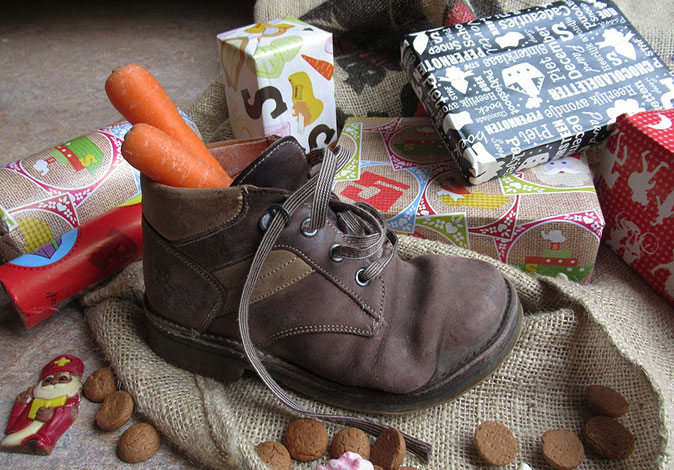
Growing up in the Netherlands, my holiday memories are filled with Sinterklaas celebrations—writing rhyming poems, unwrapping cleverly disguised gifts, and leaving my shoes by the fireplace with a carrot in them.
But that’s just one of many unique Christmas traditions around the world.
From a quirky log that “poops” gifts in Catalonia, Spain, to decorating radishes in Mexico, each country has its own way of making the holiday season special.
Let’s take a trip around the world and explore some of the most unique—and sometimes surprising—Christmas traditions.
11 Unique Christmas Traditions Around the World
1. Krampus Night (Austria)
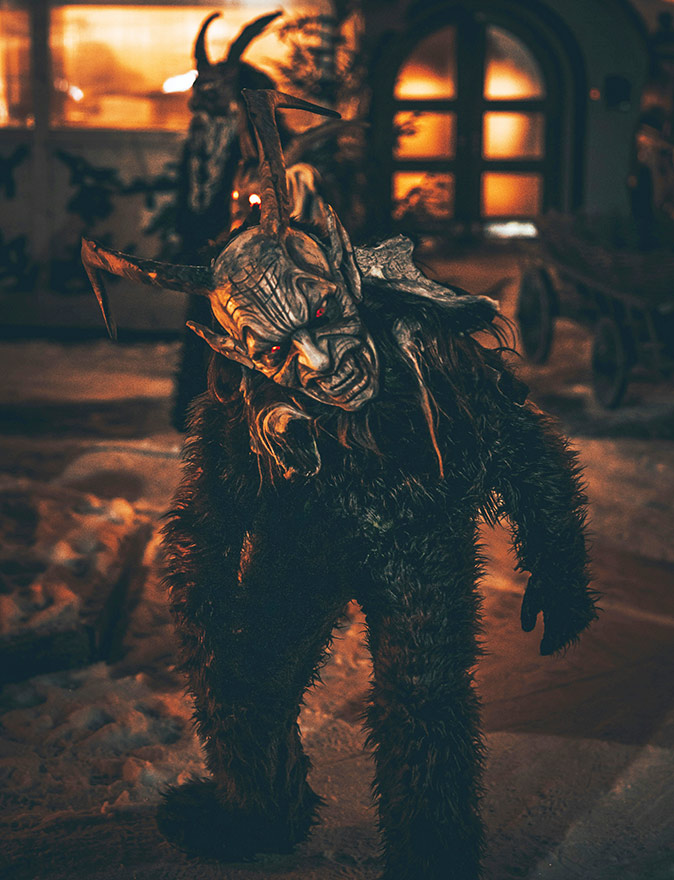
In contrast to the jolly Santa Claus, Austria has Krampus, a terrifying creature who punishes naughty children.
And it’s not just Austria. Parts of Germany, Hungary, Slovenia, the Czech Republic, and even some regions of Northern Italy have Krampus as well.
Known for his terrifying appearance—think horns, furry body, chains, and a bundle of birch sticks—Krampus is the dark counterpart to Saint Nicholas, punishing naughty children while Saint Nick rewards the good ones.
The highlight of this tradition is Krampusnacht (Krampus Night) on December 5th, when people dress as Krampus and parade through the streets in a chaotic, spooky celebration. This takes place in events like Krampuslauf (Krampus Run), where participants compete to create the most terrifying costumes.
2. Caga Tió (Catalonia, Spain)

Catalonia takes a playful approach to Christmas with Caga Tió, or the “Pooping Log”.
Families bring a hollow log into their homes, decorate it with a painted face, and cover it with a blanket to “keep it warm”. Children “feed” the log leading up to Christmas, and on Christmas Eve, they sing songs while hitting it with sticks, encouraging it to “poop” small gifts and sweets.
It’s quirky, fun, and a tradition that always makes people smile.
Also Read:
- Christmas in Spain: Popular Traditions & How to Celebrate Christmas in Spain
- 5 Crazy Spanish Festivals You Have to See to Believe
- Things to Know Before Traveling to Spain
- Interesting, Weird, and Fun Facts About Spain
3. St. Lucia Day (Sweden)
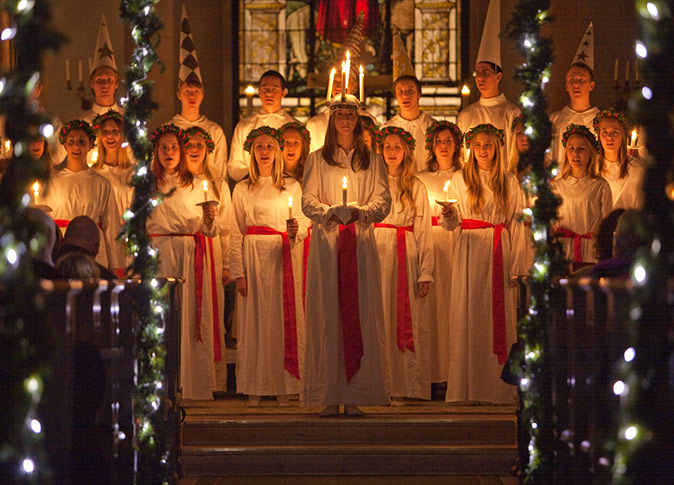
On December 13th, Sweden lights up its darkest days with St. Lucia Day, or Luciadagen, a celebration filled with music, candles, and delicious treats.
This popular tradition blends Christian and ancient Norse solstice customs, honoring St. Lucia, a young martyr from Sicily, symbolizing light and hope.
The highlight of the day is the Lucia procession, where children and young adults dress in white robes and sing traditional songs. One girl, chosen as Lucia, leads the group wearing a crown of candles (don’t worry, they’re usually battery-operated now). It’s a beautiful, heartwarming sight and a big deal in schools, churches, and even workplaces.
The festivities wouldn’t be complete without lussekatter, saffron buns shaped like little spirals, and glögg, Sweden’s version of mulled wine.
St. Lucia Day is all about bringing warmth and light into the darkest time of the year.
Also Read: What to Do if you Have a Long Layover at Stockholm Arlanda Airport
4. Sinterklaas (The Netherlands)
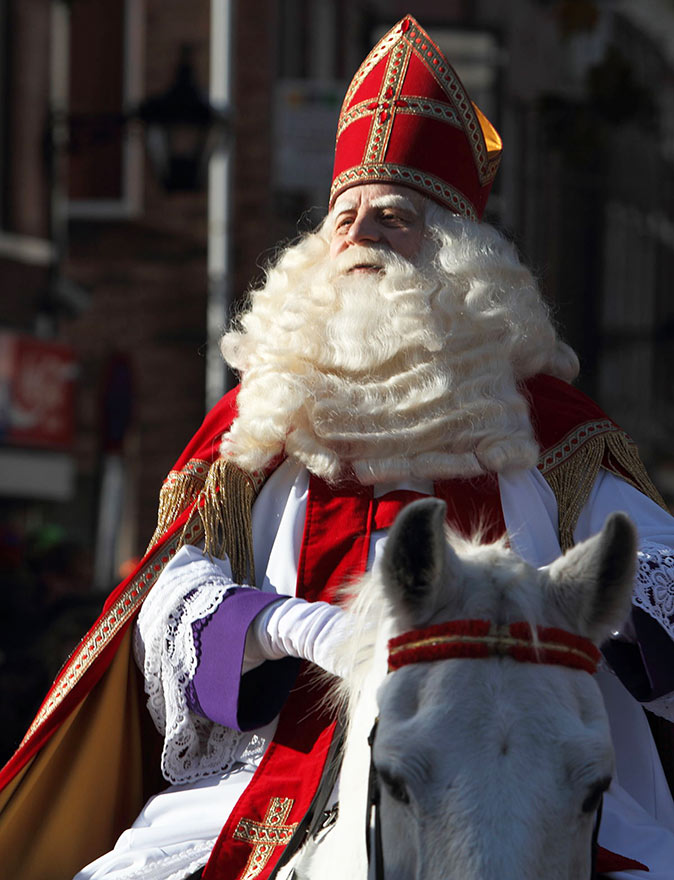
This is the Christmas tradition I grew up with, celebrated on December 5th.
It’s all about Saint Nicholas, who arrives on a steamboat from Spain. Children leave their shoes out by the fireplace (or radiator these days) with a carrot or hay for his horse, and in return, they receive small gifts or sweets in the days leading up to December 5th.
Then, on the evening of the 5th, Sinterklaas and his helpers called Pieten, deliver gifts to both the kids and adults. The evening is full of rhyming poems and playful gifts that often poke gentle fun at the recipient.
For most Dutch kids this is the event they look forward to the most, and it’s when they receive most of their gifts, much more so than on Christmas Day.
Over the years, however, the tradition has faced controversy, particularly around the portrayal of Pieten. Many families now celebrate with modernized versions of this tradition, keeping the joy of Sinterklaas alive while adapting to more inclusive practices.
Also Read:
5. KFC Christmas Feast (Japan)
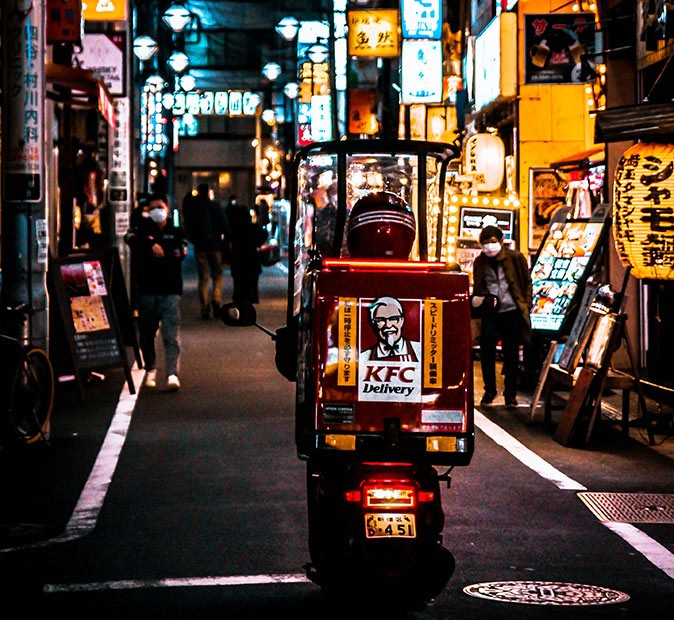
In Japan, Christmas isn’t a public holiday, but it has become synonymous with fried chicken.
Thanks to a brilliant 1970s marketing campaign by KFC, families pre-order buckets of fried chicken weeks in advance. It’s such a big deal that some KFC outlets even require reservations!
Pair it with a festive cake for dessert, and you’ve got the quintessential Japanese Christmas meal.
Also Read:
- 40 Fun Facts About Japan
- The Best Japanese Food to Try
- Nature in Japan: How to Explore the Japanese Countryside
6. A Christmas Witch (Italy)
In Italy, the Christmas season doesn’t truly end until January 6th, Epiphany, which is marked by the arrival of La Befana, a kind-hearted witch from Italian folklore.
According to the legend, La Befana declined an invitation from the Three Wise Men to visit the newborn Jesus because she was busy cleaning her house.
Regretting her decision, she later set out to find them, bringing gifts for the baby but could not locate him. Ever since, she’s been traveling the world on Epiphany Eve, delivering candy and treats to well-behaved children and leaving coal (or sugar “coal”) for those who’ve been naughty.
In modern Italy, La Befana is celebrated with joy and a touch of magic. Families hang stockings for her to fill, and many towns hold lively parades and festivals. In some places, locals even dress up as La Befana to bring the tradition to life, adding a playful twist to this centuries-old story.
Also Read:
7. Mari Lwyd (Wales)
.jpg)
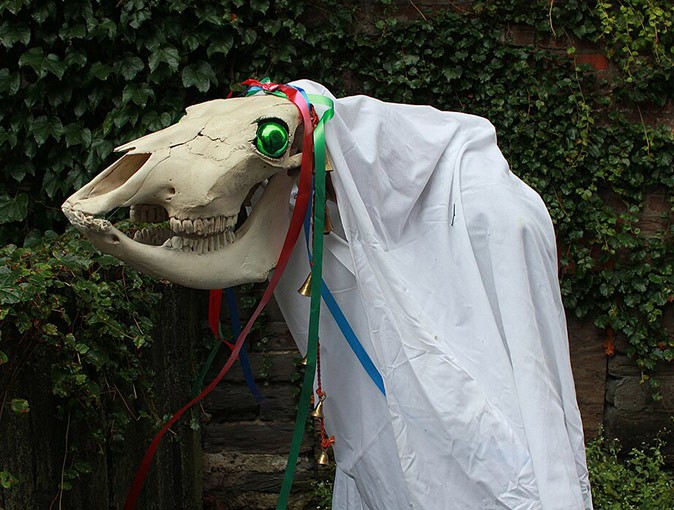
If you’re looking for one of the more unique and slightly spooky Christmas traditions, Wales delivers with the Mari Lwyd, a celebration rooted in old South Walian folklore.
This custom involves a horse’s skull, typically mounted on a pole, carried by someone hidden under a cloth. The Mari Lwyd is festively decorated, often with ribbons and lights, and is accompanied by a group of people.
The group goes door-to-door between Christmas and Twelfth Night, singing songs or participating in a rhyming battle called pwnco. The goal is to outwit the household with clever verses. If the Mari and her companions “win,” they’re invited inside for food and drink, bringing the hosts good luck for the year ahead.
The whole spectacle is both eerie and cheerful, blending Welsh creativity and festive spirit.
While not a widespread custom today, it has survived in select South Welsh towns like Llangynwyd and Chepstow and has even experienced a revival in recent years.
8. Giant Lantern Festival (Philippines)
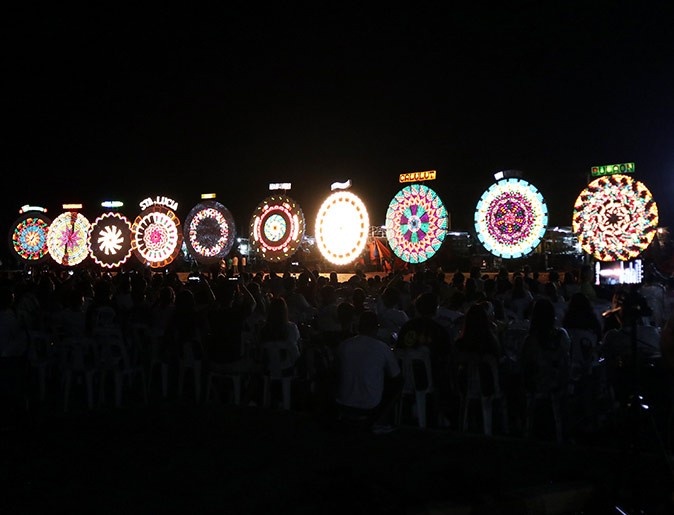
The Philippines takes Christmas to another level with the Giant Lantern Festival in San Fernando.
Held on the Saturday before Christmas Eve, it features enormous, intricate lanterns made from thousands of pieces of colorful paper. These lanterns symbolize the Star of Bethlehem and are a spectacle of light and craftsmanship.
Fun Fact: Because of the popularity of the festival, the city has been nicknamed the “Christmas Capital of the Philippines”.
Also Read:
- 20 Interesting Facts About the Philippines
- The Best Beaches in the Philippines
- Volunteering in the Philippines as a Scuba Diver
9. Christmas Log Fire (Portugal)

In parts of rural Portugal, Christmas isn’t just about twinkling lights and decorated trees—it’s also about gathering around a blazing bonfire, known as the Madeiro.
This centuries-old tradition is still alive in regions like Bragança, Guarda, and Castelo Branco. The fire is lit in the churchyard on Christmas Eve, often before or during the Missa do Galo (Rooster’s Mass), creating a warm, glowing hub for friends, family, and neighbors to celebrate the season together.
The Madeiro is more than just a fire; it’s a symbol of community. It’s said that the flames are lit to “warm the feet of baby Jesus,” adding a heartfelt layer of meaning to this festive gathering.
Large tree roots or wood are used to fuel the fire, which can burn long into Christmas Day, reminding everyone of the joy and unity that comes with the season.
In recent years, this tradition has seen a resurgence, with locals and visitors alike embracing the charm of this communal event.
If you’re in Portugal during the holidays, you might just stumble upon one of these bonfires—and trust me, standing around the Madeiro with the locals, soaking in the warmth of both the flames and the festive spirit, is a magical experience.
Also Read: 10 Beautiful Places to Visit in Portugal
10. Night of the Radishes (Mexico)
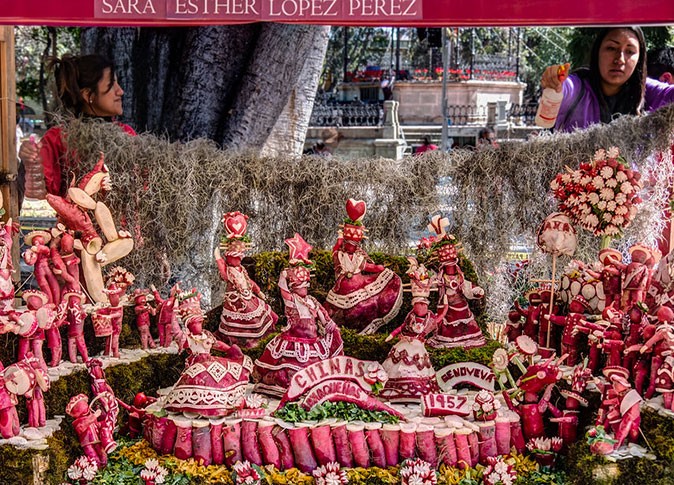
Every December 23rd, the streets of Oaxaca, Mexico, come alive for La Noche de los Rábanos (Night of the Radishes), one of the most unique Christmas celebrations you’ll ever hear about.
This quirky festival revolves entirely around oversized radishes that have been cultivated specifically for the event. The highlight? A radish-carving competition where locals transform these misshapen veggies into intricate sculptures depicting everything from nativity scenes to folkloric traditions and even modern-day themes.
The tradition traces its roots back to colonial times when Spanish settlers introduced radishes to the region. Over time, local farmers began carving them to attract attention at Christmas markets. By 1897, the mayor of Oaxaca turned it into an official competition, and it’s been a cherished annual event ever since.
Today, radishes are specially grown for this purpose, left in the ground until mid-December to reach remarkable sizes and shapes—perfect for artistic creativity.
On the 23rd Oaxaca’s main square, the Zócalo, transforms into a vibrant showcase of artistry and community spirit. Visitors flock to admire the radish sculptures, enjoy festive lights, and sample local treats like tamales and hot chocolate.
This festival isn’t just about fun—it’s a beautiful reflection of Oaxaca’s cultural heritage and love of tradition.
If you ever find yourself in Oaxaca during the holidays, this event is a must-see for its creativity, community vibe, and festive charm!
11. Christmas Saunas & Calling Santa (Finland)
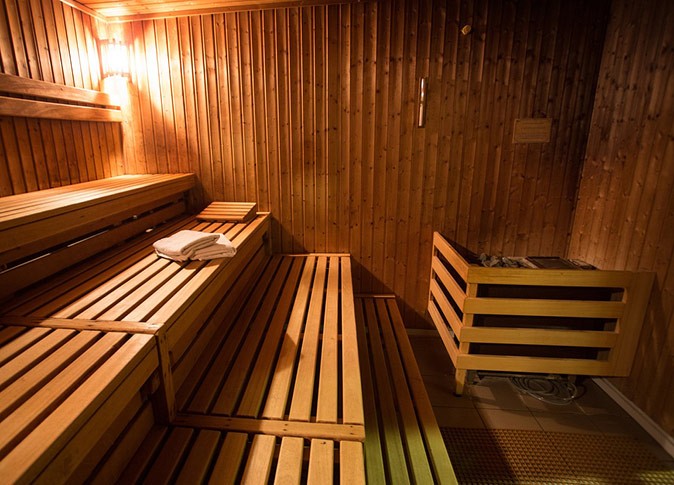
A Finnish tradition is the joulusauna (Christmas sauna), where families gather on Christmas Eve to cleanse their bodies and souls before the holiday meal. This ritual is often accompanied by candlelight, creating a serene and peaceful atmosphere. Afterward, families enjoy a festive feast and exchange gifts, marking the start of Christmas celebrations.
Another fun tradition is Joulupukin Kuumalinja, or Santa’s Hotline. It’s a live TV show where kids call in to chat with Santa (and often sing him a song!). And if that’s not festive enough, many families then watch the classic cartoon The Snowman.
At noon, the whole country tunes in for the Declaration of Christmas Peace, a tradition dating back centuries. Broadcast live from Turku, it’s a formal yet heartwarming reminder to embrace peace and kindness during the holiday season.
Also Read:
- 10 Things to Know Before Visiting Finland
- The Best Places to See the Northern Lights in Finland
- A Complete Travel Guide for Visiting Vaasa, Finland
Final Thoughts About Christmas Traditions
No matter how unique or weird Christmas traditions around the world might seem, they all serve one purpose: to bring people together in celebration.
Whether it’s through food, music, decorations, or quirky customs like Catalonia’s pooping log, each tradition has its own charm and story to tell.
Do you celebrate Christmas in a unique way? Let me know—I’d love to hear your stories!
Happy Holidays!
Also Read: